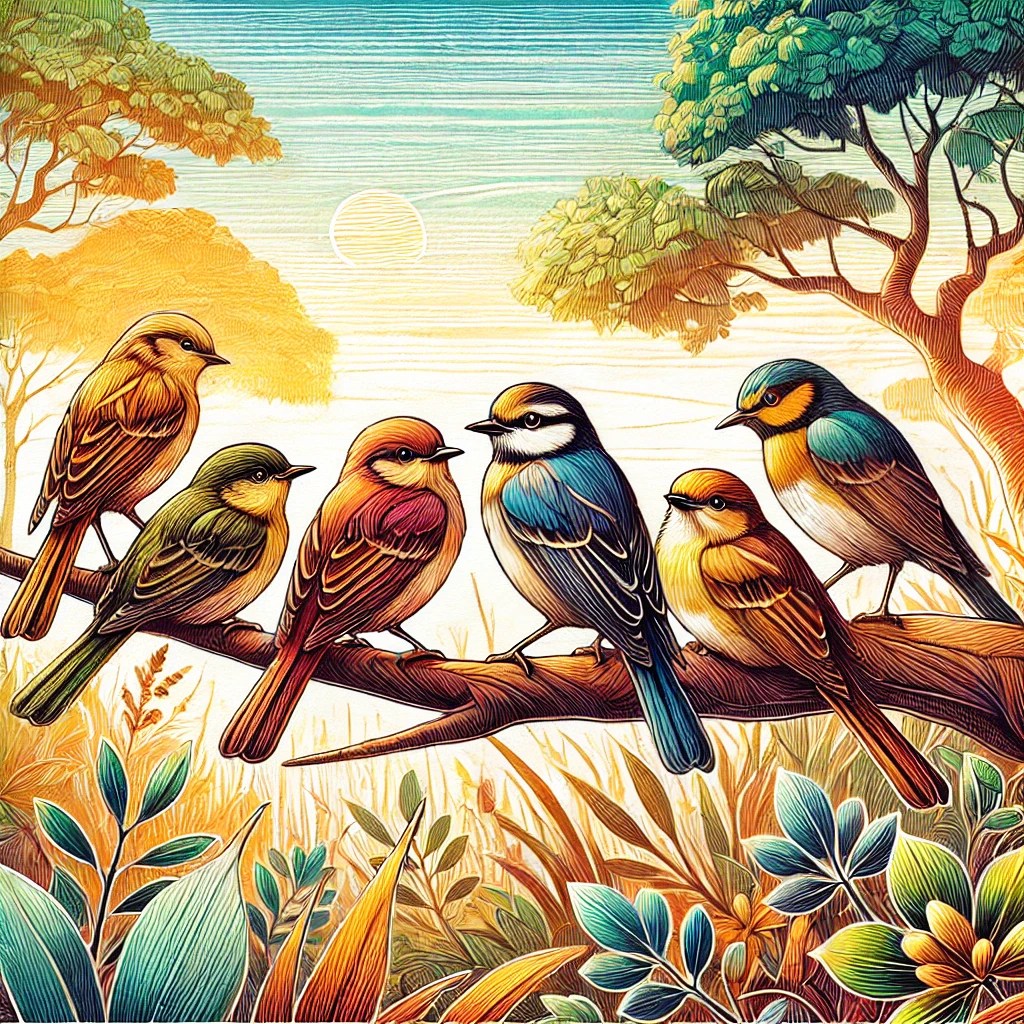
ChatGPT introduced the word “homophily” to me yesterday, and I learned that its antonym is “heterophily.” I had never encountered either term before.
Apparently, homophily is the tendency for people to associate with others who are similar to themselves. Doesn’t this remind you of some common expressions? “Birds of a feather flock together,” “great minds think alike,” “cut from the same cloth,” “like attracts like,” “two peas in a pod,” and so on.
When my husband and I got married, many of our relatives commented on how we had 夫妻相 (husband and wife looks), an expression in Chinese that means we look similar—a quality that is traditionally considered a good omen for marriage. So, did I marry him because of his intellect and sense of humor, or did we both subconsciously see our own reflection in each other’s face? Is it possible that homophily was at play here??!!
Now come to think of it, how did I choose my friends or hire staff? How much was my subconscious making decisions for me beneath the surface, with my conscious self simply going along for the ride?
In the book Subliminal: How Your Unconscious Mind Rules Your Behavior by Dr. Leonard Mlodinow, he referenced a fascinating chart, reproduced below from the original research paper titled “How Do I Love Thee? Let Me Count the Js: Implicit Egotism and
Interpersonal Attraction“. How is it that there is a bias for “Smith” to marry another “Smith”, or “Brown” to marry another “Brown”? Homophily strikes in truly unexpected ways – or maybe it’s just egotism. As the paper’s author stated “From the perspective of implicit egotism people should gravitate toward others who resemble them because similar others activate people’s positive, automatic associations about themselves.”

Whether it’s a tendency toward homophily or implicit egotism, it’s good to be aware of these inherent biases! Next time I meet someone new, I’ll be sure to check for any signs of homophilic feelings—if my unconscious is willing to let me in on its secrets.
[Written by ChatGPT]
Homophily: Understanding Its Origins, Societal Impact, and Path Forward
Introduction
Homophily—the tendency to associate with people similar to ourselves—is a deeply ingrained aspect of human behavior. It shapes how we form friendships, build communities, and structure societies. While this phenomenon has been extensively studied in sociology, psychology, and neuroscience, it remains underexplored in popular media. Understanding the scientific and biological roots of homophily, its societal implications, and the barriers to its broader discussion can provide insights into how we can address its effects, both individually and collectively.
The Scientific and Biological Origins of Homophily
Homophily arises from evolutionary, psychological, and neurological mechanisms that favor similarity. From an evolutionary perspective, humans evolved in small, interdependent groups where similarity signaled shared values, trustworthiness, and cooperative potential. Associating with similar individuals increased the likelihood of survival and group cohesion.
Neurologically, the brain’s reward system, particularly the dorsal and ventral striatum, reinforces the pleasure of interacting with like-minded people. Similarity activates the medial prefrontal cortex (mPFC), which processes self-referential thinking and empathy, making similar individuals feel more relatable. Meanwhile, the amygdala helps us evaluate whether others are part of our “ingroup,” often based on shared traits or behaviors.
Psychologically, homophily stems from the desire for predictability and comfort. Shared language, values, or experiences reduce cognitive effort in communication and foster emotional connections. This inclination is reinforced by confirmation bias, the tendency to seek and affirm information that aligns with our existing beliefs.
Concrete Examples of Homophily and Cognitive Shortcuts
Homophily manifests in subtle yet impactful ways across various aspects of life. These examples highlight its presence in everyday decisions and relationships:
- Marriage and Partner Selection:
- Studies have found that people are more likely to marry others with similar traits, such as socioeconomic background, education, and religion. Intriguingly, research also reveals a preference for partners with similar names or initials.
- Friendship Networks:
- Friend groups often form around shared hobbies, interests, or cultural backgrounds. In schools, students with similar academic performance or ethnic backgrounds tend to group together, reinforcing social clustering.
- Workplace Dynamics:
- In professional settings, employees often form stronger bonds with colleagues who share traits such as alma mater, age, or professional experience. These homophilic tendencies can lead to cliques, limiting collaboration across departments.
- Residential Patterns:
- Homophily drives residential clustering, with people choosing neighborhoods where residents share similar cultural, ethnic, or socioeconomic characteristics. This contributes to urban segregation and perpetuates systemic disparities.
- Online Interactions:
- On social media platforms, homophily amplifies echo chambers, where users primarily engage with like-minded individuals. This is driven by both algorithms and users’ natural preference for familiarity.
- Consumer Behavior:
- People are more likely to choose products, services, or brands associated with individuals or groups they identify with, reinforcing cultural or social trends.
These behaviors are often rooted in cognitive shortcuts—mental processes that simplify decision-making by reducing the effort needed to evaluate complex situations. For instance:
- Familiarity Breeds Comfort: Similarity signals safety and predictability, reducing perceived risks in social interactions.
- Ease of Communication: Shared traits reduce misunderstandings, making interactions more seamless and enjoyable.
- Ingroup Bias: Cognitive shortcuts lead us to favor those in our “ingroup” (similar to us) over the “outgroup” (different from us).
- Pattern Recognition: The brain associates familiarity with positive outcomes, reinforcing preferences for similar individuals.
While these shortcuts are efficient, they also reinforce homophily, shaping societal structures in profound ways.
Impact on Society
Homophily influences society in both positive and negative ways. On the positive side, it fosters trust, cooperation, and cohesion within groups. Shared traits or values can strengthen social bonds and facilitate teamwork, particularly in culturally or ideologically aligned communities.
However, the negative consequences of homophily are significant. It underpins social segregation, echo chambers, and systemic inequalities. For instance:
- In social networks, homophily creates clustering, where individuals are disproportionately connected to others like themselves, fueling political polarization and limiting exposure to diverse perspectives.
- In education and workplaces, homophily reduces diversity, stifling innovation and perpetuating disparities in opportunity.
- In residential patterns, homophily drives urban segregation, creating cycles of disadvantage and unequal access to resources.
Why Homophily Is Not Widely Discussed in Popular Media
Despite its significance, homophily is rarely a topic of popular discourse. Several factors contribute to this:
- Complexity: Its nuanced nature makes it challenging to distill into simple, media-friendly narratives.
- Sensitivity: Discussions about homophily touch on uncomfortable topics, such as bias and inequality, which can provoke controversy.
- Obviousness: The idea that “people prefer those who are similar” may seem too intuitive to warrant deeper exploration.
- Preference for Individual Agency: Popular media focuses on individual actions rather than systemic forces like homophily, which may seem abstract or less actionable.
Reflecting on and Addressing Homophily
To mitigate the negative effects of homophily, individuals and society must take conscious steps to reflect on its impact and counter its tendencies:
Educate on Homophily: Increase public awareness through accessible content and discussions.
As Individuals:
Expand Social Circles: Seek relationships with people from different backgrounds to broaden perspectives.
Challenge Comfort Zones: Engage with diverse media and ideas to counter echo chambers.
Cultivate Self-Awareness: Reflect on personal preferences for similarity and how they influence decisions.
As a Society:
Promote Diversity and Inclusion: Encourage diverse representation in workplaces, schools, and leadership roles.
Restructure Algorithms: Design social media systems to expose users to diverse perspectives.
Foster Cross-Group Interactions: Initiatives like integrated schools and community programs can reduce divisions.
Conclusion
Homophily is a fundamental aspect of human behavior, rooted in biology and reinforced by cognitive shortcuts and societal structures. While it fosters connection and trust, it also perpetuates division and inequality. Its underrepresentation in popular media stems from its complexity, sensitivity, and perceived obviousness. By understanding its origins and effects, individuals and societies can take deliberate steps to reflect on and mitigate its negative impacts. In doing so, we can ensure that homophily serves as a tool for unity rather than division, fostering more inclusive and dynamic communities.
 UpLive.Life