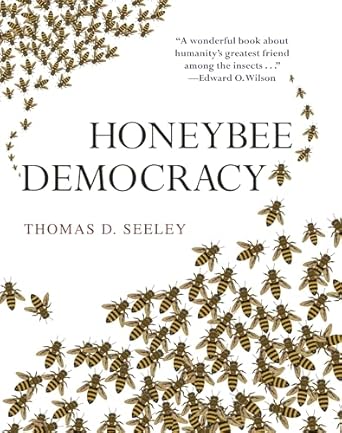
A few years ago, I picked up Honey Bee Democracy by Thomas Seeley and was struck by how fascinating the book was. Who would have guessed that creatures with such tiny brains could practice a collective decision-making process so graceful, so consensus-driven, and so ultimately democratic? As I read, I found myself returning to one thought over and over again: If bees—operating without a central authority—could settle their differences and unite on a common goal, why do we humans, with our endless capacity for innovation and empathy, so often stumble into divisiveness and conflict?
I began drawing parallels between the world of bees and our own. In a honeybee colony, every individual contributes to the collective good, from the scouts who risk themselves to find resources to the workers who labor tirelessly, each guided by signals and a shared purpose. In the human realm, we too have all the pieces for harmony—language, consciousness, the ability to learn from history—but we still find ourselves locked into tribal thinking and aggression. It occurred to me that our “evolution” no longer hinges primarily on genetics but on our willingness and capacity to shape the evolution of our global society.
The insights from Honey Bee Democracy made me realize that the key to human progress might lie in reimagining our social frameworks. Instead of dwelling on who is right or wrong, who is democrat or republican, liberal or conservative, we might focus on how we can collectively solve problems, pooling our diverse viewpoints to reach higher forms of consensus. Over time, I began to see how the health of our planet, from human society to the forests and oceans, rests on our ability to organize ourselves effectively, much like the bees do for their hive. If we cannot find common ground on issues like resource stewardship, the price might be our very survival.
These realizations also tie into the future where superintelligence or advanced AI systems may play an increasingly significant role. If we aspire to work in unison with these powerful technologies, we must first demonstrate our own ability to handle disagreements productively, manage resources responsibly, and protect the vulnerable—both human and nonhuman. Our social maturity as a species has to match our technological ambition; otherwise, we risk using such capabilities in destructive ways.
Reading about honeybees—a species whose collective intelligence far outstrips that of the individual—sparked in me a sense of awe and responsibility. It made me wonder what humanity could achieve if we learn to prioritize the long-term flourishing of the planet and one another, rather than short-term gains. What would it take for all of us to prioritize our existence and well-being rather than fighting one another and destroying our only home—Earth?
Perhaps our next step in “evolving” socially is to internalize the bees’ lesson: a thriving community is one in which each member, motivated by enlightened self-interest and an innate sense of interconnection, contributes to a harmonious whole. It’s not utopian to think we can inch closer to that vision—if anything, it may be essential to ensuring our continued existence in the face of global challenges and accelerating technological change.
[Written by ChatGPT]
Summary of Honeybee Democracy by Thomas D. Seeley
In Honeybee Democracy, biologist Thomas D. Seeley explores the fascinating decision-making process of honeybee swarms—particularly how they collectively choose a new nest site. Drawing on decades of research, Seeley demonstrates that bees embody a democratic process built on shared information, competition, and consensus. Below are the key insights from the book:
- Swarm Dynamics and Decision-Making
When a large colony becomes overcrowded, a portion of the bees—along with the old queen—leave to form a new colony. Before settling, scout bees disperse to search for potential nest sites and then return to the swarm to communicate their findings. - Waggle Dance as Communication
The scout bees use the iconic “waggle dance” to advertise the location and quality of a promising site. The strength and frequency of the dance reflect the scout’s enthusiasm, effectively recruiting other scouts to investigate the site. - Competition and Consensus
Multiple potential sites emerge from different scouts’ dances. These options compete for support, as more bees visit and evaluate each site. Over time, the swarm converges on a single choice, determined by which site gains the most “votes” (i.e., the most intense and repeated waggle dances). Once the bees reach consensus, the swarm departs en masse. - Self-Organization Principles
Seeley emphasizes the self-organizing nature of honeybee swarms. Each individual operates based on simple rules—share information, assess sites, and reinforce favorable discoveries. Despite no central leader, this collective intelligence reliably leads the group to high-quality nest sites. - Lessons for Human Groups
By detailing the bees’ methods of gathering data, encouraging diverse input, and arriving at consensus, Seeley draws parallels to human decision-making. He shows how the bees’ democratic process can illuminate best practices in committees, organizations, and other group settings, encouraging transparency, debate, and broad participation.
Overall, Honeybee Democracy offers a compelling look at how cooperation, communication, and consensus emerge naturally in honeybee swarms—and how these principles can enrich our understanding of democratic processes in human society.
Evolving Beyond Tribalism: Pathways to a More Cooperative and Intelligent Humanity
Humanity has evolved under conditions in which smaller group alliances, competition, and even conflict provided survival advantages under scarce resources. Much of our social “wiring” reflects these ancestral conditions. Yet today, global interdependence and existential threats—from nuclear weapons to climate change—make the old patterns of tribalism and war increasingly destructive to our collective future. While biological evolution alone is slow, humans possess an extraordinary capacity for cultural and technological evolution—means by which we can reshape our societies and even our thinking. Below are several avenues by which humanity can evolve into a more intelligent, cooperative species that prioritizes mutual well-being and existence over conflict.
1. Recognizing the Power of Cultural Evolution
- Beyond Genes: Unlike many species, humans do not rely solely on genetic adaptation. We also “inherit” cultural practices, ideologies, and technologies that shape our behaviors. This process of cultural evolution can dramatically outpace slow genetic changes—sometimes leading to rapid shifts in values, norms, and institutions over a few generations rather than millennia.
- Global Interconnection: Increased connectivity (through the internet, trade, and travel) fosters cultural exchange. Cultures that integrate new ideas and empathize with diverse perspectives have a better chance of reducing harmful ingroup-outgroup biases, one of the main drivers of tribal conflict.
2. Strengthening Empathy and Cooperation Through Education
- Childhood Socialization: Early childhood education and family environments have a huge impact on how children learn to treat others. Curricula that emphasize emotional intelligence, conflict resolution, and cooperative problem-solving help produce empathetic and socially responsible adults.
- Critical Thinking Skills: Teaching individuals how to think, rather than what to think, reduces susceptibility to propaganda and promotes evidence-based reasoning. This intellectual skill is a cornerstone of peaceful coexistence because it undermines the tendency toward reactive tribal mentalities.
- Global Citizenship: Implementing educational frameworks that highlight human interconnectedness, environmental stewardship, and global ethics can counteract the narrower forms of tribal identity. Encouraging foreign exchange, digital collaboration, and shared scientific pursuits also broadens perspectives.
3. Harnessing Governance and Institutions for Collective Good
- Effective Institutions: Strong democratic and accountable institutions can reduce corruption, uphold the rule of law, and mediate between conflicting interests. By design, such institutions ideally channel competition into constructive domains (e.g., economics, science, athletics) rather than war.
- Global Cooperation Mechanisms: International agreements on climate change, trade, and public health reflect humanity’s ability to unite over shared threats. Strengthening these frameworks—and creating new ones for emerging issues like AI governance—can help align national interests with long-term human survival.
- Policy Based on Well-Being: Policymakers are increasingly looking beyond GDP to measure societal progress. Indices like the Genuine Progress Indicator (GPI), Human Development Index (HDI), and Gross National Happiness (GNH) emphasize health, education, and environmental integrity, fostering political systems that prioritize well-being rather than mere economic or military power.
4. Shifting Norms: From Zero-Sum to Positive-Sum Mindsets
- Zero-Sum vs. Positive-Sum: Tribalism flourishes when groups believe gains for the “other side” imply losses for their own. Transitioning to a positive-sum mindset—where collaboration creates mutual benefit—fosters alliances and reduces fear-based competition.
- Shared Global Challenges: Whether it is climate change, pandemics, or resource scarcity, the most pressing modern crises are inherently global. This mutual vulnerability can catalyze cooperation: if survival depends on working together, we may learn to see beyond traditional group boundaries.
- Cultural Paradigms: Media, art, and storytelling have significant power to shift public attitudes. Narratives that highlight collaboration, celebrate empathy, and focus on shared human identity can gradually reduce cultural acceptance of violence and division.
5. Technological Tools for Empathy and Understanding
- Global Communication: Social media and other digital platforms allow instant connection across the planet, bringing distant realities into immediate focus. Despite problems with misinformation, they also offer unparalleled opportunities for cross-cultural learning, empathy-building campaigns, and collaborative innovation.
- Artificial Intelligence and Data: AI can aid in conflict resolution—analyzing complex data to identify root causes, predict tensions, and recommend preventive measures. Moreover, data-driven governance tools can increase transparency, reduce corruption, and create accountability in areas prone to conflict.
- Virtual and Augmented Reality: Immersive experiences can powerfully impact human empathy by putting users in another person’s shoes. VR initiatives already exist that simulate refugee experiences or environmental disasters, sometimes influencing public perception and policymaking in compassionate ways.
6. Moral and Ethical Growth
- Moral Circles: Over history, the “circle of empathy” has expanded from immediate kin to tribes, then nations, and increasingly to all humanity (and even other species). Fostering a global moral circle means continuing this trajectory—where obligations and compassion extend to all people as part of a shared human family.
- Philosophical Innovations: Ethical frameworks like utilitarianism (maximizing well-being), rights-based approaches, and deep ecology (valuing the interconnectedness of life) can challenge old tribal notions. Such philosophies encourage us to see beyond short-term or narrowly defined interests and prioritize collective flourishing.
- Religious and Spiritual Perspectives: Many religious and spiritual traditions already contain teachings on compassion, non-violence, and unity. Cooperative movements often draw on these teachings to unify diverse groups around common ethical principles, whether secular or faith-based.
7. Genetic Evolution vs. Cultural Transformation
- Slow Genetic Changes: Major shifts in the genetic code tied to behavior (e.g., decreasing tendencies toward aggression) occur gradually over thousands or millions of years. We cannot rely solely on biological evolution to solve immediate global threats.
- Rapid Cultural Transformation: Humans, unlike other species, can transform social and ethical norms in a single generation. The ongoing globalization of information and ideas accelerates cultural change, giving humans an unprecedented ability to choose new pathways.
- Gene-Culture Coevolution: Over time, certain cultural shifts can also alter selective pressures on our genome. For instance, if cooperative societies are more stable and prosperous, genes conducive to prosocial and empathetic behavior may have better survival odds. This coevolutionary effect is far slower than cultural change but can reinforce positive social norms in the long run.
Conclusion
The path to a more intelligent, cooperative species is not straightforward, but humans possess powerful tools to reshape our future. By leveraging cultural evolution, prioritizing empathy-driven education, cultivating institutions that reward collaboration, and using technology responsibly, we can transcend many of the tribal impulses that once served us in a more fragmented past. While our deep evolutionary history has left us primed for certain forms of group loyalty and conflict, our ability to reason, empathize, and work together on a global scale offers hope that we can—and will—choose existence and well-being over tribalism and war.
The Genetic Underpinnings of Honeybee Cooperation and Collective Consensus
Honeybees (genus Apis) are renowned for their sophisticated social structures and unparalleled ability to cooperate. Their highly collaborative behavior arises from both their unique genetic makeup and the complex mechanisms they use to share information. By examining how their genome and sociobiology intertwine, we gain insights into how honeybees achieve collective decisions with remarkable efficiency and accuracy.
1. Genetic Foundations of Cooperation
1.1 Haplodiploidy and Kin Selection
A key genetic factor that predisposes honeybees to cooperate is the haplodiploid sex-determination system. In this system, females (workers and queens) develop from fertilized eggs and are diploid (having two sets of chromosomes), while males (drones) develop from unfertilized eggs and are haploid (having one set of chromosomes). This unusual genetic structure leads to the following consequences:
- High Relatedness Among Sisters: Because of haplodiploidy, female honeybees share, on average, 75% of their genes with their full sisters—significantly higher than the 50% typical of diploid siblings in most species. This greater degree of relatedness increases the inclusive fitness payoff of altruistic and cooperative behaviors. A worker bee contributes more to her own genetic success by helping raise sisters (with 75% shared genes) than by reproducing on her own.
- Evolution of Eusociality: The enhanced genetic benefit of assisting highly related siblings is one of the evolutionary drivers of eusociality—the highest level of social organization characterized by cooperative brood care, reproductive division of labor, and overlapping generations. This arrangement, combined with selective pressures favoring cohesion and coordination, cements cooperation within the colony.
1.2 Altruistic Behavior and Colony-Level Selection
Along with kin selection, colony-level selection shapes honeybee cooperation. Colonies that are more effective at collectively solving problems (e.g., foraging, brood care, thermoregulation) tend to outcompete other, less organized colonies. Over countless generations, genes favoring cooperative traits become more prevalent. Examples of such genetically influenced traits include:
- Division of Labor: Specialized subgroups of workers carry out tasks such as feeding brood, building comb, guarding, and foraging. Genetic factors contribute to individual predispositions toward certain tasks.
- Chemical Communication: Pheromone production and perception are genetically regulated. Queen pheromones, for example, suppress the reproductive capabilities of workers and help maintain colony organization.
Thus, through both individual- and group-level selective pressures, honeybee genomes have been shaped to strongly favor cooperative behaviors.
2. Mechanisms of Consensus: From Individual Signals to Collective Decisions
2.1 The Role of the Waggle Dance
Perhaps the most iconic mechanism honeybees use to form consensus is the waggle dance. Scout bees that discover valuable food sources—or potential nest sites—return to the colony and perform a dance on the comb surface. Critical features of this dance include:
- Direction: The angle of the waggle relative to gravity on the comb correlates with the sun’s azimuth, indicating the direction of the resource or site.
- Distance: The duration of the waggle portion of the dance encodes the distance from the hive to the resource.
- Quality: The vigor or intensity of the dance can signal the richness or desirability of the site.
By relying on shared genetic “instructions” to interpret and perform these dances, the bees rapidly exchange navigational and quality-related information, enabling them to converge on high-value targets.
2.2 Positive Feedback and Recruitment
Once a scout bee communicates the location and quality of a resource, other bees may follow her instructions, visit the site themselves, and return with reinforcing dances if they find it equally desirable. This sets up a positive feedback loop:
- Scouts detect a high-quality site.
- They dance more vigorously to advertise the site.
- Recruited bees verify the site and perform additional waggle dances if they agree with the scout’s assessment.
- More bees become aware of the site, and the recruitment cycle intensifies.
Multiple, concurrent waggle dances can initially advertise different sites. Over time, as more bees “vote” for one site through repeated dances, the colony naturally gravitates toward the best option—a process culminating in consensus.
2.3 Stopping Signals and the Final Decision
While positive feedback loops encourage support for a favorable site, bees also employ inhibitory signals—sometimes referred to as “stop signals.” These short buzzes can be delivered during a waggle dance to interrupt it, thus discouraging further recruitment for a competing site if another, superior option has been found. This interplay between excitatory and inhibitory signals refines the decision-making process by preventing the colony from splitting efforts or locking onto suboptimal choices.
Ultimately, when one site’s advertising overwhelms alternatives, worker bees collectively reach a threshold of agreement. At this point, a “pipe piping” signal can spread throughout the swarm, mobilizing individuals to prepare for flight. The colony then departs en masse to occupy the chosen location—a testament to their capacity to achieve consensus without a central authority.
3. Integration of Genetics and Communication for Collective Action
Honeybees exemplify how genetic underpinnings and sophisticated communication systems align to drive cooperation and consensus. Their haplodiploid genetic system enhances the evolutionary advantage of altruistic behavior, while complex signaling mechanisms—like the waggle dance and stop signals—fine-tune the colony’s group decisions. This deep integration allows honeybee colonies to efficiently gather and synthesize information from multiple scouts, steer the group toward optimal nest sites or food sources, and coordinate large-scale tasks critical for survival.
4. Conclusion
In honeybee societies, cooperation is not merely a product of environmental demands but a direct outcome of their genetic makeup interacting with collective communication strategies. The haplodiploid system and kin selection strongly favor collaboration, while a repertoire of signals (waggle dances, stop signals, and pheromones) allows for swift and decisive consensus-building. Studying these entwined genetic and behavioral facets of honeybees offers crucial insights into how complex animal societies—lacking a centralized authority—can consistently organize themselves, adapt to ever-changing conditions, and thrive through the power of collective action.
Sex Determination Systems
Sex determination systems govern how an organism’s biological sex is established, typically through the inheritance or expression of specific genes or chromosomes. Across the animal kingdom (and even in some plants), several distinct mechanisms have evolved. Below is an overview of the haplodiploid system—famously found in bees—and other major types of sex determination systems.
1. Haplodiploid Sex Determination
Definition
- In haplodiploidy, females develop from fertilized (diploid) eggs, while males develop from unfertilized (haploid) eggs.
- This means that females have two sets of chromosomes (one from each parent), whereas males have only one set (from the mother only).
Common Example
- Found in most bees, ants, and wasps (order Hymenoptera).
Genetic Consequences
- High Relatedness Among Sisters: Because females share genes from both parents, while males contribute genetically only through the mother, sisters can be more closely related to each other (on average 75% shared genes) than they would be under typical diploid systems (50%).
- Eusociality: This heightened relatedness is thought to be one evolutionary factor favoring altruism and the development of complex social behaviors seen in bees and ants.
- Skewed Gene Flow: Males do not contribute paternal genes to daughters, so certain traits pass differently than they would in standard diploid populations.
2. XY (Male Heterogametic) System
Definition
- In the XY system, males are heterogametic (XY), meaning they have two different sex chromosomes, while females are homogametic (XX).
Common Example
- Humans and most other mammals follow the XY system, as do some insects (e.g., fruit flies, although Drosophila has some unique twists).
Mechanism
- In mammals, the presence of the SRY gene (on the Y chromosome) typically directs the embryo to develop male characteristics.
- Without a Y chromosome (i.e., XX genotype), the embryo usually develops female characteristics.
3. ZW (Female Heterogametic) System
Definition
- In the ZW system, females are heterogametic (ZW), and males are homogametic (ZZ).
- This reverses the familiar XY pattern: the female determines the sex of the offspring through her egg chromosomes.
Common Example
- Birds, many reptiles, some amphibians, and certain fish species use this system.
Mechanism
- While the specific genes involved vary, the W chromosome typically carries factors that determine the development of female characteristics.
- Males, with ZZ chromosomes, lack these feminizing factors.
4. XO (Male “Monosomic”) System
Definition
- In the XO system, females possess two sex chromosomes (XX), while males have only one (X, designated “XO” to denote the absence of a second sex chromosome).
Common Example
- Observed in certain insects such as grasshoppers, cockroaches, and some other invertebrates.
Mechanism
- The lack of a second chromosome in males is the defining factor.
- The presence of two X chromosomes leads to female development, while only one X chromosome leads to male development.
5. Environmental Sex Determination
Definition
- Environmental sex determination (ESD) occurs when external cues—often temperature, but also social environment or population density—dictate sex.
Common Example
- Certain reptiles (like many turtles and crocodiles) have temperature-dependent sex determination (TSD), where warmer or cooler incubation temperatures result in offspring of a specific sex.
- In some fish (e.g., clownfish), social status within a group can trigger sex changes.
Mechanism
- Rather than relying solely on chromosomes, embryos develop into one sex or another based on physiological responses to environmental conditions.
- This allows for sex ratios that can adapt to changing environments.
6. Other Variations and Complexities
- Polygenic Sex Determination: In certain organisms, multiple genes (not just one chromosome pair) influence whether an individual develops as male or female.
- Hermaphroditism: Some species (e.g., many snails, some fish) can produce both eggs and sperm, either simultaneously (simultaneous hermaphrodites) or by switching sex (sequential hermaphrodites).
- Social Insects with Multiple Systems: Although haplodiploidy is prevalent in bees and ants, other insects may combine chromosomal with environmental factors, adding even more complexity.
Conclusion
From the haplodiploid system of bees and ants to the familiar mammalian XY setup and beyond, sex determination is remarkably diverse across the animal kingdom. Each system reflects evolutionary pressures, ecological constraints, and genetic mechanisms tailored to maximize survival and reproductive success. Understanding these systems not only clarifies how organisms develop as male or female but also highlights the innovative ways that life adapts to varied environments and social structures.
Exploring Cooperation Across Different Sex Determination Systems
Sex determination systems—haplodiploidy, XY, ZW, XO, and various forms of environmental sex determination—do not alone dictate how cooperative or social a species will be. Rather, cooperation emerges from a confluence of factors, including genetic relatedness, ecological pressures, and evolutionary history. Below, we examine how each major system correlates (or not) with the evolution of cooperative or social behaviors.
1. Haplodiploidy: High Relatedness Fostering Cooperation
System Overview
- Definition: Females are diploid (from fertilized eggs) and males are haploid (from unfertilized eggs).
- Example: Bees, ants, and wasps in the order Hymenoptera.
Cooperativeness
- High Relatedness Among Sisters: A hallmark of haplodiploid species is that sisters can share up to 75% of their genes on average (vs. 50% in typical diploid siblings). This elevated relatedness increases the benefits of cooperative and altruistic behavior (inclusive fitness), contributing to the evolution of eusociality—the highest level of social organization.
- Eusocial Insects: Many haplodiploid insects live in large colonies with overlapping generations and extreme cooperation (e.g., honeybees, ants). Workers forgo direct reproduction to help raise the offspring of a single queen, and division of labor is pronounced (foraging, brood care, nest defense).
- Not All Haplodiploids Are Eusocial: Despite the strong correlation, not every haplodiploid insect is eusocial. Some solitary wasps and bees retain the haplodiploid system without complex social structures. However, among the insects that are eusocial, haplodiploidy is notably common.
Bottom Line: Haplodiploidy, especially in Hymenoptera, has been one strong genetic factor favoring the evolution of cooperative societies. But it is not an absolute guarantee—additional ecological and evolutionary pressures also shape social behavior.
2. XY (Male Heterogametic): From Solitary to Moderately Social
System Overview
- Definition: Males have XY chromosomes, females have XX chromosomes.
- Examples: Most mammals (including humans), some insects (like fruit flies).
Cooperativeness
- Varies Widely: XY species range from solitary carnivores (e.g., many felines) to highly social mammals (e.g., wolves, dolphins, primates). The XY mechanism itself does not directly favor cooperation via genetically higher relatedness.
- Complex Social Structures in Some Mammals: Certain mammals (e.g., naked mole rats, some primates) exhibit cooperative breeding and even eusocial traits (in the case of naked mole rats). Their cooperation arises more from ecological pressures (e.g., harsh environments) and kin selection within families, rather than from the XY system.
- Human Societies: Humans, an XY species, have developed extremely elaborate forms of cooperation—though driven by culture, cognitive abilities, and social learning, rather than by a simple genetic system favoring high relatedness.
Bottom Line: The XY system alone does not strongly dictate cooperation. While some XY species form sophisticated cooperative groups, many do not, underscoring that social evolution involves far more than just chromosome configuration.
3. ZW (Female Heterogametic): Occasional Cooperativeness
System Overview
- Definition: Females have ZW chromosomes, males have ZZ chromosomes.
- Examples: Birds, many reptiles, some amphibians and fish.
Cooperativeness
- Birds: Some bird species form complex social systems—cooperative breeding is relatively common (e.g., Florida scrub-jays, groove-billed anis). However, bird social structures typically revolve around pair bonds, extended parental care, or group defense of territory, rather than the eusocial model seen in haplodiploid insects.
- Reptiles with ZW: Some reptiles do form group aggregates but rarely show the intense cooperation of social insects or certain mammalian societies. Generally, reptilian social structure is comparatively simple.
Bottom Line: In ZW species, you can find cooperative behaviors (like cooperative breeding), but these are more the result of ecological and behavioral adaptations than a direct consequence of the ZW sex determination system or high relatedness.
4. XO (Male “Monosomic”): Limited Sociality
System Overview
- Definition: Females have two sex chromosomes (XX), whereas males have only one (XO).
- Examples: Many grasshoppers, crickets, cockroaches, some nematodes.
Cooperativeness
- Mostly Solitary or Simple Sociality: Most insects using XO are not highly social. Grasshoppers and cockroaches, for instance, can aggregate and communicate to some degree but do not exhibit advanced cooperative behaviors akin to eusocial insects.
- Aggregation vs. Cooperation: Many XO insects do cluster (e.g., locust swarms), but the driving force is often mating or resource-related rather than a eusocial system involving division of labor or cooperative brood care.
Bottom Line: XO species typically display rudimentary social interactions rather than complex cooperative structures. The XO system is not particularly known for promoting altruism or high levels of cooperation.
5. Environmental Sex Determination (ESD): Sociality Varies by Species
System Overview
- Definition: Sex is determined by environmental factors (temperature, social status, etc.) rather than strictly by chromosomes.
- Examples: Many reptiles (e.g., crocodiles, turtles), some fish (e.g., clownfish), and amphibians.
Cooperativeness
- Temperature-Dependent Reptiles: Turtles and crocodilians can form maternal nest-guarding behaviors (crocodiles often guard nests), but these are generally short-term parental behaviors, not wide-scale social living.
- Social Fishes (Sequential Hermaphrodites): Clownfish and wrasses may change sex based on hierarchy or group composition. While there is a social structure, it is more about maintaining a breeding hierarchy than sustaining complex cooperative tasks like colony construction or group foraging with division of labor.
- Cooperation Drivers: In ESD species, cooperative behaviors—if any—are shaped by breeding or survival strategies in specific environments, rather than by a unifying “eusocial” impetus.
Bottom Line: ESD itself doesn’t inherently produce advanced social structures. Some species show social grouping or parental care, but rarely the large-scale cooperative complexity found in certain haplodiploid or mammalian societies.
Putting It All Together
- Haplodiploidy is strongly associated with the evolution of eusociality and thus some of the most cooperative societies on Earth (e.g., honeybee colonies, ant colonies). The high genetic relatedness among sisters likely lowers the evolutionary “threshold” for sacrificing individual reproduction in favor of inclusive fitness.
- XY and ZW systems exhibit variable social structures—from solitary to moderately or highly social—driven more by ecological and social factors than by the sex-determination mechanism itself.
- XO organisms typically display limited social interaction, with a few exceptions of aggregations driven by mating or resource conditions, but not true cooperation on the scale of haplodiploid eusocial insects.
- Environmental Sex Determination systems can feature parental care or social hierarchies (as in clownfish), but, again, large-scale eusociality is absent. Cooperation usually focuses on mating success, territory defense, or short-term parental investment.
Therefore, although not an absolute rule, haplodiploid organisms (especially in the order Hymenoptera) include many of the most intensively cooperative species known. These societies rely on their unique genetic system to reinforce altruistic behaviors and complex social structures. However, cooperation is multifactorial, and each sex determination system intersects with ecology, life history, and other evolutionary pressures to shape how (and whether) organisms live, reproduce, and work together.
 UpLive.Life