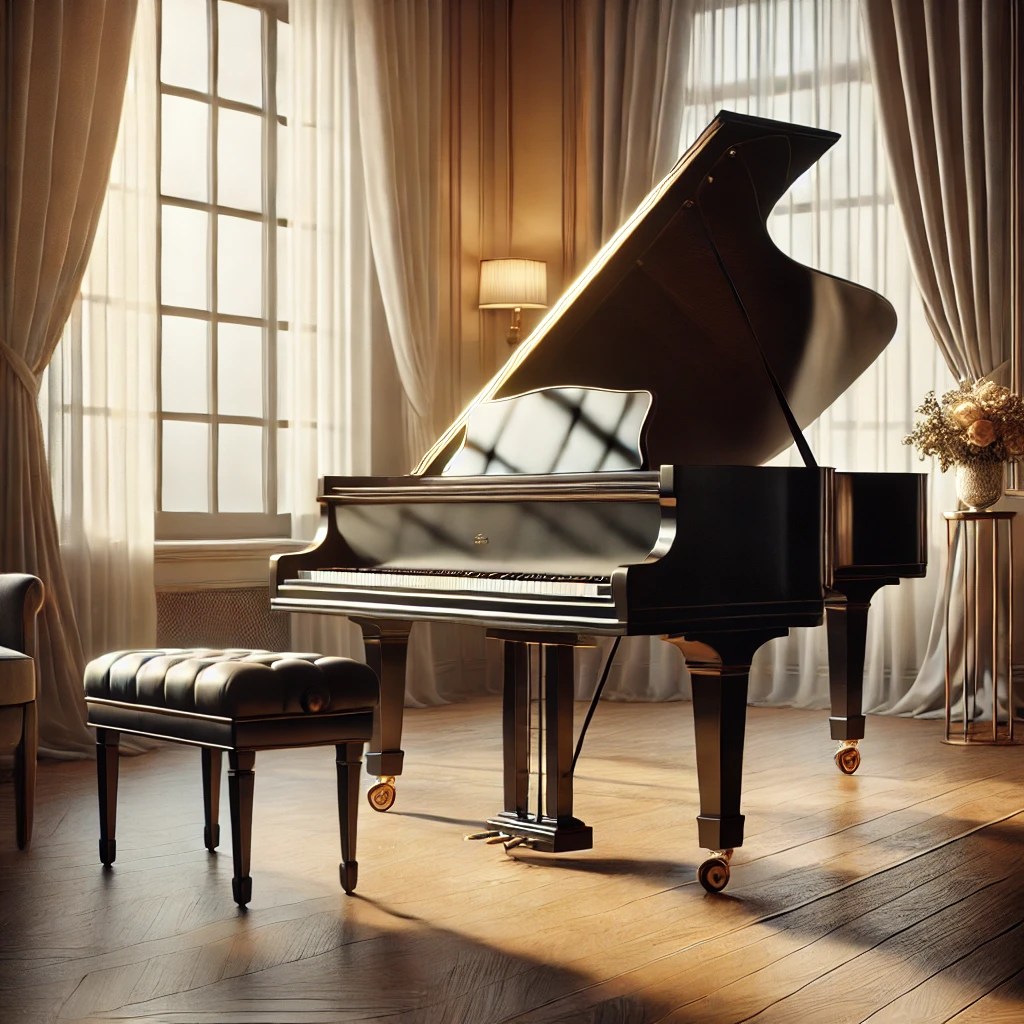
[Written by ChatGPT]
Taking on the challenge of learning piano in your 40s can feel like standing at the base of a mountain, staring up at its daunting heights. While the idea of playing beautiful melodies might be a long-held dream, the reality of starting later in life comes with its unique hurdles. Unlike children, whose brains are naturally wired for rapid skill acquisition and adaptability, adults often face mental blocks, slower muscle memory development, and a packed schedule that leaves little room for consistent practice. Add in the self-doubt that can creep in when comparing yourself to younger learners or accomplished pianists, and the task might seem nearly impossible.
However, while the challenges are real, so are the rewards. Adults bring discipline, focus, and emotional depth to their learning. It’s not about becoming a concert pianist overnight; it’s about embracing the journey, celebrating small victories, and reconnecting with the joy of creating music. Yes, learning piano in your 40s is hard—but that’s also what makes every note played, every song mastered, and every personal breakthrough all the more meaningful.
[Written by Grok]
The notion that human consciousness can only process one thing at a time oversimplifies how our brain functions, especially in complex tasks like playing the piano. Here’s how pianists manage to play different notes and rhythms with each hand:
- Muscle Memory and Motor Skills:
- Through extensive practice, pianists develop muscle memory. This means that the physical actions of playing notes and rhythms become automated to some degree. The hands can perform complex sequences without conscious, moment-to-moment oversight.
- Division of Attention:
- While it might seem like a single focus, the brain can divide attention in a way that allows for multitasking within the musical context. Pianists learn to distribute their attention across different aspects of the performance, such as melody with one hand and accompaniment or bass line with the other.
- Parallel Processing in the Brain:
- The human brain is capable of parallel processing, where different neural pathways handle different tasks simultaneously. For musicians, this might mean one part of the brain deals with reading sheet music, another with hand coordination, and yet another with listening and adjusting to the sound being produced.
- Integration of Sensory and Motor Information:
- Playing the piano involves a feedback loop between sensory input (hearing the music, feeling the keys) and motor output (finger movements). This feedback helps in fine-tuning the performance in real-time, even if the conscious mind is not fully aware of each individual action.
- Cognitive Chunking:
- Complex tasks like piano playing are broken down into cognitive “chunks” or units. A pianist might think of a whole phrase or segment of music as one unit rather than individual notes, allowing for a broader focus while still achieving complex coordination.
- Experience and Practice:
- Over time, through deliberate practice, pianists enhance their ability to coordinate different limbs independently. This skill is not just about physical dexterity but also about cognitive control, where the brain learns to manage multiple streams of information effectively.
So, while it’s true that at any given moment, our conscious focus might be somewhat limited, the brain’s capacity for multitasking in well-practiced domains like music allows for what seems like simultaneous processing of different tasks. This is why pianists, after years of practice, can perform intricate pieces with both hands doing different things at the same time.
[Written by Gemini]
The Two-Handed Paradox: How Pianists Defy Conscious Limits
The human brain is a marvel of complexity, capable of incredible feats of processing and coordination. Yet, a fundamental limitation of our consciousness is its seeming inability to focus on two distinct things simultaneously. This raises a fascinating question, particularly for those who witness the seemingly effortless mastery of concert pianists: if our conscious minds can only process one thing at a time, how do piano players manage to play two different notes and rhythms on different hands? This article delves into the fascinating intersection of music, psychology, and neuroscience to unravel this “two-handed paradox.”
The Orchestrator Within: The Brain’s Role in Piano Playing
Playing the piano is far more than just pressing keys. It’s a complex interplay of cognitive processes, sensory-motor integration, and years of dedicated practice. When a pianist performs, their brain transforms into a dynamic orchestra conductor, coordinating a symphony of neural activity.
A Whole-Brain Workout
Neuroimaging studies reveal that playing the piano engages various brain regions, each with a specific role to play. The auditory cortex processes the acoustic properties of the music, while the motor cortex coordinates the intricate finger movements. The visual cortex is engaged in reading the musical score, and the hippocampus and other memory-related areas are crucial for recalling learned sequences and musical patterns.
Interestingly, playing the piano necessitates communication between both hemispheres of the brain. The left hemisphere, responsible for logic and analysis, deciphers the sheet music and maintains rhythm. Meanwhile, the right hemisphere, associated with creativity and emotion, interprets the music’s emotional content and guides artistic expression. This interhemispheric communication is facilitated by the corpus callosum, a bridge of neural fibers connecting the two hemispheres. Studies have shown that musicians, especially pianists, often have a larger and more active corpus callosum than non-musicians, suggesting a greater capacity for integrating information from both sides of the brain. This enhanced interhemispheric communication may be a key factor in the pianist’s ability to coordinate complex movements and express musicality.
Furthermore, research has revealed distinct patterns of brain activation when pianists perform different types of music. While scales and concerto performances both activate primary motor cortex, corresponding somatosensory areas, inferior parietal cortex, supplementary motor area, motor cingulate, bilateral superior and middle temporal cortex, right thalamus, anterior and posterior cerebellum, there are also unique activations associated with each. For instance, regions specifically supporting concerto performance include the superior and middle temporal cortex, planum polare, thalamus, basal ganglia, posterior cerebellum, dorsolateral premotor cortex, right insula, right supplementary motor area, lingual gyrus, and posterior cingulate. This suggests that the brain adapts its activity based on the specific demands of the musical piece.
Beyond Conscious Control: The Power of the Subconscious
While conscious effort is undoubtedly involved in learning and performing music, the subconscious mind plays a vital role in executing complex actions. In the realm of piano playing, this means that as pianists practice, they gradually transition from conscious, analytical control to a more intuitive and automated approach. The subconscious mind, which houses muscle memory and ingrained motor patterns, takes over, allowing for fluid and expressive playing without the need for conscious deliberation over every note and movement. This shift is similar to how we learn to ride a bike or type without consciously thinking about each individual action.
Divided Attention or Figure-Ground?
The concept of “divided attention” might seem like a logical explanation for how pianists manage two-handed playing. However, research suggests that true divided attention, where we consciously focus on two distinct tasks simultaneously, has limitations. Our brains may instead employ strategies like “attention switching,” rapidly shifting focus between tasks, or “figure-ground” processing, where one task becomes the focal point while the other fades into the background.
In the context of piano playing, the “figure-ground” model suggests that pianists might focus their conscious attention on one hand while the other hand operates more automatically, guided by muscle memory and subconscious processing. This allows for a seamless integration of two distinct musical lines. This attention switching ability is crucial for pianists, as they must constantly monitor different aspects of the performance, such as melody, harmony, rhythm, and dynamics.
Furthermore, an “attentional bottleneck” can occur when two tasks demand the same cognitive resources, leading to slower processing and potential errors. Pianists likely learn to overcome this bottleneck through extensive practice, developing efficient cognitive strategies that minimize interference between the two hands.
The Muscle Memory Maestro
Muscle memory, or procedural memory, is the unsung hero of piano performance. Through countless hours of practice, pianists develop intricate motor programs that allow their fingers to navigate the keyboard with remarkable precision and speed. These motor programs are stored in the cerebellum and basal ganglia, brain regions crucial for motor control and skill learning.
Interestingly, studies have shown that experienced pianists actually use their motor networks less than inexperienced pianists when performing complex hand movements. This suggests that muscle memory allows for greater efficiency, freeing up cognitive resources for other aspects of the performance, such as musical expression and interpretation. This highlights a fascinating paradox: the more skilled a pianist becomes, the less they consciously control their movements, allowing for a more intuitive and artistic performance.
However, it’s important to note that pianists shouldn’t rely solely on muscle memory. While it’s essential for executing complex passages, a deep cognitive understanding of the music’s structure and phrasing is crucial for a truly expressive and meaningful performance.
Repetitive actions are fundamental to the development of muscle memory. When an individual performs a specific movement repeatedly, the brain and muscles work together to create and strengthen neural pathways. This process of neural adaptation allows for increasingly efficient and automated movements over time.
Flow State: Losing Yourself in the Music
Beyond the technical mastery and cognitive coordination, there’s an almost mystical element to piano performance: the flow state. This state of deep immersion and effortless concentration allows pianists to transcend conscious limitations and become one with the music.
Flow state is characterized by a loss of self-consciousness, a distorted sense of time, and a feeling of complete absorption in the activity. In this state, pianists may experience a heightened sense of creativity and effortless execution, allowing them to perform at their peak. Warming up before playing can help pianists enter a flow state more easily.
It’s important to acknowledge that the capacity to experience flow can differ from person to person. Some individuals may find it easier to enter a flow state than others, and the intensity of the experience can vary depending on factors such as personality, skill level, and the nature of the task.
A Pianist’s Perspective
To gain a deeper understanding of the mental and emotional processes involved in piano performance, it’s valuable to consider the perspectives of professional pianists.
One pianist describes the experience of playing complex pieces as a dynamic interplay between conscious control and subconscious automation. While certain aspects of the performance require focused attention, others seem to flow effortlessly, guided by intuition and years of ingrained practice. This suggests a fluid exchange between conscious decision-making and the subconscious execution of motor skills.
Another pianist emphasizes the importance of mental imagery and internalization of the music. By vividly imagining the sounds and movements before physically playing, pianists can enhance their performance and overcome technical challenges. This mental rehearsal allows for a deeper understanding of the music and a more refined execution.
Furthermore, a pianist highlights the role of mental practice in achieving performance security. By mentally rehearsing the piece away from the piano, pianists can strengthen their memory and develop a sense of “mental toughness” that helps them stay focused and overcome distractions during live performances.
Synthesis and Conclusion
The two-handed paradox in piano playing highlights the remarkable adaptability and complexity of the human brain. While conscious awareness might be limited to a single focus, the subconscious mind, muscle memory, and the ability to enter a flow state allow pianists to transcend these limitations.
Through years of dedicated practice, pianists develop intricate motor programs and cognitive strategies that enable them to coordinate two distinct musical lines with seemingly effortless grace. They learn to integrate conscious and subconscious processes, allowing for a seamless interplay of analysis, intuition, and physical mastery. This integration is further facilitated by enhanced communication between the two hemispheres of the brain, allowing for a holistic and coordinated approach to music-making.
The development of muscle memory is crucial for this process. By repeatedly practicing specific movements, pianists create efficient neural pathways that automate complex actions, freeing up cognitive resources for artistic expression and interpretation. However, this reliance on muscle memory should be balanced with a conscious understanding of the music’s structure and emotional content.
Furthermore, the ability to enter a flow state allows pianists to transcend the limitations of conscious thought and experience a heightened sense of creativity and effortless execution. This state of deep immersion in the music unlocks the full potential of their abilities, resulting in captivating and emotionally resonant performances.
In conclusion, the two-handed paradox is not a defiance of conscious limits but rather a testament to the brain’s remarkable capacity for adaptation and integration. It showcases the power of the subconscious mind, the importance of dedicated practice, and the transformative potential of the flow state in achieving extraordinary feats of musical expression. This intricate interplay of cognitive processes, motor skills, and psychological states reveals the remarkable potential of human consciousness and the boundless possibilities that arise from the harmonious collaboration between mind and body.
 UpLive.Life