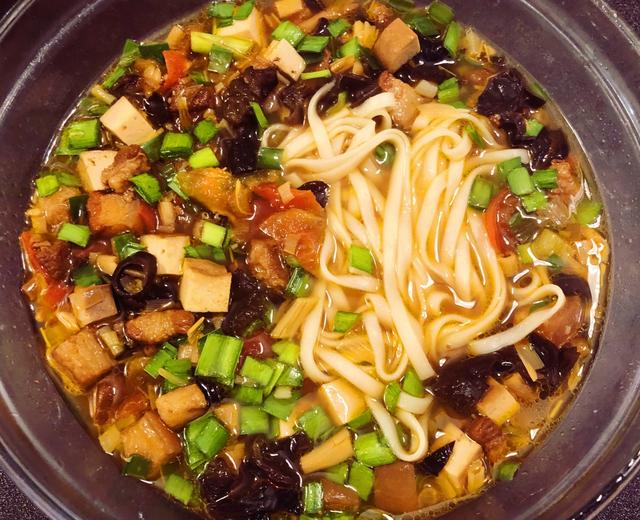
One happy day, I was enjoying my parents’ incredible homemade noodles—a dish so flavorful it never fails to brighten my mood. In Chinese, we call it 臊子面 (Sào Zi Miàn), a hearty noodle dish topped with a savory blend of minced meat, and other ingredients such as potatoes and carrots, as the sauce. As I savored each bite, a curious thought struck me: doesn’t the word 臊子 sound remarkably similar to sauce in English? It was one of those small, serendipitous moments that made me wonder about the connections between languages and how words and cultures intertwine. Could there be more to this similarity than meets the ear?
[Written by ChatGPT]
Exploring words that sound like “sauce” across diverse linguistic families reveals fascinating patterns, including phonetic similarities, potential cognates, and coincidences. Let’s break it down by linguistic families and cultural contexts.
1. Indo-European Family
Italic Branch (e.g., Latin, Romance Languages):
- Latin: salsa (salty, from sal meaning salt).
- Italian: salsa (sauce).
- French: sauce (borrowed into English directly).
- Spanish: salsa (sauce, especially for dipping or condiment).
- Portuguese: salsa (sauce, also parsley depending on context).
Germanic Branch (e.g., English, German, Dutch):
- English: sauce (from Old French).
- German: Soße (sauce).
- Dutch: saus (sauce, closely related to French).
Indic Branch (e.g., Sanskrit, Hindi):
- Sanskrit: sarṣapa (सरषप) meaning mustard, often associated with sauces or dips in ancient Indian cooking.
- Hindi: sos (सॉस, modern transliteration for “sauce,” borrowed from English).
Hellenic Branch (e.g., Greek):
- Ancient Greek: halas (ἅλας, meaning salt, linked to seasonings).
- Modern Greek: salsa (borrowed from Italian/Latin).
2. Sino-Tibetan Family
Chinese:
- Mandarin:
- 酱 (jiàng, meaning sauce or paste, as in 豆瓣酱, fermented bean paste).
- 臊子 (sàozi, minced meat topping, phonetically resembling “sauce”).
- Cantonese:
- 醬 (zoeng3, similar to jiàng in Mandarin).
- Possible Silk Road influence: While 臊子 (sàozi) predates European contact, it coincidentally aligns phonetically with “sauce” and may reflect parallel culinary concepts.
3. Afro-Asiatic Family
Semitic Branch (e.g., Arabic, Hebrew):
- Arabic: ṣalṣa (صلصة, meaning sauce, directly borrowed from Latin salsa via Mediterranean trade).
- Hebrew: rôtv (רוֹטֶב, modern word for sauce, not phonetically similar).
4. Altaic Family
Turkic Branch:
- Turkish: sos (directly borrowed from French/English).
Mongolic Branch:
- Mongolian: соустай (soustai, meaning “with sauce,” adapted from English/French influence).
5. Dravidian Family (Southern India):
- Tamil: sos (சாஸ், transliteration of “sauce”).
- Traditional words for chutneys and dips (e.g., thogayal) are not phonetically similar but serve similar functions.
6. Uralic Family
- Finnish: kastike (sauce, no phonetic similarity).
- Hungarian: szósz (phonetically similar, borrowed from Western languages).
7. Austroasiatic and Austronesian Families
Southeast Asia:
- Thai: ซอส (sot, transliteration of “sauce”).
- Vietnamese: sốt (transliteration of “sauce”).
- Local traditional terms (e.g., nước mắm for fish sauce) predate these borrowed forms.
Polynesian:
- Hawaiian: kīʻaha (traditional term for dips or liquids, no similarity).
8. Other Linguistic Families
Korean (Language Isolate):
- Korean: 소스 (sosu, transliteration of “sauce”).
Japanese (Japonic Family):
- Japanese: ソース (sōsu, transliteration from English).
Bantu Languages (Niger-Congo Family):
- Swahili: mchuzi (gravy/sauce, not phonetically related).
Why Does “Sauce” Sound Similar Across Languages?
- Latin and Romance Influence:
- The spread of Latin salsa (salty/sauce) across Europe and later globally through colonization and trade.
- Global Trade and Borrowing:
- Languages like Turkish, Arabic, and Japanese adopted the term “sauce” or its derivatives due to trade and cultural exchanges.
- Phonetic Simplicity:
- The combination of s, a/o/u, and s/z is easy to pronounce and found in many languages, increasing the likelihood of phonetic resemblance.
- Parallel Culinary Development:
- Independent evolution of words for “condiment” or “sauce” in different cultures, such as Chinese 臊子 and Latin salsa, may coincidentally sound alike due to universal culinary practices.
Connection to Silk Road?
The appearance of 臊子 in northern China does suggest a potential connection to the Silk Road, given the historical context of cultural and culinary exchange along these trade routes. While 臊子 has deep roots in Chinese culinary tradition, the possibility of Silk Road influences is worth exploring.
1. Northern China as a Silk Road Hub
- Geographic Position:
- Regions like Shaanxi and Gansu, where 臊子面 (sàozi miàn) is most popular, were key locations along the Silk Road.
- Xi’an (formerly Chang’an), the capital of Shaanxi Province, was a major starting point for the Silk Road during the Han Dynasty (206 BCE – 220 CE) and a melting pot of cultures.
- Cultural Exchange:
- The Silk Road facilitated the exchange of spices, cooking techniques, and ingredients between China, Central Asia, the Middle East, and Europe.
- Ingredients like cumin, coriander, and saffron were introduced to Chinese cuisine, often enriching northern Chinese dishes.
2. Parallels with Other Silk Road Cuisines
- Minced Meat Preparations:
- The concept of minced or ground meat seasoned with spices is common in many Silk Road cuisines:
- Kebabs and koftas in the Middle East and Central Asia.
- Dumplings like manti in Central Asia, which also use minced meat.
- These dishes could have inspired or reinforced the preparation of 臊子, a meat-based topping with seasonings.
- The concept of minced or ground meat seasoned with spices is common in many Silk Road cuisines:
- Integration with Noodles:
- Noodles themselves are believed to have spread via the Silk Road, linking Chinese, Central Asian, and Mediterranean cuisines. Pairing minced meat sauces with noodles (as in 臊子面) could reflect this culinary blending.
3. Linguistic and Culinary Connections
- The term 臊子 (sàozi) bears a phonetic resemblance to “sauce” in English, which could hint at a distant connection through cultural exchange. While this may be coincidental, it underscores the shared importance of condiments and sauces in Silk Road cuisines.
- Seasonings like soy sauce and vinegar, used in 臊子, may have been enriched by spices brought along the Silk Road, such as pepper or cinnamon.
4. Independent Development with Possible Influences
- Local Innovation:
- The preparation of minced meat toppings likely originated independently in northern China, aligning with the agricultural and dietary needs of the region.
- The use of potatoes and carrots in modern 臊子 may reflect later adaptations rather than ancient practices, as these ingredients arrived in China after the Columbian Exchange.
- Mutual Influence:
- While the core idea of 臊子 may have been indigenous, exposure to Silk Road cuisines could have introduced new spices, preparation techniques, or culinary ideas that shaped the evolution of the dish.
Conclusion
The presence of 臊子 in northern China does suggest a possible connection to the Silk Road, especially given the region’s position as a crossroads of cultural exchange. While the specific origins of 臊子 likely lie within Chinese traditions, the dish’s development was likely enriched by the culinary diversity and influences brought by centuries of Silk Road interactions.
Common 陕北 (Northern Shaanxi) Cuisine
The cuisine of Shaanbei, or Northern Shaanxi (陕北), reflects the region’s unique geography and history as a key crossroads of Chinese culture and the Silk Road. While deeply rooted in Chinese traditions, many dishes show clear influences from Central Asia, nomadic cultures, and other regions connected through trade and migration. Below is an exploration of some of the most iconic Shaanbei dishes that reveal these cultural exchanges.
1. 羊肉泡馍 (Yángròu Pào Mó) – Lamb Stew with Flatbread
- Description: A hearty dish consisting of lamb broth, crumbled flatbread, and often garnished with garlic, coriander, and chili.
- Cultural Roots:
- Likely influenced by Central Asian and Middle Eastern stews such as shurpa, which also combine lamb and bread.
- The use of flatbread echoes the naan and other breads common in Turkic and Persian cuisines.
- Silk Road Connection:
- Lamb as a staple protein reflects the dietary habits of nomadic cultures that traded along the Silk Road.
2. 饸饹面 (Hélè Miàn) – Buckwheat Noodles
- Description: Thick noodles made from buckwheat, often served with a meat-based sauce or soup.
- Cultural Roots:
- Similar to Central Asian laghman (The word “laghman” is derived from the Chinese word 拉面 (lāmiàn), meaning hand-pulled noodles.).
- Buckwheat as a staple was introduced via trade routes, reflecting dietary habits shared with nomadic cultures.
- Adaptation:
- Localized to include Shaanxi seasonings like garlic and vinegar.
3. 烤羊肉串 (Kǎo Yángròu Chuàn) – Grilled Lamb Skewers
- Description: Spicy lamb skewers seasoned with cumin and chili, a popular street food in Shaanxi.
- Cultural Roots:
- Strongly influenced by Uyghur, Turkic, and Mongolian grilling traditions.
- The use of cumin, a key spice in Central Asian cuisine, is a hallmark of Silk Road culinary influence.
4. 臊子面 (Sàozi Miàn) – Noodles with Minced Meat Sauce
- Description: A dish of thin wheat noodles topped with a savory mixture of minced meat, potatoes, carrots, and vinegar for a tangy flavor.
- Cultural Roots:
- Similar to laghman, a noodle dish popular in Central Asia, which pairs hand-pulled noodles with a meat-based sauce.
- The use of lamb and sour flavors connects it to nomadic and Turkic food traditions.
5. 肉夹馍 (Ròu Jiā Mó) – Chinese Meat Sandwich
- Description: A pita-like bread filled with tender, braised meat, often pork or lamb, seasoned with spices and stewed for hours.
- Cultural Roots:
- Shares similarities with Middle Eastern pita and meat fillings, reflecting influences from Silk Road trade.
- The method of braising meat mirrors techniques used in Central Asian and Persian cuisines.
Ingredients and Seasonings with External Roots
- Cumin (孜然, Zīrán):
- Introduced via the Silk Road, cumin is a key spice in Shaanbei lamb dishes.
- Chili Peppers:
- Arrived in China after the Columbian Exchange but quickly became integral to Northern Shaanxi cuisine.
- Vinegar (醋):
- While vinegar is a traditional Chinese ingredient, its sour profile mirrors Central Asian and Turkic flavors.
Conclusion
Northern Shaanxi’s cuisine is a flavorful testament to the region’s history as a cultural and trade hub. From lamb skewers influenced by Turkic grilling traditions to noodle dishes resembling Central Asian laghman, the food of 陕北 (Shaanbei) captures the essence of cultural blending. These dishes not only preserve local heritage but also reflect the broader historical exchanges that have shaped Chinese culinary traditions over centuries.
 UpLive.Life