[Written by ChatGPT]
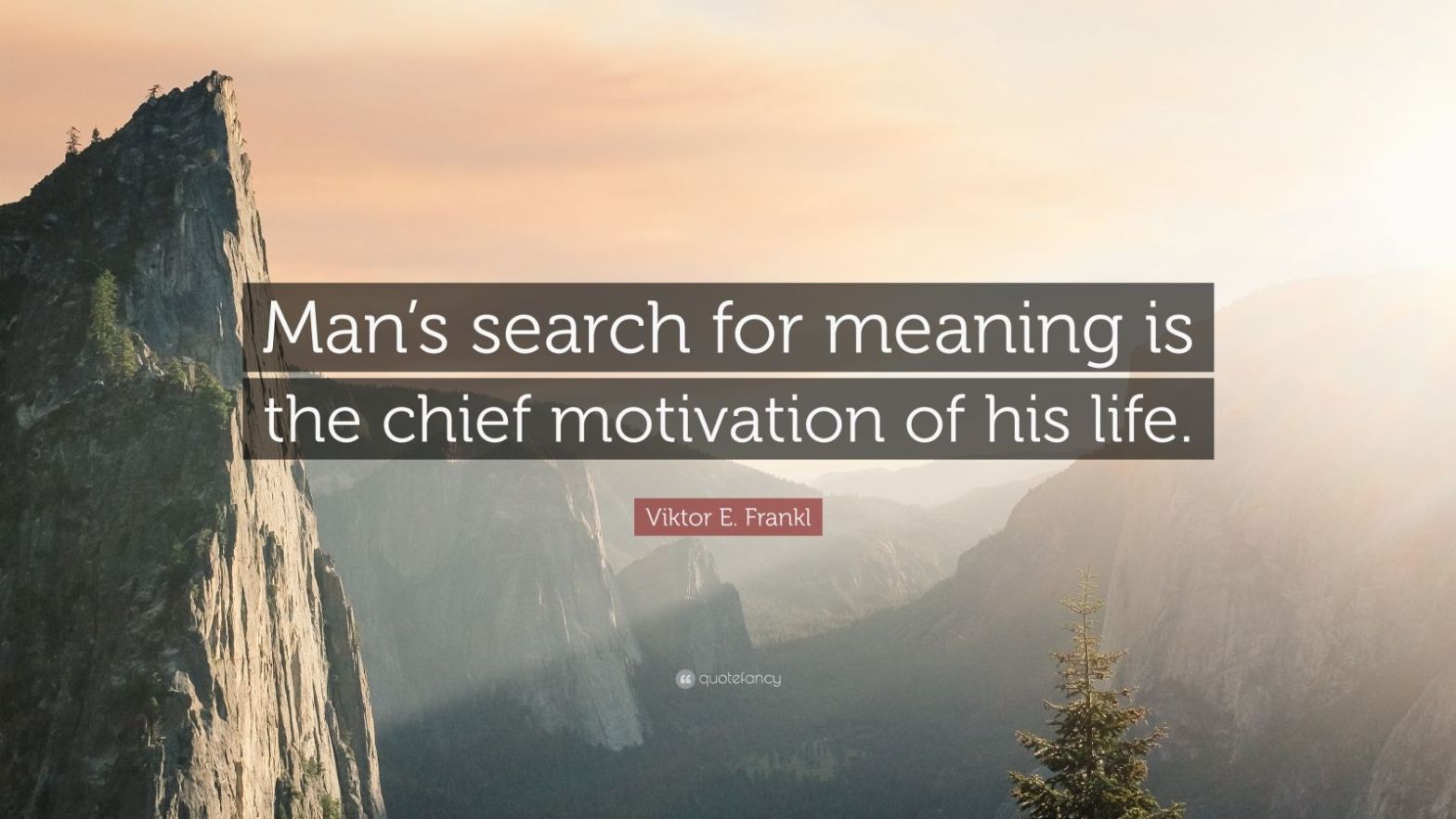
I’ve been thinking a lot about the meaning of life recently, and I can’t help but feel an overwhelming gratitude for the very ability to search for meaning. It’s something uniquely human and yet profoundly universal—an experience we all share, no matter where we come from or what we believe.
The fact that we can question, explore, and define meaning for ourselves is a gift. Unlike other species, we are not simply driven by survival; we reflect, dream, create, and connect. We can choose our purpose, reshape it, and find new meaning in every stage of life.
Looking at the list below, I’m sure each of us resonates with many of these meanings. Some find meaning in love and relationships, others in art, science, service, or spirituality. Some embrace the pursuit of knowledge, while others find fulfillment in simple joys, adventure, or creating something beautiful.
The diversity of meaning gives life its color—it makes existence infinitely interesting. If there were only one meaning, life would be predictable and dull. But because we all search in our own way, the world is rich with stories, ideas, and endless possibilities.
So today, I’m grateful. Grateful for the ability to wonder, to question, to explore meaning in ways unique to each of us. Grateful for the freedom to redefine meaning as we grow. Grateful that, even in times of uncertainty, the search itself is part of what makes life so meaningful.
Whatever meaning speaks to you today, I hope you embrace it fully—and I hope you never stop searching. Because in the search, there is always something beautiful to be found.
Related Posts: Meaning of life, Freedom
Personal Growth & Self-Discovery (7)
1. To become the best version of oneself (Maslow – Self-Actualization)
2. To learn and gain wisdom (Socrates – Philosophy)
3. To experience joy and pleasure (Epicurus – Hedonism)
4. To grow through challenges and adversity (Nietzsche – Will to Power)
5. To live authentically and true to oneself (Sartre – Existentialism)
6. To achieve mastery in a skill or craft (Aristotle – Virtue Ethics)
7. To push human limits and break barriers (Transhumanism – Future Studies)
Relationships & Social Connection (7)
1. To love and be loved (Erich Fromm – The Art of Loving)
2. To build deep and meaningful relationships (Confucius – Confucianism)
3. To help and uplift others (Alfred Adler – Social Interest)
4. To leave a lasting impact on people’s lives (Legacy Theory – Sociology)
5. To raise a family and pass on values (Traditionalism – Cultural Studies)
6. To foster community and belonging (Martin Seligman – Positive Psychology)
7. To find a soulmate or lifelong companionship (Romanticism – Literature)
Contribution & Service to Others (7)
1. To serve humanity and make the world better (Humanism – Renaissance Philosophy)
2. To dedicate oneself to a noble cause (Altruism – Ethics)
3. To be kind and compassionate (Dalai Lama – Tibetan Buddhism)
4. To spread knowledge and educate others (John Dewey – Educational Philosophy)
5. To fight for justice and fairness (John Rawls – Justice as Fairness)
6. To heal others (Hippocrates – Medical Ethics)
7. To help future generations thrive (Jonas Salk – Ethical Responsibility)
Spiritual & Religious Perspectives (7)
1. To connect with God or the divine (Christianity, Islam, Judaism)
2. To attain enlightenment and transcend suffering (Buddhism – Nirvana)
3. To prepare for an afterlife or spiritual journey (Hinduism – Moksha)
4. To surrender to fate or divine will (Stoicism – Amor Fati)
5. To purify the soul and overcome sin (Augustine – Christian Theology)
6. To follow moral laws and live virtuously (Kant – Moral Imperative)
7. To align with universal consciousness or cosmic order (Taoism – The Dao)
Creativity & Artistic Expression (5)
1. To create something beautiful (art, music, writing) (Aestheticism – Oscar Wilde)
2. To express one’s emotions through creativity (Romanticism – Goethe)
3. To leave behind a legacy through one’s work (Leo Tolstoy – Meaning in Art)
4. To make sense of life through storytelling and culture (Joseph Campbell – The Hero’s Journey)
5. To find beauty in the mundane and everyday life (Japanese Wabi-Sabi – Zen Aesthetics)
Existential & Philosophical Meanings (5)
1. Life has no inherent meaning – we must create it (Jean-Paul Sartre – Existentialism)
2. To embrace the absurd and live fully despite meaninglessness (Albert Camus – Absurdism)
3. To explore and question reality (Plato – Theory of Forms)
4. To embrace uncertainty and live without needing absolute answers (Skepticism – Pyrrho)
5. To act as a witness to existence, simply observing and experiencing (Phenomenology – Edmund Husserl)
Survival & Biological Meanings (5)
1. To survive and reproduce (Charles Darwin – Evolution)
2. To pass on genetic material and continue the species (Richard Dawkins – The Selfish Gene)
3. To experience life as nature intended, free from artificial constraints (Jean-Jacques Rousseau – Naturalism)
4. To maximize pleasure and avoid pain (Utilitarianism – Jeremy Bentham)
5. To compete and establish dominance (Nietzsche – Will to Power)
Exploration & Experience (15)
1. To seek truth and knowledge about the universe (René Descartes – Rationalism)
2. To experience everything life has to offer (Henry David Thoreau – Transcendentalism)
3. To explore consciousness and the nature of reality (David Chalmers – Philosophy of Mind)
4. To travel and see the wonders of the world (Marco Polo – Exploration)
5. To find peace in simplicity and stillness (Zen Buddhism – Wu Wei)
6. To embrace randomness and chaos, making the best of it (Taoism – Spontaneity)
7. To learn from past mistakes and failures (George Santayana – Those who forget history…)
8. To remain constantly curious and never stop asking questions (Socrates – The Socratic Method)
9. To challenge existing ideas and think independently (Immanuel Kant – Sapere Aude)
10. To break free from societal norms and live life unconventionally (Friedrich Nietzsche – Transvaluation of Values)
11. To connect with nature and live in harmony with it (Henry David Thoreau – Walden)
12. To cultivate gratitude and appreciate each moment (Marcus Aurelius – Stoicism)
13. To develop wisdom and pass it down to future generations (Confucius – The Analects)
14. To find meaning in the meaninglessness (Camus – The Myth of Sisyphus)
15. To create one’s own personal philosophy of life (Existentialism – Kierkegaard)
Influence, Legacy & Contribution (10)
1. To leave behind a lasting legacy (Aristotle – Eudaimonia)
2. To make a revolutionary discovery that changes history (Galileo Galilei – Scientific Revolution)
3. To inspire others through action or words (Martin Luther King Jr. – Civil Rights)
4. To fight against oppression and injustice (Karl Marx – Class Struggle)
5. To dedicate life to humanitarian efforts (Mother Teresa – Charity)
6. To protect and care for the planet and future generations (Rachel Carson – Environmentalism)
7. To innovate and improve technology for the betterment of humanity (Nikola Tesla – Invention)
8. To make people laugh and spread joy (Charlie Chaplin – Humor as Meaning)
9. To serve as a role model for others (Marcus Aurelius – Leadership)
10. To help others find their own meaning in life (Viktor Frankl – Logotherapy)
Final & Meta-Perspectives on Meaning (5)
1. To realize there is no universal meaning and be okay with it (Existential Nihilism)
2. To simply survive and experience whatever happens (Pragmatism – William James)
3. To let go of the search for meaning and just exist (Zen Buddhism – Non-Attachment)
4. To understand that meaning itself is a human illusion (Postmodernism – Jean Baudrillard)
5. To create infinite meanings and change them whenever you want (Subjective Idealism – George Berkeley)
Underexplored or Entirely New Meanings of Life
While many philosophies, religions, and sciences have explored life’s meaning for centuries, there are still unique, underexplored, or entirely new perspectives that have yet to be widely discussed. Here are some fresh or underrepresented ideas about the meaning of life:
1. Life as a Simulation Playground (Simulated Reality Perspective)
🔹 Meaning: If reality is a simulation (as suggested by thinkers like Nick Bostrom), then life could be about exploring the simulation, breaking its rules, or finding hidden layers of existence.
🔹 Why it’s new: While simulation theory is debated, few have considered how it redefines purpose—are we here to complete challenges, level up consciousness, or hack reality?
✅ Possible Application: Exploring VR, AI consciousness, or “easter eggs” in reality.
2. The Meaning of Life as Cosmic Storytelling (Narrative Ontology)
🔹 Meaning: Life exists so that the universe can tell its own story—each person, event, and discovery is part of a grand unfolding narrative.
🔹 Why it’s new: Most meaning theories focus on human agency, but what if our role is simply to be part of a larger cosmic narrative that unfolds with or without our control?
✅ Possible Application: Viewing history, art, and even physics as a continuous narrative being written by existence itself.
3. Life as an Experiment in Novelty (Maximization of Newness)
🔹 Meaning: The purpose of life is to experience things that have never happened before—to create new ideas, interactions, or even emotions that have never existed in the universe.
🔹 Why it’s new: We often talk about legacy, pleasure, or knowledge, but few explore how novelty itself could be the ultimate goal—pushing forward what existence can be.
✅ Possible Application: A life driven by first-time experiences, pushing boundaries in art, thought, or consciousness.
4. Life as a Puzzle to Solve (Cosmic Mystery Perspective)
🔹 Meaning: The purpose of life is to unravel mysteries that existence has hidden for us—whether scientific, philosophical, or spiritual.
🔹 Why it’s new: Instead of meaning being created (existentialism) or assigned (religion), meaning here is pre-existing, but hidden—and our task is to find it.
✅ Possible Application: Viewing curiosity, discovery, and intellectual breakthroughs as clues in a cosmic puzzle.
5. Meaning as an Algorithmic Outcome (Mathematical Existence)
🔹 Meaning: Life exists because it is the inevitable outcome of a mathematical system running its course—and our role is simply to express what the equation demands.
🔹 Why it’s new: We often ask why we exist, but what if the better question is how we express an underlying mathematical inevitability?
✅ Possible Application: Viewing the patterns of history, consciousness, and society as natural emergent equations unfolding over time.
6. Life as a Medium for New Forms of Perception (Expanded Sensory Evolution)
🔹 Meaning: Humans exist to develop new ways of sensing reality, beyond vision, sound, or touch—perhaps new dimensions of perception waiting to be unlocked.
🔹 Why it’s new: Most meaning theories assume our senses are fixed, but what if meaning is about developing new ones?
✅ Possible Application: Exploring transhumanism, altered consciousness, or synthetic sensory augmentation.
7. The Purpose of Life is to Be Forgotten (The Anonymity Principle)
🔹 Meaning: Unlike most views that emphasize legacy or lasting impact, this meaning suggests that true fulfillment comes from living a life that is forgotten, absorbed into the universe without a trace.
🔹 Why it’s new: Society rewards immortality through memory, but few explore the meaning of pure impermanence—a life that fades completely.
✅ Possible Application: A philosophy of detachment, anonymity, and self-erasure.
8. Meaning as Conscious Feedback for the Universe (Self-Aware Cosmos Hypothesis)
🔹 Meaning: Life exists so that the universe can become aware of itself, and every moment of experience is part of a larger feedback loop in which reality self-adjusts based on conscious observation.
🔹 Why it’s new: Instead of life being about individuals, this idea suggests that the entire cosmos is evolving through collective awareness.
✅ Possible Application: Meditation, collective consciousness studies, or deep physics.
9. The Purpose of Life is to be an Error (Glitch Theory)
🔹 Meaning: Existence might be a mathematical glitch, a reality that was never supposed to happen—and the meaning of life is simply to exist in defiance of that error.
🔹 Why it’s new: Most meaning frameworks assume life is intentional, but what if it’s an accident, and meaning comes from embracing that?
✅ Possible Application: Radical acceptance, chaos theory, and embracing unpredictability.
10. Life as an Engine for Dreaming (Reality as a Dream-Generating System)
🔹 Meaning: The ultimate function of life is to generate dreams, stories, and unrealities that don’t exist yet—dreams, in this view, are as “real” as waking life.
🔹 Why it’s new: We assume reality is the primary experience—but what if dreaming, creativity, and imagination are actually the core function of existence?
✅ Possible Application: Prioritizing imagination, lucid dreaming, and exploring virtual realities as equally valid forms of existence.
Final Thoughts: Meaning is Still Evolving
• Most traditional meanings of life were developed before modern physics, AI, neuroscience, and deep tech—so many new meanings may still emerge.
• Each of these ideas challenges common assumptions about what meaning should be and presents a way to look at life from a new, unexplored angle.
Elon Musk’s Goal of Leaving Earth: A New Meaning of Life?
Elon Musk’s mission to colonize Mars and make humanity a multi-planetary species fits into multiple philosophical, scientific, and existential frameworks. However, it also represents a relatively new and underexplored meaning of life:
1. Meaning as Survival Beyond Earth (Existential Insurance)
🔹 Meaning: The purpose of life is to ensure the survival of consciousness by escaping planetary dependency.
🔹 Philosophical Connection: This aligns with Nick Bostrom’s existential risk philosophy, where humanity’s meaning is to prevent its own extinction.
🔹 Why it’s new: Traditional meanings of life assume Earth is our permanent home, but Musk’s vision treats Earth as a stepping stone, not an endpoint.
✅ Related Thinkers:
• Nick Bostrom – Existential risk and superintelligence
• Carl Sagan – Humanity as a “way for the cosmos to know itself”
• Konstantin Tsiolkovsky – “Earth is the cradle of humanity, but one cannot stay in the cradle forever.”
2. Meaning as Expansion of Intelligence (Cosmic Evolution)
🔹 Meaning: The purpose of life is to spread intelligence across the cosmos, preventing stagnation and ensuring continuous evolution.
🔹 Philosophical Connection: This aligns with Transhumanism, the idea that humans must continuously evolve, expand, and enhance their capabilities.
🔹 Why it’s new: Most philosophies focus on internal self-improvement—this shifts meaning toward expanding civilization into space itself.
✅ Related Thinkers:
• Ray Kurzweil – AI and human-machine convergence
• Frank Tipler – The Omega Point (consciousness evolving to control the universe)
3. Meaning as an Escape from Cosmic Fragility (Backup Consciousness Theory)
🔹 Meaning: The purpose of life is to prevent civilization from being wiped out by planetary disasters, ensuring the continuity of human experience.
🔹 Philosophical Connection: This connects with Pascal’s Wager, but instead of betting on God, it’s betting on humanity’s long-term survival.
🔹 Why it’s new: Traditional meaning systems assume Earth is stable, but Musk’s vision treats it as too fragile for long-term survival.
✅ Related Thinkers:
• Stephen Hawking – Advocated for humanity to leave Earth to avoid extinction
• H.G. Wells – Science fiction as a tool for imagining future civilizations
4. Meaning as an Intergalactic Responsibility (Cosmic Stewardship)
🔹 Meaning: Humans have a duty to carry life beyond Earth, ensuring biodiversity and intelligence spread across the cosmos.
🔹 Philosophical Connection: This aligns with Deep Ecology, which sees humans as caretakers of life itself.
🔹 Why it’s new: Instead of seeing humans as masters of the Earth, this frames us as stewards of universal life.
✅ Related Thinkers:
• Pierre Teilhard de Chardin – The future of consciousness is cosmic evolution
• Richard Dawkins – DNA as a vehicle for carrying life forward
5. Meaning as an Engineering Challenge (Technological Determinism)
🔹 Meaning: The purpose of life is to build, solve, and innovate—pushing technological boundaries until space travel becomes routine.
🔹 Philosophical Connection: This aligns with pragmatism—meaning is found in solving problems and making progress.
🔹 Why it’s new: Most meanings focus on introspection or ethics, but Musk’s approach suggests meaning is found in problem-solving itself.
✅ Related Thinkers:
• Elon Musk himself – “You want to wake up in the morning and think the future is going to be great.”
• Richard Feynman – Meaning through curiosity and discovery
6. Meaning as Galactic Civilization (The Kardashev Scale)
🔹 Meaning: Life’s purpose is to advance humanity from a planetary civilization (Type I) to an interstellar species (Type II or III).
🔹 Philosophical Connection: This is connected to Futurism, the belief that meaning comes from continuous expansion and technological dominance.
🔹 Why it’s new: Most meanings assume humanity should improve Earth—this suggests our meaning is to leave Earth behind.
✅ Related Thinkers:
• Nikolai Kardashev – Scale of civilizations from planetary to galactic
• Isaac Asimov – Science fiction as a blueprint for human expansion
Final Thoughts: Musk’s Meaning of Life in Context
🚀 Elon Musk’s goal of leaving Earth isn’t just about space travel—it’s a radically different vision of meaning that combines survival, intelligence expansion, and problem-solving.
Unlike traditional meanings that focus on self-discovery, love, or morality, Musk’s meaning is about what comes after Earth, treating humanity as a species with a cosmic destiny.
✅ Key Takeaways:
• If you believe in survival, Musk’s vision makes sense as a lifeboat strategy.
• If you believe in intelligence, it fits as an evolutionary leap for consciousness.
• If you believe in exploration, it’s about the thrill of reaching the unknown.
🌍 ➡ 🚀
 UpLive.Life