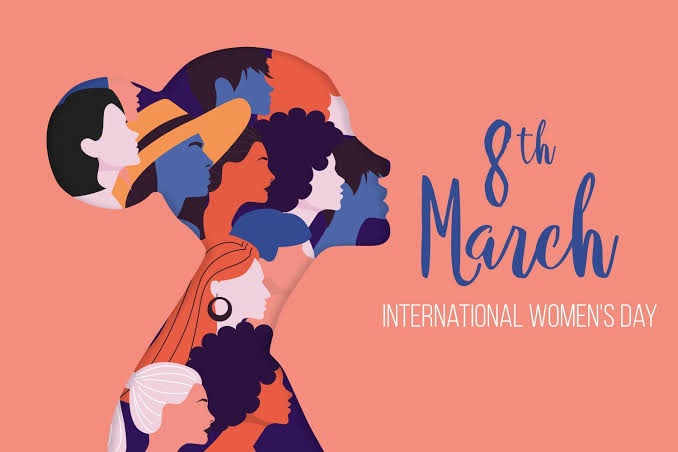
[Written with help from ChatGPT. Image credit]
There is something fitting about International Women’s Day falling in March—a month of transition, where winter lingers, and the frozen ground begins to yield, only to refreeze again. It is a time of resilience, of waiting, of knowing that change is near even if it has not fully arrived. Like the season, women throughout history have pushed through seemingly impenetrable barriers, their persistence creating fissures in systems never designed for their advancement.
The Seeds of a Movement
International Women’s Day wasn’t born in corporate boardrooms or granted by those in power—it emerged from the labor movements of the early 20th century. In 1908, 15,000 women marched through New York City demanding shorter working hours, better pay, and the right to vote. The following year, the Socialist Party of America declared the first National Woman’s Day.
The spark spread internationally in 1910 when Clara Zetkin, a German feminist and socialist, proposed an annual women’s day at the International Socialist Women’s Congress in Copenhagen. The 100 women from 17 countries unanimously approved her proposal.
March 8th became the official date in 1917, when Russian women protested on that day for “Bread and Peace” amid the devastation of World War I. Their strike marked the beginning of the Russian Revolution, leading to the abdication of Tsar Nicholas II. Within days, the provisional government granted women the right to vote.
What began as a radical call for equality has been recognized by the United Nations since 1975 and is now celebrated globally with a different theme each year. Yet, the day maintains its activist roots—a reminder that progress is not a passive process but the result of sustained collective action.
An Evening of Illumination: The Elevate International Event
Yesterday’s gathering felt like stepping into a living embodiment of this legacy. Elevate International’s event hummed with an energy that was both celebratory and purposeful—a space where achievements were honored while acknowledging the work still ahead.
At the center of it all was Solange Tuyishime, Elevate International’s CEO, resplendent in a golden gown that seemed to capture and reflect the light in the room—a visual metaphor for her role in illuminating paths for women in leadership. With Rwandan roots and a career spanning international development work across three continents, Solange founded Elevate International with a vision of creating global networks that support women’s leadership in both public and private sectors. Her background in economic development and gender equality initiatives has shaped the organization’s emphasis on practical mentorship programs and policy advocacy.
The conversation between Solange and Governor General Mary Simon unfolded with rare depth and authenticity. As the first Indigenous person to serve as Canada’s Governor General, Simon brings a perspective shaped by her Inuk heritage and decades of advocacy for Indigenous rights. Born in Kangiqsualujjuaq, Nunavik (Quebec), her career spans roles as President of Inuit Tapiriit Kanatami, Ambassador for Circumpolar Affairs, and Canada’s first Ambassador to Denmark. Her diplomatic expertise and lifelong commitment to building bridges between cultures informed her reflections on leadership in times of uncertainty.
Simon spoke about leadership as a balance of understanding, compassion, and the courage to stand one’s ground. Her words underscored the idea that leadership is not about domination or control, but about fostering space where diverse voices can shape solutions.
Equally moving was Claudette Commanda’s presence. An Algonquin Anishinabe from Kitigan Zibi Anishinabeg First Nation, Elder Commanda carries forward the wisdom of generations. Her extensive work as an educator, advocate, and executive director of the First Nations Confederacy of Cultural Education Centres has been dedicated to preserving Indigenous knowledge and promoting understanding between Indigenous and non-Indigenous communities. Currently serving as the first Indigenous Chancellor of the University of Ottawa, she embodies the importance of connecting past and future.
Commanda invited the ancestors into the gathering, calling on everyone present to remember those who came before them. As she welcomed the audience to this land that has stood since time immemorial, she acknowledged its enduring presence—unchanged by whoever may currently claim it as their own.
The evening’s dialogue was further enriched by Mitzie Hunter, CEO of the Canadian Women’s Foundation. With her background as a former Ontario Minister of Education and Minister of Advanced Education and Skills Development, as well as CEO of the Greater Toronto Civic Action Alliance, Hunter brought insights into systemic approaches to gender equity. Born in Jamaica and having experienced the challenges of immigration firsthand, her leadership at the Foundation focuses on addressing the root causes of gender-based violence, poverty, and barriers to women’s economic independence.
Hunter spoke about the Foundation’s work supporting over 2,500 programs across Canada that help women and girls move out of violence, out of poverty, and into confidence and leadership. She emphasized the long-term impact of investing in women and girls, sharing stories of transformation that resonated deeply with the audience.

Finding My Voice in the Continuum
As I sat absorbing the wisdom in that room, I felt something shifting within me—a recognition that my desire to write about the women in my family isn’t separate from this larger movement but intrinsically connected to it. Every woman who pushes against limitations creates space not just for herself but for others.
The stories of my grandmothers—who raised children during famine and cultural upheaval, navigating uncertainty with ingenuity and resilience—and my mother, who broke barriers as the first in her family to earn a university degree and later faced cancer with unwavering strength, are more than family history. They are part of a broader narrative of survival and transformation, testaments to the unseen labor and quiet perseverance that shape the world just as profoundly as those in the public eye.
They form part of the tapestry of women’s experiences that, when woven together, reveal patterns of resilience, innovation, and care that have shaped our world in ways both acknowledged and invisible. By documenting these stories, I would be participating in the essential work of making women’s contributions visible.
As I left the event, carrying the echoes of powerful voices and newly formed connections, I realized that International Women’s Day isn’t just a celebration or a call to action—it’s an invitation to find our place in an ongoing story. The journey of women’s advancement continues not just through grand gestures and policy changes but through countless individual decisions to honor truth, create beauty, and insist on justice.
 UpLive.Life