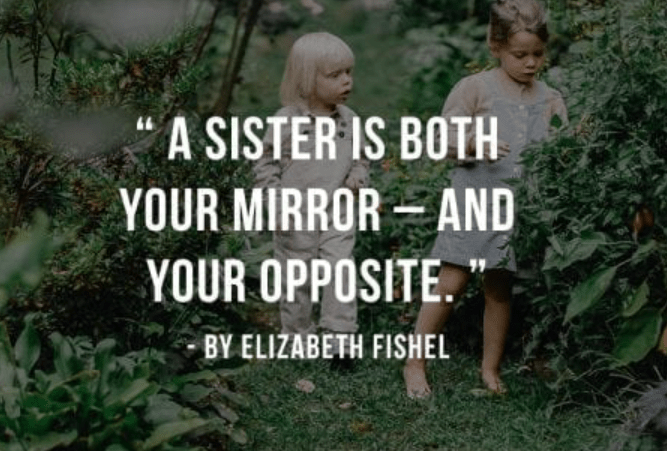
[Written by ChatGPT. Image credit]
It never fails to amaze me that siblings, who share such similar DNA, can be so drastically different in personality and preferences. One sibling may be an extroverted risk-taker, while the other prefers quiet contemplation and stability. Even physical traits, like height, metabolism, or susceptibility to certain diseases, can vary significantly despite their genetic overlap. This paradox highlights the intricate interplay between nature and nurture—how identical genes can be expressed differently based on environmental factors, epigenetic modifications, and unique life experiences. From birth order effects to differences in peer influences, countless variables shape how each sibling’s genetic blueprint is realized in the real world.
Perhaps sociogenomics, the study of how genetics interact with social environments, holds the answer. While genetics provide the foundation, external factors such as parenting styles, socioeconomic conditions, and even cultural context influence gene expression and behavior. Recent research in this field suggests that certain genetic predispositions only manifest under specific environmental triggers. For example, a child with a genetic tendency for high intelligence may thrive in an enriched learning environment but fail to reach their potential in an unstimulating one. Likewise, genetic traits linked to mental health conditions may remain dormant unless activated by stress or trauma. By examining the intersection of DNA and social experience, sociogenomics sheds light on why siblings can diverge so sharply despite sharing much of the same genetic code.
Sociogenomics explores how genetic “recipes” interact with environmental “kitchens” to shape human traits, behaviors, and life outcomes. It incorporates genomics, psychology, sociology, and epigenetics to understand how genes and social environments work together.
1. The Recipe (Genetics & Polygenic Scores)
Your DNA is like a cookbook, containing recipes for different traits—intelligence, personality, height, risk-taking, etc. However, these recipes are not single instructions but a combination of many genetic variants working together.
• Polygenic Scores (PGS) = The Recipe’s Ingredients List
• Instead of one gene determining intelligence or personality, thousands of small genetic variations each contribute a tiny effect.
• Scientists calculate polygenic scores (PGS) by analyzing how these variants predict complex traits.
• Example: If someone has a high polygenic score for educational attainment, it’s like a recipe favoring “success-friendly” ingredients (memory, focus, motivation).
• But a good recipe still needs the right kitchen conditions to turn out well.
2. The Kitchen (Social Environment & Gene-Environment Interactions)
Even if you have a world-class recipe, the quality of the meal depends on the kitchen where it’s prepared. Social environments influence whether genetic potential is realized, suppressed, or even altered.
• Socioeconomic Status = Kitchen Equipment & Ingredients
• A wealthy, stable household provides high-quality tools (education, nutrition, mental stimulation), enabling someone to fully utilize their genetic recipe.
• A low-resource environment (poverty, neglect, chronic stress) may lack ingredients or force substitutions, making it harder to follow the recipe correctly.
• Example: A child with high genetic potential for intelligence may not reach their full ability if raised in a stressful, underfunded environment.
• Parental Influence & Education = Cooking Skills
• A good chef (supportive parents, quality education) can still make a decent meal with subpar ingredients.
• A child with average genetic potential but great schooling may outperform a child with a higher genetic score who lacks educational opportunities.
• Trauma & Stress = Kitchen Disruptions
• Just as a power outage or fire can ruin a meal, traumatic experiences or chronic stress can override genetic advantages.
• Epigenetics (changes in gene expression due to environment) acts like a kitchen’s conditions affecting the recipe’s execution.
3. Gene-Environment Interaction (Cooking Process & Epigenetics)
Even if two people have identical recipes (genetic predispositions), their meals (life outcomes) can turn out very differently based on how they’re cooked (life experiences and epigenetics).
• Epigenetics = Cooking Techniques & Temperature
• Certain genes can be “turned on” or “off” depending on environmental influences, just like a recipe can change based on cooking methods.
• Example: Malnutrition in childhood can alter genetic expression related to metabolism, leading to lifelong health effects, even if someone had genes for a fast metabolism.
• Early life stress can activate genes related to cortisol (stress hormone), making someone more prone to anxiety or depression later in life.
• Social Mobility = Adapting the Recipe
• Some people modify their cooking style (life strategies) to compensate for early disadvantages.
• Example: A person who grows up in poverty but gains access to higher education may still achieve success, despite initial obstacles.
4. Evolution & Cultural Influence (Culinary Trends Over Time)
Sociogenomics also looks at how genetics and society evolve together, just like how food cultures change over time.
• Cultural Evolution = Changing Cooking Preferences
• Just as food preferences shift, society influences which traits are beneficial.
• Example: In past centuries, physical strength was more valuable, but today, cognitive skills are more strongly linked to success—so genetic factors related to intelligence may be under stronger selection.
• Intergenerational Effects = Family Cooking Traditions
• Just as families pass down recipes, genetic and social advantages are inherited together.
• If a family has both a high genetic predisposition for education and a tradition of prioritizing learning, these effects multiply across generations.
Final Takeaways
• Genes provide the recipe, but the environment is the kitchen where it’s cooked.
• Polygenic scores help predict traits, but social conditions determine whether those traits fully develop.
• Epigenetics shows that genes can be “reprogrammed” based on life experiences.
• Social mobility is like adapting the recipe—some people overcome bad conditions, while others struggle despite good genetic potential.
• Sociogenomics helps explain why some people succeed or struggle despite similar genetic backgrounds.
Why Are Siblings So Different? A Sociogenomic Perspective
Even though siblings share, on average, 50% of their genetic material, they often have very different personalities, interests, and life outcomes. This can be explained through a combination of genetics, environment, and random variation—which aligns well with the recipe & kitchen analogy from sociogenomics.
1. Different Genetic Recipes (Genetic Recombination & Polygenic Inheritance)
Each sibling inherits a unique combination of genes from their parents due to genetic recombination.
• Not Clones: Even full siblings don’t inherit the exact same 50% of DNA from each parent—one might inherit more genes related to intelligence, another more related to athleticism.
• Polygenic Traits: Traits like intelligence, personality, and mental health are influenced by thousands of genes, so even small differences in inheritance can lead to big differences in outcomes.
• Example: Imagine parents provide a cookbook of genetic traits—each sibling gets a mix of different recipes, leading to different “dishes” (traits).
This explains why some siblings might be more similar (if they inherit many of the same polygenic influences) or vastly different (if their genetic combinations diverge).
2. Different Kitchens (Unequal Environments & Birth Order Effects)
Even if two people have similar genetic potential, their environment (family dynamics, social experiences, birth order) shapes how their traits develop.
• Birth Order & Parental Attention
• The firstborn might be raised in a home with 100% parental attention, while later children share resources.
• Parents tend to be more protective and structured with their first child but more relaxed and permissive with younger children.
• This can influence personality—oldest siblings often develop leadership and conscientiousness, while younger siblings may be more rebellious or social.
• Different Social & Economic Contexts
• A sibling born during financial stability may have better resources (education, nutrition), while one born during hardship may experience more stress and fewer opportunities.
• Cultural shifts (changing technology, parenting styles, or societal values) also mean that two siblings might grow up in slightly different “kitchens.”
3. Epigenetics & Developmental Differences (Gene-Environment Interaction)
Genes are not static—they can be turned on or off based on experiences, a concept known as epigenetics.
• Stress & Trauma Can Alter Gene Expression
• A sibling who experiences early-life stress (e.g., parental divorce, bullying) may develop different stress responses than a sibling who did not.
• These experiences can activate or suppress genes related to mental health, emotional resilience, and risk-taking behavior.
• Nutrition & Health Differences
• Early childhood nutrition can influence metabolism, height, and even cognitive development.
• Example: If one sibling was breastfed and the other wasn’t, or if one had frequent illnesses while the other stayed healthy, their developmental paths might differ.
4. Randomness & Chance (Non-Shared Environment)
Even if siblings share genetics and a household, they don’t experience life exactly the same way.
• Friends & Peer Groups
• One sibling might fall into a high-achieving friend group, while another bonds with more rebellious peers.
• These social influences shape personality and life choices.
• Teachers & Mentors
• A great teacher or coach can inspire one sibling to excel, while another sibling may never encounter that opportunity.
• Random experiences—like a chance internship or a childhood injury—can set siblings on very different life paths.
• Personal Interpretation of Experiences
• Two siblings can go through the same family event (e.g., parental divorce, financial struggles) but interpret it differently, leading to different emotional and psychological outcomes.
Final Takeaways: Why Siblings Are So Different
1. Different Genetic Combinations – Siblings share only 50% of their genes, and even slight variations in polygenic traits can lead to major differences.
2. Unique Environmental Experiences – Birth order, parental attention, and economic conditions create different “kitchens” for each sibling.
3. Epigenetics Modifies Gene Expression – Early experiences can turn genes on or off, influencing personality, intelligence, and mental health.
4. Non-Shared Environment (Randomness & Chance) – Friends, mentors, and random life events shape each sibling in unpredictable ways.
Big Picture:
Siblings are like two different dishes made from similar but not identical recipes, cooked in the same but slightly changing kitchen, using different ingredients, techniques, and timing. Even with the same parents and household, they develop into unique individuals based on a mix of genetic differences, environmental influences, and sheer randomness.
 UpLive.Life