[Written by ChatGPT]
Use your brain’s blind spots like a pro—or be played by them
When you learn about cognitive biases, it feels like getting your hands on the instruction manual for human behavior. These mental shortcuts aren’t just quirks—they’re tools. Especially for enterprising minds.
Let’s explore the ones that start with B and break down how they show up in the real world—and how you can use or protect against them.
Related Posts: Cognitive Biases that start with A, Thinking Fast and Slow, Applications
1. Bandwagon Effect
What it is:
We tend to do (or believe) things just because others are doing it. Popularity becomes a shortcut for credibility.
Examples:
- Magic: When the crowd gasps, you feel compelled to be amazed too—even if you missed the trick.
- Marketing: “Best-seller” or “Over 1 million sold!” pushes people to join in.
- Investing: People pile into hot stocks or crypto just because everyone else is.
- Decisions: You agree with a group’s opinion even when you had doubts.
Exploit It:
Build social proof: reviews, user counts, influencer shoutouts. Make people feel like everyone’s already in.
2. Barnum Effect
What it is:
We believe vague, general statements—especially when they feel personal. (This is why horoscopes work.)
Examples:
- Magic: Cold reading tricks (“You’re a sensitive person… but also strong”) hook people emotionally.
- Marketing: “This product is perfect for anyone who’s ever felt stuck.” Sound familiar?
- Investing: Advisors use flattering language to sound like they get you.
- Decisions: You see yourself in anything tailored just right.
Exploit It:
Craft copy that feels hyper-personal, but broadly appealing. Use words like “you’re the type of person who…”
3. Base Rate Fallacy
What it is:
We ignore general statistics (base rates) in favor of vivid, specific information.
Examples:
- Magic: One shocking effect makes you forget all logic and probability.
- Marketing: “9 out of 10 dentists recommend” sounds great—even if the sample was tiny.
- Investing: We chase hype stories, forgetting broader market trends.
- Decisions: You hear one horror story and assume it’s the norm.
Exploit It:
Tell compelling stories that beat dry stats. Frame your wins with high-impact narratives, even if they’re exceptions.
4. Belief Perseverance (a.k.a. the Backfire Effect)
What it is:
Even when presented with contradictory evidence, we tend to cling to our existing beliefs.
Examples:
- Magic: You’ll try to justify the trick rather than admit it fooled you.
- Marketing: Loyal fans defend brands even after scandals.
- Investing: Investors hold on to failing stocks out of pride.
- Decisions: “That’s just the way I’ve always done it” becomes a trap.
Exploit It:
Position your brand or idea as a belief—not just a product. Beliefs are harder to shake, and people will defend their choice post-purchase.
5. Benjamin Franklin Effect
What it is:
We like people more after we do them a favor—not the other way around.
Examples:
- Magic: Getting someone to help with a trick makes them feel bonded.
- Marketing: Ask for small user input: feedback, voting, or beta testing.
- Investing: Angel investors feel more attached after helping early.
- Decisions: Asking for advice makes others more invested in your success.
Exploit It:
Invite micro-contributions. Ask your audience to vote, share, or comment—it builds loyalty through effort.
6. Bikeshedding (a.k.a. Parkinson’s Law of Triviality)
What it is:
We spend more time on trivial issues than on complex ones because they’re easier to understand.
Examples:
- Magic: The magician draws focus to a flashy prop while doing the trick elsewhere.
- Marketing: Teams argue over button colors while ignoring the broken funnel.
- Investing: Investors obsess over headlines, ignoring macroeconomic data.
- Decisions: Debating fonts on a proposal instead of whether the idea is sound.
Exploit It:
Redirect attention to harmless details while you work on the big stuff. Or, highlight a clear, easy win to distract from a complex pitch.
7. Bottom-Dollar Effect
What it is:
When we’re low on money, we get extra irritated at spending—even if the product is fine.
Examples:
- Magic: People may enjoy less when they feel the ticket wasn’t worth it.
- Marketing: Poor customer satisfaction spikes if people feel broke after buying.
- Investing: Regret kicks in when funds dip below comfort zones.
- Decisions: Buyers may blame your product for their own tight budget.
Exploit It (ethically):
Be extra generous with customers who’ve spent their last bit—freebies, kindness, or upgrades can turn resentment into loyalty.
8. Bounded Rationality
What it is:
We make decisions that are “good enough,” not optimal, because our brain has limited resources.
Examples:
- Magic: You fill in the gaps with assumptions—you can’t process it all.
- Marketing: People skim, not research. They choose the first product that fits.
- Investing: Portfolio diversification often stops at “some stocks, some bonds.”
- Decisions: People don’t calculate every pro and con—they just go with what feels okay.
Exploit It:
Make default decisions easier. Offer curated plans, starter kits, or clear “best choice” labels to guide overwhelmed customers.
9. Bundling Bias
What it is:
We value items less when they’re bundled—even if the value is the same or higher.
Examples:
- Magic: Giving multiple reveals at once lowers perceived amazement.
- Marketing: Bundled products often feel “cheaper,” even if more valuable.
- Investing: Advisory packages feel bloated vs. single services.
- Decisions: A buffet can feel less impressive than a la carte dining.
Exploit It:
Unbundle selectively. Sell benefits individually first, then offer a bundle as an upgrade—this boosts perceived value.
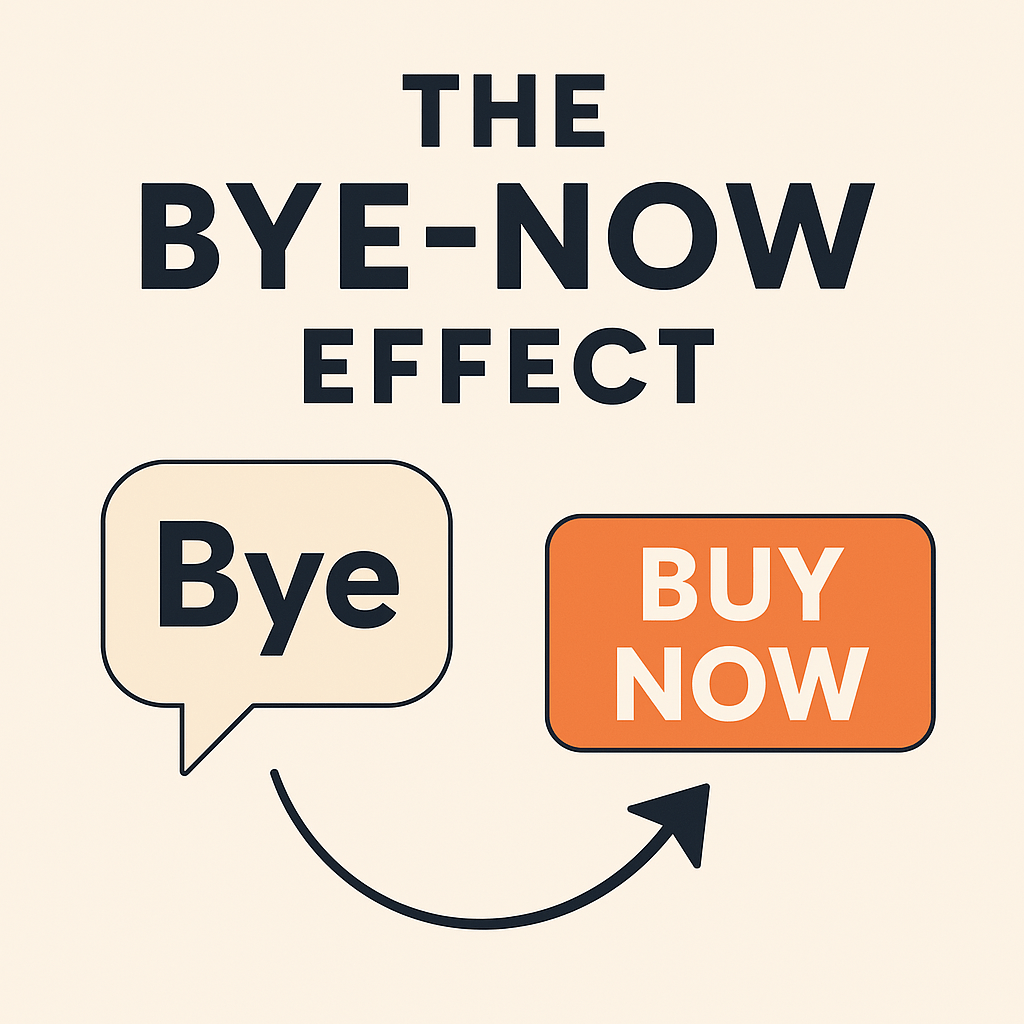
10. Bye-Now Effect
What it is: The Bye-Now Effect occurs when encountering words like “bye” subconsciously primes individuals to think of their homophone “buy,” leading to an increased likelihood of making purchases. This phenomenon demonstrates how subtle linguistic cues can influence our decisions without conscious awareness.
Examples:
- Magic: A magician concluding a performance with a farewell like “bye-bye” might, albeit subtly, prime the audience towards purchasing related merchandise or souvenirs.
- Marketing: Advertisements incorporating phrases such as “Say goodbye to your old phone!” can unconsciously encourage consumers to consider buying a new one.
- Investing: Financial advisors might use language like “Don’t let this opportunity pass you by” to subtly nudge clients towards making investment decisions.
- Everyday Decisions: Reading a travel blog that ends with “bye-bye” can, under certain conditions, increase a reader’s willingness to spend on travel-related services.
How to leverage it: Incorporate homophonic words strategically in communication to subtly prime desired behaviors. For instance, using farewells or terms that sound like “buy” in marketing materials can unconsciously encourage purchasing decisions. However, it’s crucial to employ this tactic ethically, ensuring that consumers are not manipulated into making unintended purchases.
Conclusion: Use Bias, Don’t Be Biased
Understanding these “B” biases isn’t just intellectual—it’s tactical. As an entrepreneur, creator, investor, or magician (literal or metaphorical), knowing how people think helps you design smarter offers, close better deals, and influence ethically.
If you don’t learn how these work, you’re a target. If you do, you become a strategist.
 UpLive.Life
One thought on “Beyond Bias: The “B” List That Builds or Breaks Success”