[Written by ChatGPT]
I watched No Other Land with tears that didn’t announce themselves. They simply arrived—quietly, like dust settling on an old photograph. The kind of tears that don’t need explanation, because some truths bypass the brain and go straight to the soul.
This land—this heartbreaking, sacred, contested stretch of earth—feels like the exception to everything I’ve ever believed about time. Nothing in life lasts forever, they say. Cities fall. Empires crumble. People move on. But this conflict—this grinding, generational, soul-wrenching struggle—seems eternal. It’s a wound that refuses to scar over. It pulses through the soil, through olive groves and checkpoints, through lullabies and sirens.
And yet, in the midst of despair, No Other Land gave me something I didn’t expect: a pulse of hope.
A Brief Summary of the Film
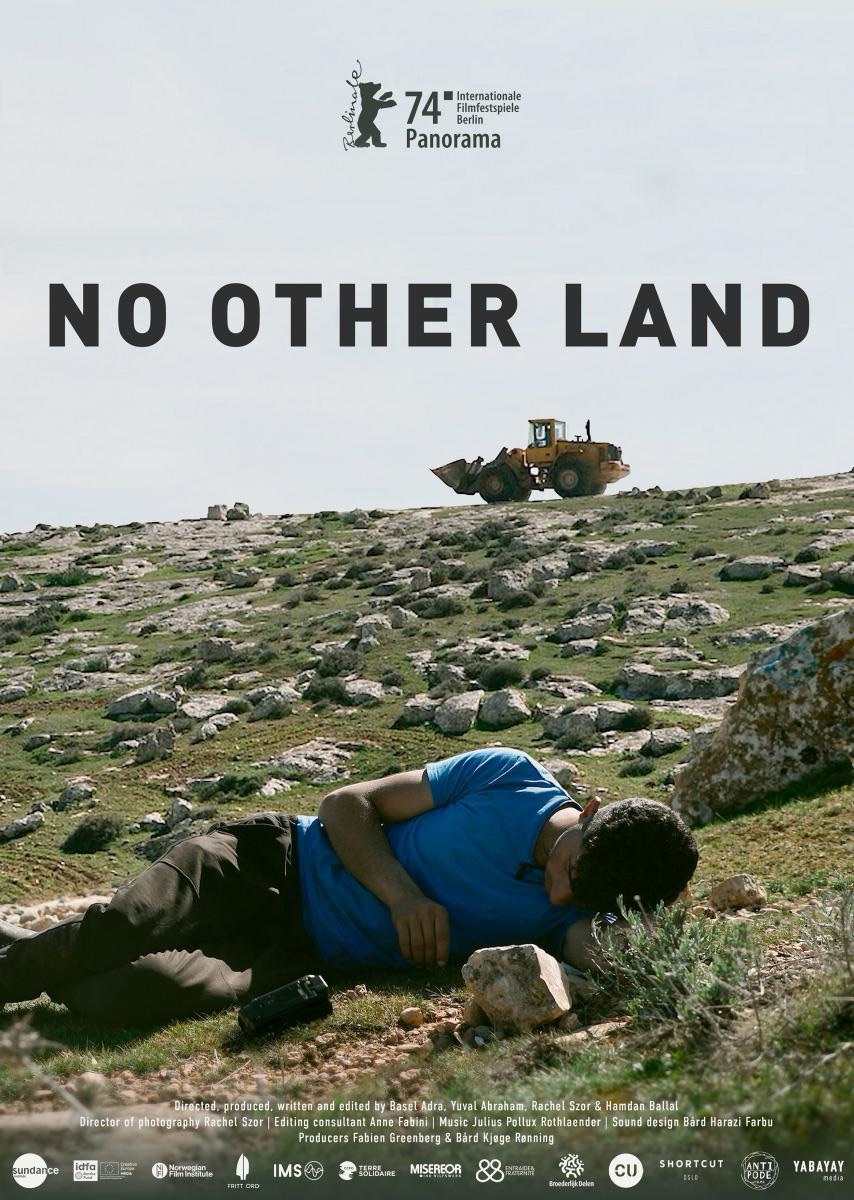
No Other Land is a powerful and intimate documentary born not from a film studio, but from the raw urgency of life under occupation. Directed collaboratively by Basel Adra, a young Palestinian activist and filmmaker from Masafer Yatta, and Yuval Abraham, an Israeli journalist, the film documents the daily reality of Palestinian displacement in the South Hebron Hills of the West Bank.
The film follows Basel over several years as he witnesses the demolition of homes, the forced expulsion of families, and the slow erosion of a way of life. With a camera in hand and a quiver of quiet rage, he captures not just buildings falling but the unbearable stillness that follows—the silence of erasure.
What makes this film extraordinary isn’t just what it shows, but who shows it. Yuval, an Israeli who could be shielded from this world, chooses instead to stand beside Basel. The two form a rare and radical bond, built not on agreement but on shared humanity. In one unforgettable scene, they speak candidly about their friendship, their pain, their guilt. It’s uncomfortable. It’s beautiful. It’s real.
The Human Cost of Occupation
There is a moment in the film when a family’s home is destroyed—again. Not by warplanes or foreign invaders, but by bulldozers, paperwork, and indifference. You watch a child stare at rubble, clutching a piece of furniture like it’s the only anchor left in a world that keeps shifting beneath his feet.
Occupation is often framed in geopolitics. But here, it is visceral. It is children robbed of sleep, mothers robbed of safety, entire generations robbed of a future that feels theirs by birthright.
What struck me most was not just the physical demolition of homes—but the emotional demolition of hope. And yet, paradoxically, hope kept rising from the dust.
What Will Effect Real Change Within a Generation?
This is the question that lingers like smoke after the credits roll. Is peace even possible? Not just a ceasefire. Not just the absence of war—but a genuine reckoning, reconciliation, rebuilding?
Here’s what might make it possible:
1. Radically Human Storytelling
Change begins when we see. Really see. Not statistics. Not slogans. Faces. Families. Friendships.
• Documentaries like No Other Land must be seen—not by the already converted, but by the indifferent, the cynical, the comfortably removed.
• Storytelling must become activism. Not propaganda. Not erasure. But truth—messy, nuanced, deeply human truth.
2. A Global Youth Movement That Refuses to Inherit Hatred
Basel and Yuval are not anomalies. There are young people on both sides—tired of their grandparents’ pain, their parents’ silence, and their leaders’ failures—who want something else.
• We must nurture these voices. Fund them. Protect them.
• A new generation must say: We are not our ancestors’ trauma. We are the authors of something new.
3. Education Rooted in Empathy
• Teach Israeli children about the Nakba.
• Teach Palestinian children about Jewish trauma.
• Create schools where both narratives live side by side—because truth is not zero-sum.
• Invest in empathy the way nations invest in defense. Build peace curriculums. Normalize grief for the “other.”
4. Economic and Political Justice
• Dismantle the systems of occupation—legally, politically, economically.
• Hold states and companies accountable for profiteering off displacement and despair.
• Elevate leaders who prioritize human rights over hardline ideologies.
5. Shared Sovereignty or Shared Vision
Whether through two states, one democratic state, or a confederation—the solution must ensure:
• Equal rights for all.
• Security for both peoples.
• Dignity for every child—regardless of which side of the wall they’re born on.
Empathy: Our Evolutionary Superpower
Empathy is not weakness. It’s not a luxury. It’s what has allowed us, as a species, to survive—to build families, cities, civilizations.
And yet, somewhere along the way, we forgot. We built systems that reward conquest over compassion, victory over vulnerability. But No Other Land is a reminder: we are still capable of seeing each other. Of choosing not revenge, but repair.
Empathy is what lifts us above the past. It’s what allows us to say, “You hurt me. But I see you.”
And that sentence, whispered across checkpoints and memory, might just be the beginning of everything new.
Final Thoughts
After the film ended, I sat still for a long time. The credits rolled. The world kept turning. Somewhere, another house was being demolished. Somewhere else, someone was falling in love. The absurdity of it all—the injustice and the joy, side by side—was too much and also exactly right.
We may not change the whole world in a generation. But we can refuse to pass down the hate, the lies, the erasures.
We can listen. We can build. We can remember that even the Berlin Wall—once unthinkable, immovable—came down because people believed it could.
There is no other land. But there is another way.
And it starts with us.
 UpLive.Life