[Written by ChatGPT]
Related Posts: The Quest for a Good Life, Ikigai, Meaning of Life – Adler, Dysmorphia
🌟 Introduction: A Path Illuminated by Research
What does it really mean to live a good life? For decades, philosophers, poets, and psychologists have pondered this. But rather than speculate, The Harvard Study of Adult Development set out to observe it in real time—starting in 1938 and continuing today.
This unprecedented longitudinal study followed two original groups:
- Harvard undergraduates from privileged backgrounds (including President John F. Kennedy),
- And boys from inner-city Boston, many from troubled, impoverished homes.
Later, their wives, children, and grandchildren were added. Across 85+ years, researchers collected medical records, interviews, home visits, and self-reports—tracking everything from career choices to relationship satisfaction and mental health.
The resounding insight? Strong relationships are the single greatest predictor of health, happiness, and longevity—more than genes, IQ, cholesterol levels, or socioeconomic status.
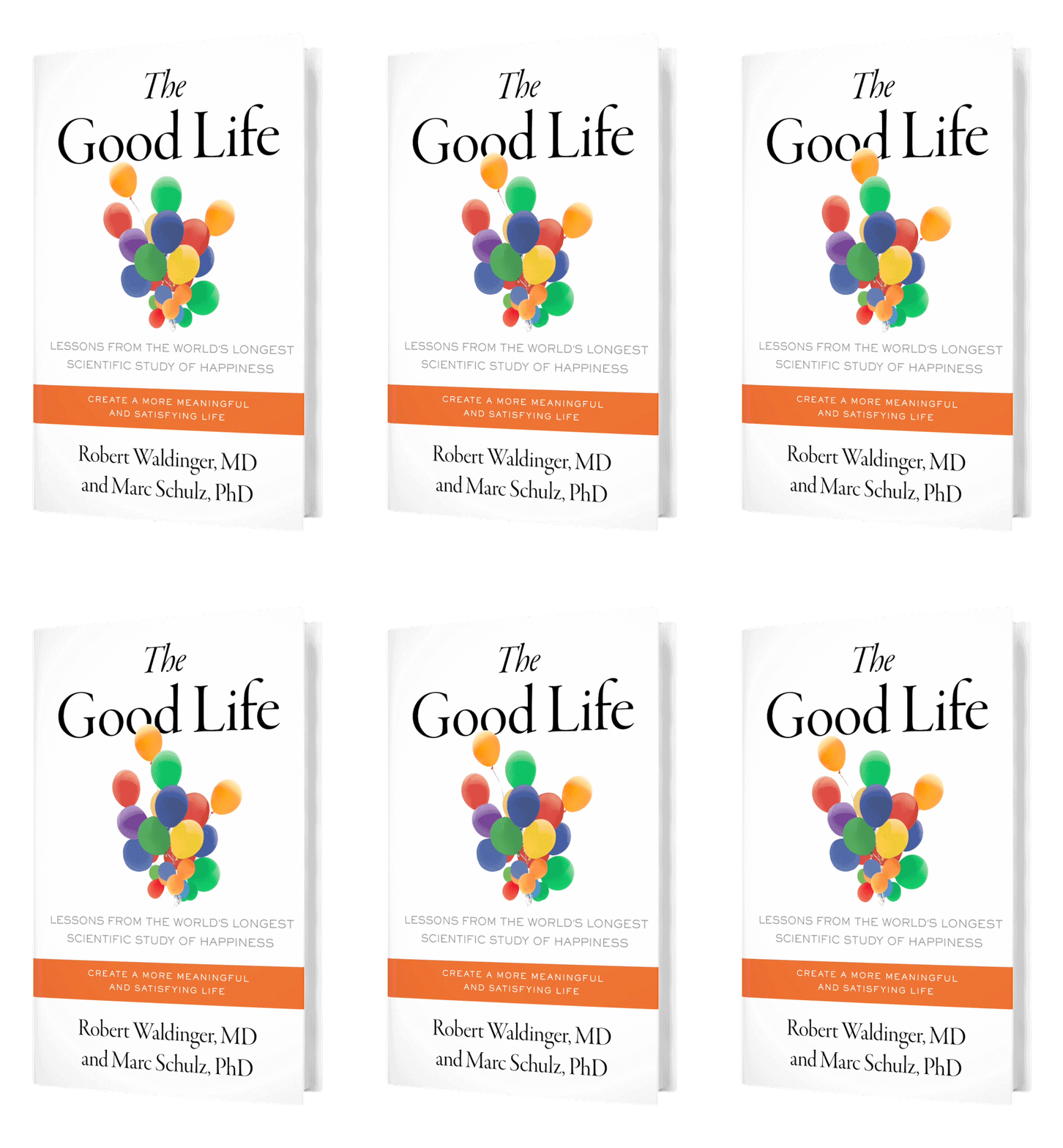
Authors Dr. Robert Waldinger and Dr. Marc Schulz—current leaders of the study—bring this rich data to life in The Good Life, transforming scientific findings into a guide for meaningfully navigating life.
Chapter 1: What Makes a Good Life?
The central insight is profound: Happiness isn’t something you win or find—it’s something you build. And the bricks are made of meaningful relationships. The book defines a “good life” not as the absence of struggle, but as one filled with belonging, purpose, and care.
“Good relationships keep us healthier and happier—period.”
🛠️ Try this: Ask yourself, “Who do I truly feel seen by?” and “Am I making time for them?” If the answer is “not enough,” that’s a signal to realign.
Chapter 2: Why Relationships Matter
Loneliness doesn’t just make us feel bad—it harms our health. The study found that people who were more socially connected to family, friends, and community were happier, physically healthier, and lived longer than those who were less connected.
And it’s not just about having people around—it’s about the quality of those relationships.
🛠️ Try this: Reach out today to someone you trust. You don’t need a reason—just a “thinking of you” message. Small moments accumulate.
Chapter 3: Relationships on the Winding Road of Life
Relationships don’t stay static. Each life stage brings its own shifts:
- In your 20s, friendships often flourish and exploration reigns.
- In your 30s–50s, relationships compete with work, caregiving, and ambition.
- In older age, reflection, forgiveness, and reconnection become more important.
Relationships are living systems. They stretch, bend, and sometimes break—but they can also be repaired.
🛠️ Try this: Identify the life stage you’re in. Then ask: “What kind of connection matters most to me right now?”
Chapter 4: Social Fitness: Keeping Relationships in Good Shape
We monitor our physical health. Why not our social health?
The authors introduce the idea of social fitness—an intentional practice of maintaining and improving our relationships. It’s not passive. It’s like physical exercise: you improve by showing up regularly.
📊 Life by the Numbers:
If you only see your parents or close friends once a year, and they’re in their 60s or 70s? That could mean you only have 30–40 more times left together. That number can hit hard—but it’s a call to action.
🛠️ Try this: Make a list of five people you care about. Ask yourself, “When did I last connect with them?” Then, schedule your next interaction.
Chapter 5: Attention to Relationships: Your Best Investment
Modern life equates value with time—but attention is more scarce and powerful. The authors make it clear: presence trumps presence. You could spend three hours with someone and not be emotionally available—or five minutes of full attention could change the tone of the entire day.
It’s not just about “fitting people in.” It’s about effort, intention, and genuine emotional availability.
🛠️ Try this: Put your phone down during a conversation. Ask a thoughtful question and really listen—without planning your reply. Show your care through attention, not just time.
Chapter 6: Facing the Music: Adapting to Challenges in Your Relationships
Disagreements and misunderstandings are inevitable. What matters is how we respond.
Waldinger and Schulz present the WISER model, a practical framework for navigating conflict:
- Watch: Pay attention to what’s happening in the moment.
- Interpret: Reflect on what it means—without assumptions.
- Select: Choose the best course of action.
- Engage: Respond with intention.
- Reflect: Afterward, ask what worked or didn’t.
This model emphasizes pause and perspective—not just reactivity.
🛠️ Try this: In your next tense moment, pause and go through the WISER steps. You may be surprised how much clarity you gain by simply slowing down.
Chapter 7: The Person Beside You: How Intimate Relationships Shape Our Lives
Romantic partners play a pivotal role in our emotional ecosystem—but our modern expectations often place too much weight on one person. We expect a spouse to be:
- A financial partner
- Our best friend
- Therapist
- Cheerleader
- Travel buddy
- Soul mate
- Comedian
- Motivator
That’s a tall (and often unfair) order. The truth is: no one person can make us whole. It’s our responsibility to nourish ourselves and to cultivate a diverse emotional ecosystem.
🛠️ Try this: Have an open dialogue with your partner: “What expectations do we place on each other?” Consider whether some needs could be met through other friendships or interests.
Chapter 8: Family Matters
Family relationships can be our most grounding—and our most complicated. Our early relationships with parents and siblings often shape our emotional patterns for life. But even if we grew up with distance, conflict, or trauma, we are not doomed to repeat those dynamics.
The Harvard Study found that people who reconciled with family—by reframing past hurts or building new patterns in adulthood—experienced more peace and emotional well-being in later life.
What matters isn’t just where we came from, but how we work with where we are now.
🛠️ Try this: Start small. Call a sibling. Write a note to a parent—even if it’s just to share a memory. If a family relationship feels broken, ask: “What would healing—even a small step—look like?”
Chapter 9: The Good Life at Work: Investing in Connections
We spend much of our adult lives at work. So it’s no surprise that workplace relationships deeply affect our mental health. But while performance and pay often take center stage, the study found that people with close work relationships reported far more job satisfaction—and even better health outcomes.
Work friendships can act as a buffer against burnout and isolation. And for those who retire, a drop in connection can feel like a loss of identity—unless replaced with meaningful roles elsewhere.
🛠️ Try this: Strike up a new conversation with someone outside your usual circle at work. Or, if you’re no longer working, consider volunteering, mentoring, or taking a course—anywhere people gather with purpose.
Chapter 10: All Friends Have Benefits
Friendship, especially in adulthood, often gets neglected. But the study found that people who actively maintained friendships lived longer and were more satisfied than those who let their social lives dwindle.
Interestingly, not only do close friends matter, but “weak ties” (the barista, the gym regular, your neighbor) also boost mood, identity, and even opportunities. These casual connections help us feel part of a community.
And yet, friendships require initiative. Unlike family or work relationships, there’s no structural reason to stay in touch—we have to choose it.
🛠️ Try this: Reach out to a friend you’ve lost touch with. Set a recurring lunch date or phone call. And say yes more often—to walks, coffees, or “just catching up.”
Chapter 11: It’s Never Too Late to Be Happy
One of the most hopeful messages in The Good Life is that it’s never too late to invest in the relationships that matter.
Even participants in their 70s, 80s, and 90s reported growth, joy, and new beginnings—in friendships, romances, even in self-knowledge. Aging doesn’t limit us from meaning—it sharpens our understanding of what truly matters.
So if you feel like you’ve “missed your chance,” the data says otherwise.
“The good life is built with good relationships. And the best time to start building—or rebuilding—is now.”
🛠️ Try this: Think of one relationship you’d love to revive. Reach out today. Or think of one area—partner, friend, family, community—and commit to a small act every week. The effort compounds.
💬 Final Thoughts: Choose Your Life Through Your Relationships
The Good Life doesn’t promise a perfect life—but it shows us a possible one. A life filled with joy, struggle, and change—but always centered on meaningful human connection.
It isn’t about having a large social circle or perfect harmony—it’s about:
- Noticing who matters
- Showing up more often
- Listening more deeply
- Making room for love, even in imperfection
And perhaps most importantly: believing that change is always possible, no matter where you start from.
 UpLive.Life
One thought on “The Good Life: How the Longest Study on Happiness Reveals the Secret to a Meaningful Life”