[Written by Claude]
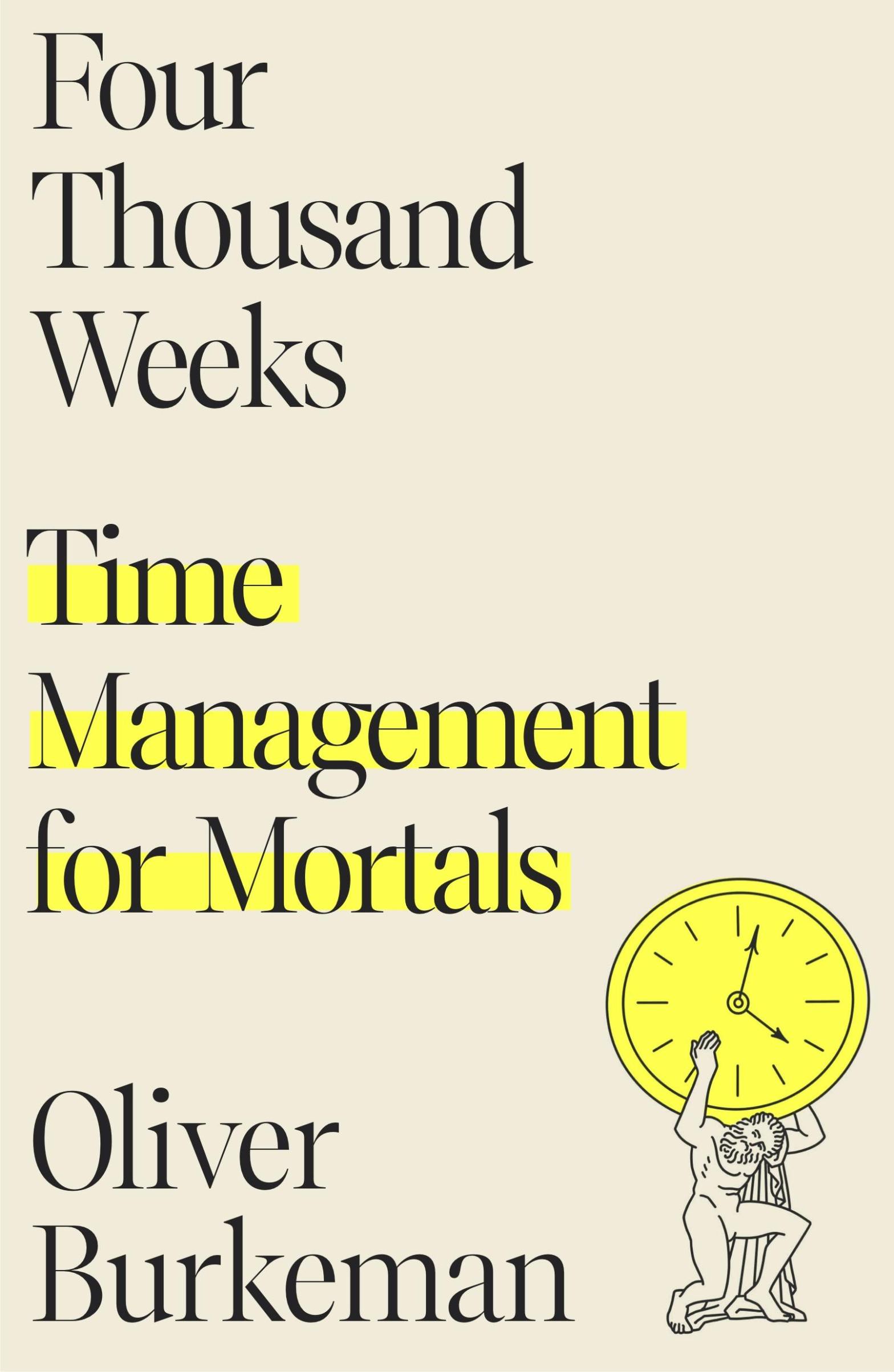
The mathematics of mortality are stark and sobering. If we’re fortunate enough to live to 80, we get roughly 4,000 weeks on this planet. For many of us in midlife, perhaps 1,000 weeks of good health remain—maybe fewer, maybe more, but certainly finite. This realization, explored brilliantly in Oliver Burkeman’s “Four Thousand Weeks,” isn’t meant to terrorize us into frantic productivity. Instead, it’s an invitation to radical clarity about what truly matters.
The Liberation of Limits
There’s something profoundly liberating about accepting our temporal constraints. When we truly grasp that we cannot do everything, optimize every moment, or achieve perfect work-life balance, we stop trying to be infinitely efficient and start being intentionally selective. The golden thousand weeks ahead aren’t about cramming in more experiences—they’re about choosing the right ones.
Burkeman argues that our culture’s obsession with time management and productivity is fundamentally misguided. We treat time as a resource to be maximized rather than a medium in which to live. But time isn’t something we have; it’s something we are. Each week is not a container to be filled but a life to be lived.
The Art of Saying No
Perhaps the most crucial skill for our remaining weeks is the ability to say no gracefully and decisively. Warren Buffett famously said, “The difference between successful people and really successful people is that really successful people say no to almost everything.” This isn’t about success in the traditional sense—it’s about success at living deliberately.
Every yes is a thousand nos. When we commit to one thing, we simultaneously reject countless alternatives. This isn’t a tragedy; it’s the very essence of choosing a life. The anxiety comes not from having limited options, but from the illusion that we should somehow be able to pursue them all.
Embracing Imperfection and Incompletion
One of the most profound shifts in perspective comes from accepting that we will die with our inboxes full, our to-do lists incomplete, and many dreams unrealized. This isn’t failure—it’s the human condition. The goal isn’t to finish everything; it’s to engage wholeheartedly with what we choose to do.
This acceptance frees us from the tyranny of optimization. We can stop trying to find the perfect morning routine, the ideal productivity system, or the most efficient way to exercise. Instead, we can simply begin, imperfectly and immediately, with what matters most.
The Power of Presence
In our golden thousand weeks, presence becomes more valuable than productivity. The moments that ultimately matter most—a conversation with a friend, watching a sunset, holding a grandchild—cannot be optimized or efficiently managed. They can only be fully experienced.
Meditation teacher Jon Kabat-Zinn reminds us that “wherever you go, there you are.” The present moment is the only place where life actually happens. Planning for the future and learning from the past have their place, but living occurs in the eternal now.
Choosing Your Constraints
Freedom isn’t the absence of constraints—it’s the ability to choose your constraints wisely. In a world of infinite possibilities, we must deliberately limit ourselves to create meaning. The artist chooses canvas and paint over infinite materials. The writer chooses words over silence. We must choose our commitments over endless options.
This might mean choosing to deepen existing relationships rather than constantly networking. It might mean mastering one skill rather than dabbling in many. It might mean committing to one community rather than keeping options open in multiple cities.
The Three-Tier Approach to Priorities
Burkeman suggests organizing our lives into three categories:
Tier 1: The Non-Negotiables – These are the 2-3 areas of life that matter most deeply. They get our best time, energy, and attention. Everything else is secondary.
Tier 2: The Seasonal Focus – One or two additional priorities that we commit to for a specific period, knowing they’ll eventually rotate out.
Tier 3: Everything Else – The vast majority of potentially worthwhile activities that we consciously choose to do poorly, sporadically, or not at all.
This framework prevents the paralysis that comes from trying to excel at everything simultaneously.
Building a Legacy of Connection
As we consider our golden thousand weeks, it’s worth reflecting on what kind of legacy we want to leave. Research consistently shows that people rarely regret not working more, but they often regret not investing more in relationships and experiences.
The deepest satisfaction comes not from accomplishing everything on our bucket list, but from the quality of our connections—to people, to work that matters, to something larger than ourselves. These connections don’t require perfect health or unlimited time; they require presence and authenticity.
Practical Wisdom for the Path Ahead
Here are some practical principles for making the most of our remaining golden weeks:
Start Before You’re Ready – Perfect conditions rarely exist. Begin with what you have, where you are, now.
Choose Meaning Over Happiness – Happiness is fleeting; meaning endures. Ask not “What will make me happy?” but “What feels worth doing?”
Protect Your Attention – In an age of infinite distraction, attention is your most precious resource. Guard it jealously.
Embrace Routine – Contrary to popular belief, routine creates freedom by removing decision fatigue from mundane choices, preserving mental energy for what matters.
Practice Patience – Some of life’s greatest rewards—deep relationships, mastery, wisdom—unfold slowly. Resist the temptation to accelerate everything.
Accept Help – Independence is overrated. Allow others to contribute to your life and well-being.
The Paradox of Time
Perhaps the greatest paradox of our finite existence is that the more fully we accept our limitations, the more expansive life becomes. When we stop trying to do everything, we can finally do something well. When we stop trying to live forever, we can start living today.
Your golden thousand weeks—however many remain—are not a countdown to be anxiously managed but a gift to be gratefully received. They are not a problem to be solved but a mystery to be lived.
The clock is ticking, as it always has been. But that’s not cause for panic—it’s cause for presence, for choosing wisely, for loving deeply, and for embracing the magnificent, messy, limited, and precious nature of being human.
In the end, we won’t be measured by how efficiently we used our time, but by how fully we lived it. The golden thousand weeks ahead are your chance to write that story deliberately, courageously, and with deep gratitude for the time you’ve been given.
Time is not money. Time is not a resource. Time is the medium in which we love, create, and become who we’re meant to be. Use it well.
[Written by ChatGPT]
Four Thousand Weeks: Time Management for Mortals by Oliver Burkeman is a philosophical and countercultural book that challenges conventional notions of productivity and time management. The title refers to the average human lifespan—approximately 4,000 weeks—and serves as a stark reminder of our finite time on Earth.
📘 About the Author: Oliver Burkeman
Oliver Burkeman is a British author and journalist, best known for his work in psychology, philosophy, and self-help. For years, he wrote the popular column “This Column Will Change Your Life” for The Guardian, where he explored the quirks and limitations of self-improvement culture. Four Thousand Weeks is a culmination of his reflections on time, meaning, and what it truly means to live a fulfilling life.
🧭 Core Themes & Ideas
Time is Finite and That’s Okay We only get about 4,000 weeks—life is inherently short. Instead of trying to “master” time, we need to come to terms with our limitations.
The Productivity Trap Chasing efficiency and trying to “get everything done” often leads to more work and less satisfaction. Productivity, when disconnected from deeper purpose, becomes a form of self-defeating control.
The Myth of Total Control We crave the illusion of control over our time, seeking perfect plans and productivity hacks. Letting go of the fantasy of control allows us to engage more meaningfully with the present.
The Joy of Missing Out (JOMO) Embracing limitations means acknowledging that we can’t do or experience everything. By making peace with our choices, we make our time more meaningful.
Accepting “Finitude” We must confront our finitude—our limited capacity, energy, and lifespan. Accepting this can lead to freedom, as it clarifies what truly matters.
Resisting Distraction Modern life pulls us in a thousand directions. Instead of constant switching and stimulation, Burkeman advocates for deep engagement and presence.
Choosing What to Neglect You will always have to neglect something—do so deliberately. Focus only on a few meaningful commitments instead of scattering your attention.
🛠️ Practical Suggestions from the Book
Set boundaries on work and don’t treat email or to-do lists as endless tasks to “clear.” Say no more often—choosing what to ignore is as important as choosing what to do. Embrace boredom and stillness to reconnect with what matters. Use fixed time blocks (e.g., end your workday at a specific hour) instead of working until things are done. Limit options—don’t try to explore every possibility or optimize every decision. Acknowledge mortality, not as morbid, but as a clarifying force for making decisions.
🌱 In Summary
Four Thousand Weeks is less about how to squeeze more tasks into your day, and more about how to rethink your relationship with time itself. Burkeman urges readers to stop trying to “conquer” time and instead learn to live with its constraints—embracing a slower, more intentional, and ultimately more satisfying life.
 UpLive.Life