[Written by Claude]
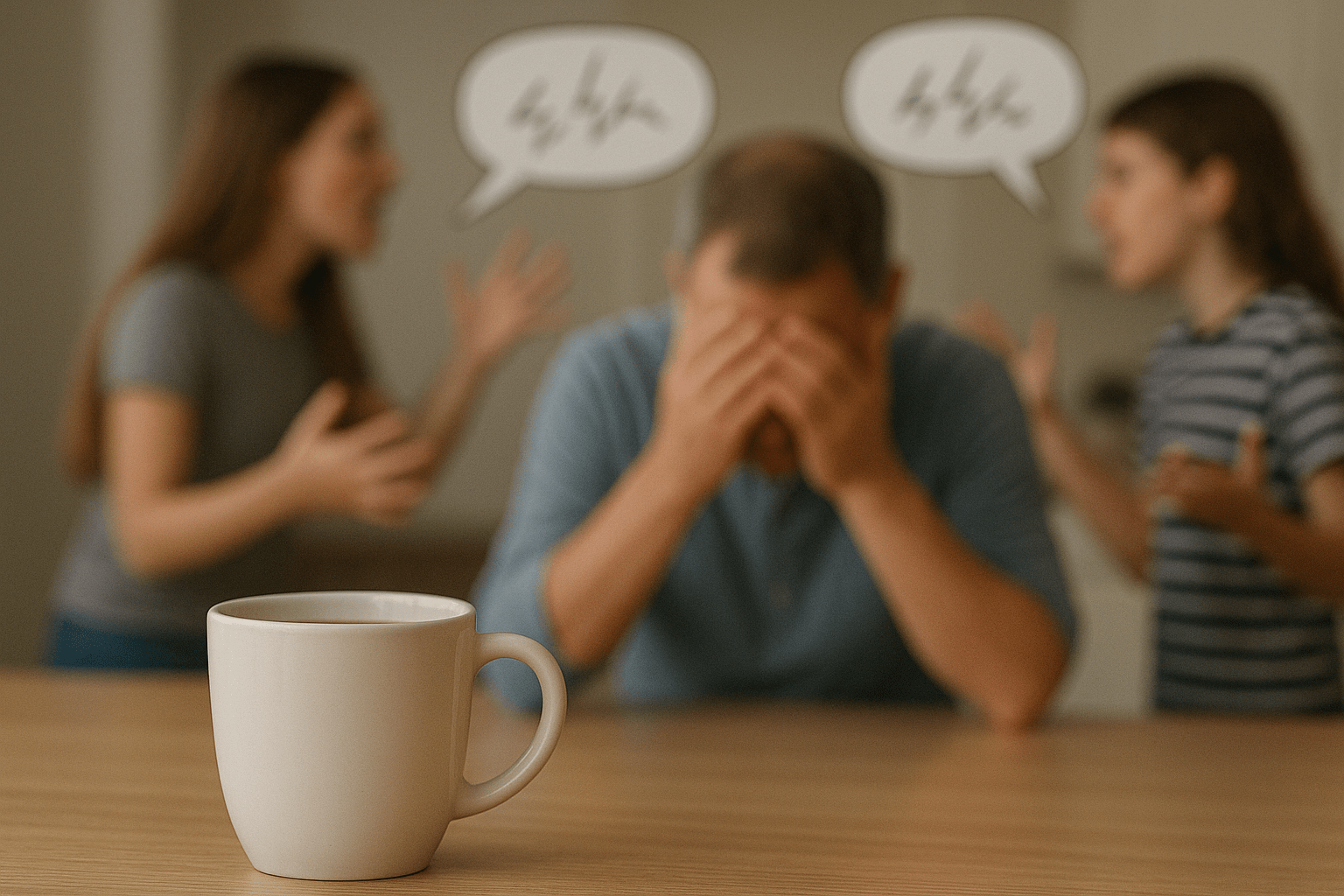
Picture this: You’re trying to enjoy your morning coffee when suddenly the peaceful silence is shattered by the sound of raised voices from upstairs. “MOM! She’s wearing my hoodie again!” followed by “It’s not even yours, you left it in the laundry room!” And just like that, your day begins with the familiar soundtrack of teenage sibling warfare.
If you’re a parent of teenagers, you know this scene all too well. The constant bickering, the eye rolls, the dramatic declarations of injustice over borrowed clothes, bathroom time, or who ate the last slice of pizza. It’s enough to make even the most patient parent fantasize about running away to a quiet cabin in the woods.
Why Teen Bickering Hits Different
When our kids were little, their fights were relatively simple to navigate. Someone took someone’s toy, tears were shed, hugs were given, and peace was restored. But teenage bickering? That’s a whole different beast. It’s loaded with hormones, identity issues, and a fierce need for independence that somehow always seems to clash with their sibling’s equally fierce need for the exact same thing.
The arguments can escalate from zero to nuclear in seconds, often over things that seem completely trivial to our adult brains. But here’s the thing – to them, these battles aren’t trivial at all. They’re fighting for respect, autonomy, and their place in the family hierarchy. Understanding this doesn’t make it less exhausting, but it does help explain why “just get along” rarely works as a solution.
The Ripple Effect on Family Life
Teen bickering doesn’t just affect the siblings involved – it creates a ripple effect that touches everyone in the house. Younger siblings learn that yelling gets attention. Parents find themselves walking on eggshells, trying to prevent the next explosion. Family dinners become tense affairs where everyone’s waiting for the next argument to erupt.
The constant conflict can leave parents feeling like referees in a game where the rules keep changing. We find ourselves questioning our parenting skills, wondering where we went wrong, and desperately googling “how to make teenagers stop fighting” at 2 AM.
Strategies That Actually Work
Here’s the truth no parenting book wants to tell you: you can’t eliminate teenage sibling conflict entirely. But you can change how you respond to it, and that makes all the difference.
Set Clear Boundaries Around Respect While you can’t control whether your teens argue, you can absolutely control how they’re allowed to treat each other in your home. Make it clear that name-calling, personal attacks, and disrespectful language aren’t acceptable, regardless of how angry they are. Enforce consequences consistently when these boundaries are crossed.
Resist the Urge to Play Judge Your first instinct might be to dive in and determine who’s right and who’s wrong, but this often backfires. Instead of solving the problem, you become part of it. Unless someone’s in physical danger, try stepping back and letting them work it out themselves. You might be surprised by their problem-solving abilities when they’re not performing for an audience.
Create Individual Space and Time Sometimes the best solution is separation. Make sure each teen has their own space where they can retreat when tensions rise. This might mean establishing bedroom sanctuaries, creating separate bathroom schedules, or even just ensuring everyone has their own designated spot at the dinner table.
Address the Real Issues Often, the fight about the borrowed shirt isn’t really about the shirt – it’s about feeling unheard, unrespected, or unimportant. Try to identify the underlying needs and feelings driving the conflict. Sometimes a simple acknowledgment of their frustration can defuse the situation more effectively than any punishment.
Model the Behavior You Want to See This is perhaps the hardest part. When your teenagers are pushing every button you have, it’s challenging to remain calm and respectful. But they’re watching how you handle conflict, and they’re learning from your example. Take deep breaths, speak calmly, and show them what healthy conflict resolution looks like.
Pick Your Battles Wisely Not every argument requires your intervention. Learning to distinguish between normal sibling rivalry and conflicts that need parental involvement is crucial for your sanity. Ask yourself: Is anyone being hurt? Are family rules being broken? Will this matter in a week? If the answers are no, consider letting it go.
Create Positive Shared Experiences When siblings are constantly at each other’s throats, it’s easy to forget that they actually can enjoy each other’s company. Look for opportunities to create positive interactions – maybe a shared interest, a family project, or even just a funny movie night. These positive memories can help balance out the negative ones.
Remember: This Too Shall Pass
Here’s what I wish someone had told me during the peak of my own teenagers’ bickering phase: this is temporary. The kids who are currently arguing over whose turn it is to load the dishwasher will likely grow up to be close friends who laugh about these very fights at family gatherings.
Most sibling conflict in the teen years isn’t a sign of permanent damage or parenting failure – it’s a sign of normal development. Your teenagers are learning to navigate complex relationships, assert their independence, and figure out their place in the world. Unfortunately, they’re doing all of this learning in your living room, at volumes that could wake the neighbors.
Taking Care of Yourself
Don’t forget that dealing with constant conflict is emotionally draining. It’s okay to feel frustrated, exhausted, and sometimes even resentful. Take breaks when you can, whether that’s a walk around the block, a phone call with a friend, or even just five minutes of deep breathing in your car.
Consider creating a support network with other parents going through similar experiences. Sometimes just knowing you’re not alone in feeling like your home has turned into a war zone can provide enormous relief.
The Long View
While it’s hard to see in the moment, these conflicts are actually serving a purpose. Your teenagers are learning valuable life skills: how to stand up for themselves, how to negotiate, how to handle disagreement, and how to maintain relationships even when things get tough. They’re also learning that love doesn’t disappear just because people disagree – a lesson that will serve them well in all their future relationships.
The key is helping them learn these skills in healthier ways while preserving your own sanity in the process. Remember, you’re not trying to eliminate all conflict – you’re trying to teach them how to handle it respectfully and constructively.
Your home might feel like a battlefield right now, but with patience, consistent boundaries, and maybe a really good pair of noise-canceling headphones, you’ll all make it through to the other side. And who knows? Someday you might even miss the passionate intensity of it all. (But probably not the volume.)
 UpLive.Life