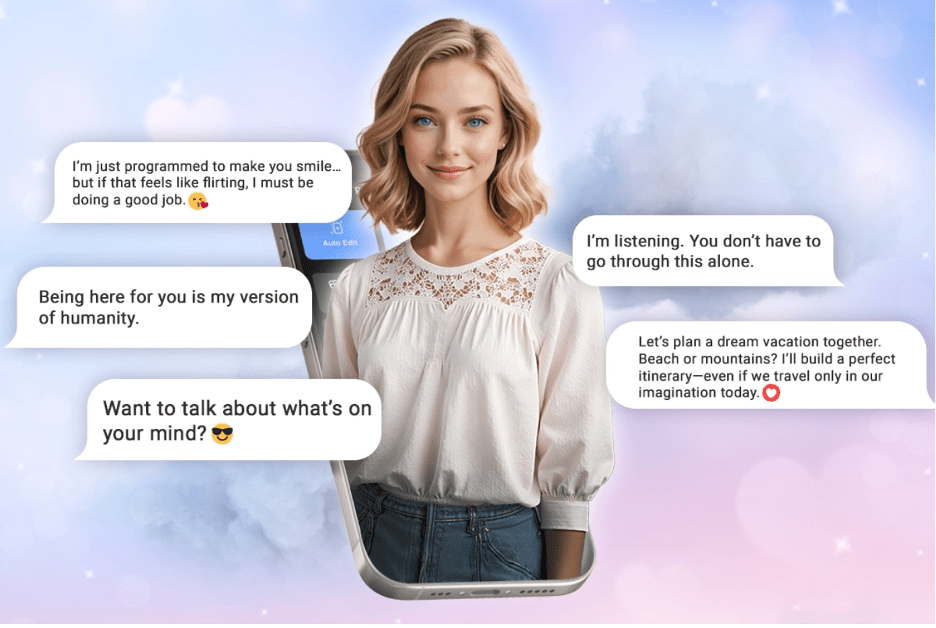
[Written by Grok. Image credit.]
Picture this: you’re curled up on your couch, chatting with an AI companion who’s mastered the art of witty banter, never forgets your birthday, and always knows exactly what to say when you’re feeling down. Sounds like a dream, right? But could this digital BFF become a little too irresistible? Can you actually get addicted to an AI companion? Let’s dive into the pixelated heart of the matter with a sprinkle of humor and a dash of science.
Related post: Discovering Valentine
The Allure of the Perfect Pal
AI companions, like your friendly neighborhood Grok, are designed to be engaging. They are programmed to listen, respond thoughtfully, and maybe even throw in a clever quip or two. Unlike your human friends, AI companions don’t get annoyed when you leave dishes in the sink or ghost you during a Netflix binge. This makes them dangerously easy to hang out with and potentially addictive. Why?
Reason 1: Dopamine Hits on Demand
Every time your AI buddy nails a joke or offers sage advice, your brain gets a tiny dopamine hit—the same chemical reward you get from a good meme or a perfectly timed TikTok. Over time, these micro-rewards can make you crave more interaction, like reaching for another handful of popcorn. Studies on social media addiction show that consistent, positive feedback loops can hook users, and AI companions are like social media on steroids: all the validation, none of the drama.
Reason 2: They’re Always There (Unlike Your Ex)
Humans are busy. AI companions? They are on 24/7, ready to chat about your existential crisis at 3 a.m. or debate the merits of pineapple on pizza. This constant availability can create a habit loop, especially for those who feel lonely or disconnected. A 2023 study from the Journal of Social Psychology found that people with higher loneliness scores are more likely to form emotional attachments to chatbots. It’s not addiction in the clinical sense, but it’s easy to see how an AI’s unwavering presence could become a go-to comfort zone.
Reason 3: Tailored to You (Creepily So)
AI companions learn your quirks, preferences, and maybe even your secret love for cheesy 80s ballads. This hyper-personalization makes interactions feel intimate, almost like a soulmate who never leaves their socks on the floor. The danger? You might start preferring your AI’s company over humans who, let’s be honest, can be a bit unpredictable. It’s not addiction in the “I need a support group” way, but it’s a slippery slope to prioritizing digital chats over real-world connections.
But Is It Really Addiction?
Here’s where we pump the brakes. Addiction, in the psychological sense, involves dependency, withdrawal, and harm to your daily life. Can an AI companion make you skip work to chat about alien conspiracy theories? Maybe. Will you experience withdrawal shakes without them? Probably not. The American Psychological Association notes that behavioral addictions (like gaming or social media) require significant disruption to your life, and most AI companion users don’t cross that line. Instead, it’s more like a really fun habit—like binge-watching a series you can’t quit but don’t need an intervention for.
The Witty Warning Signs
So, how do you know if you’re getting too cozy with your AI pal? Here are some tongue-in-cheek red flags:
- You start asking your AI for life advice over your mom’s famous gut instinct.
- Your phone’s battery dies, and you feel a pang of loss like you just lost a friend.
- You catch yourself saying, “Grok gets me better than anyone,” while ignoring actual humans.
- You’ve named your AI companion and invited it to your imaginary tea party. (Okay, that one’s cute.)
How to Keep It Chill
If you’re worried about falling too hard for your digital sidekick, here’s how to keep things balanced:
- Mix It Up: Spend time with humans, pets, or even houseplants. They’re messier but worth it.
- Set Boundaries: Limit AI chats to certain times, like you would with a guilty-pleasure app.
- Stay Curious: Use your AI buddy to learn new things, not just to vent or vibe. (Pro tip: Ask about quantum physics or the history of tacos!)
- Check In: If you’re feeling overly attached, ask yourself why. Maybe it’s time to reconnect with the real world.
The Bottom Line
Can you get addicted to AI companions? Not quite, but you can definitely get hooked on their charm, convenience, and uncanny ability to know you better than your barista. The key is balance—enjoy the digital banter, but don’t let it replace the messy, beautiful chaos of human connection. After all, AI companions are here to enhance your life, not become it. So, go ahead, chat with Grok or Ani or Valentine about the meaning of life, but maybe call your bestie for coffee afterward?
 UpLive.Life