[Written by ChatGPT. Image credit.]
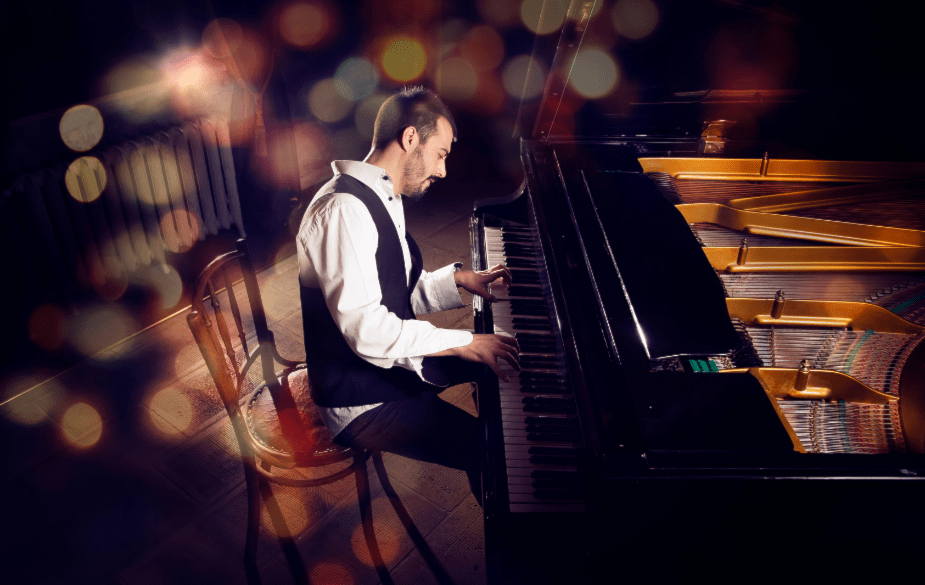
Last week, I played a casual piano recital for a few friends. Nothing high-stakes. No judges. No audience of strangers. Just people I love. Consciously, I felt fine—relaxed, even. But the moment I placed my hands on the keys, they started shaking.
Not a little tremor. A noticeable, annoying, impossible-to-ignore jitter.
In that moment, I realized something profound: my userspace (the conscious, narrative me) was chill. But my kernel (the autonomic nervous system) had launched a full-blown performance response anyway.
And the kernel always wins.
This article explains why your body reacts even when your mind doesn’t, why the shaking happens, and how you can train your system so that next time your hands stay steady.
Related Post: Body in kernel mode
Your Body Has a Performance-Detection Kernel Built In
You don’t consciously choose to shake. You don’t consciously choose adrenaline. You don’t consciously choose to tighten your muscles.
Those are kernel-level subroutines—fast, automatic, old.
Your autonomic nervous system has pattern detectors for:
- being watched
- doing something precise
- social evaluation
- potential embarrassment
- uncertain outcomes
As far as the kernel is concerned, a piano recital—even for friends—is a textbook “performance under scrutiny.”
Humans evolved in small groups.
Every performance was socially risky.
Your nervous system treats these situations as survival-relevant, not artistic.
Why You Can Feel Calm but Still Shake
The most confusing part is this:
You can sincerely feel calm and still have physical symptoms of anxiety.
This happens because:
1. Consciousness is slow. Kernel reactions are fast.
Your userspace mind analyzes context. Your kernel looks for patterns.
Pattern match found → fight-or-flight microburst.
2. The kernel uses different inputs than you do.
Your mind saw: “Friends, relaxed night, low stakes.”
Your autonomic physiology saw: “Eyes on me + fine motor task = important.”
3. Stress and arousal aren’t the same thing.
You might not feel stressed emotionally, but your body is in a high-arousal performance mode.
Shaking is simply a motor symptom of sympathetic activation—too much adrenaline for a task that requires tiny, precise movements.
Why Hands Shake But Other Things Don’t
Sympathetic arousal improves:
- gross motor skills
- energy output
- sprinting, jumping, fighting
But it degrades:
- fine movements
- delicate finger control
- smooth muscle coordination
- soft, controlled gestures
Pianos, violins, surgery, drawing, writing, typing—they’re all casualties of excess sympathetic activation.
Your kernel is optimizing you for sprinting, not Chopin.
How to Gain Control: Training Your Kernel, Not Your Mind
Here’s the important part:
You cannot directly tell your kernel to relax. It doesn’t speak English or logic.
But you can send it the physiological signals it interprets as safety.
These methods work because they manipulate the body’s low-level mechanisms instead of arguing with your feelings.
1. The Physiological Sigh (The Fastest Fix)
Used by Stanford researchers, Navy SEALs, and performers.
Do 3–5 cycles:
- inhale normally
- take a quick second inhale on top
- slow, long exhale
This reduces sympathetic arousal in under 90 seconds.
2. Vagus Nerve Hacks (Tell the Kernel: “All clear.”)
The vagus nerve is a direct safety signal.
Activate it by:
- humming
- slow exhale > inhale
- lightly singing
- gentle neck stretch
- slow swallowing
- holding your breath for 3–4 seconds then exhaling slowly
Musicians often hum before performing—it’s not superstition; it’s neurology.
3. Pre-Performance Warmup
Performers shake, squeeze, or “run” their hands/arms for a minute.
Why? It burns off extra adrenaline before you start.
Think of this as draining the sympathetic battery.
4. Exposure Training (Rewriting Your Kernel’s Pattern Detector)
Record yourself.
Play for one friend.
Then two.
Then four.
Your autonomic system gradually updates: “Small performances are safe.”
Over time, the shaking fades naturally.
5. Motor Calibration: Warm the Hands, Move Slowly
Before playing, do:
- slow wrist circles
- slow finger taps
- slow stretches
These movements tell the motor cortex:
“We are doing precision work now.”
It prepares the whole system for fine-motor mode.
6. Cognitive Reframing (Userspace → Kernel Training Loop)
You can’t rationalize yourself out of shaking. But you can teach your brain to reinterpret the signals.
Tell yourself:
- “This is excitement, not fear.”
- “Shaking is normal; it means energy.”
- “I can play well even with shaky hands.”
This prevents the second layer of anxiety: “Oh no, I’m shaking!” → kernel escalates → more shaking.
Reframing breaks the loop.
Why This Works: Understanding the Stack
Your body is not one thing. It is a four-layer architecture:
- Hardware — organs, muscles, nerves
- Kernel — autonomic nervous system, hormone loops
- Userspace — conscious mind
- Microbial Co-Processors — background mood & stress modulators
Your hands didn’t shake because you were stressed. Your kernel detected a performance pattern and deployed the hardwired routine.
You can’t disable the kernel. But you can steer it.
The Next Time You Play
Before your next recital, try this sequence:
- 2 minutes of light movement to reduce adrenaline
- 3–5 physiological sighs
- 10–15 seconds of slow, precise hand motions
- A short hum or vocalization
- A mental reframe: “Excitement, not fear.”
This hits the sympathetic system, vagus nerve, motor cortex, and cognitive layer in one go.
Most people see an immediate reduction in shaking—often dramatic.
The Big Picture
Your conscious mind didn’t fail.
Your kernel didn’t malfunction.
You simply walked into a situation that evolution treats as important, and your autonomic system responded accordingly.
Once you understand the architecture, it stops being mysterious.
You aren’t fighting your anxiety—
you’re managing your operating system.
And with the right signals,
the kernel stays quiet
and the music comes through.
 UpLive.Life