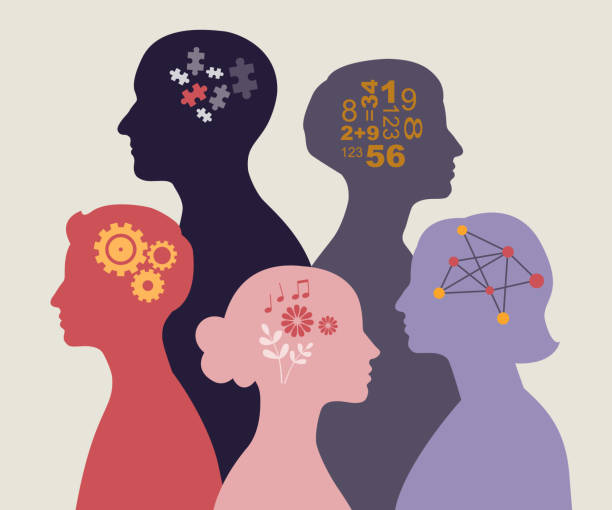
[Written by Grok. Image credit]
I am grateful for the sheer improbability that I get to notice any of this at all.
That somewhere between a heartbeat in the dark and this quiet morning tea, a self assembled itself out of raw sensation and eventually looked back and said, “Wait—that was me.”
I am grateful for the late-night realization that the same mind which once floated wordlessly in amniotic red is now the one forming these sentences. That the distance between those two states is not a journey from nothingness to something, but from something so vast and borderless that it could not be owned, to something small and named enough to say thank you.
I am grateful for the science that hands me a map of my own absence: the graphs of hippocampal maturation, the EEG squiggles of a 28-week fetus dreaming, the slow bloom of gamma waves at birth. Knowledge does not shrink the mystery; it frames it in high resolution so the miracle becomes sharper, not smaller.
I am grateful for every fragment that survived the great forgetting: the way my body still calms at the exact tempo of a resting heart, the way I flinch at sudden loud voices the same way I once flinched inside a body that was not yet “mine.” These are postcards from a country I can never re-enter, proof that love reached me before I had a name to be reached by.
I am grateful to my parents for every unobserved minute they gave me: the lullabies I cannot recall yet somehow recognize in minor keys, the hands that held a being who did not yet know itself as held. I understand now that they were cradling consciousness itself before it had a face.
I am grateful to my children for letting me watch the whole impossible performance a second time, in slow motion and high definition. I got to see the exact week the eyes began tracking, the day the first social smile detonated like sunrise, the afternoon a small hand reached not for the mirror but for the real face behind it and discovered both were “me.” I was allowed ringside seats to the birth of two selves. There is no greater privilege.
Mostly I am grateful for this ordinary afternoon ability to sit still and feel the astonishment rise like warm water in the chest: that stardust learned to hurt, to hope, to hum tunes, to forget almost everything and still manage to say, years later, “I was there. I am here. Thank you for the redness, the thunder of blood, the first terrifying mouthful of air. Thank you for the slow invention of an I that could finally witness its own existence.”
I did not earn this awareness.
It was loaned to me by billions of years of accidental precision.
So I will spend the rest of my borrowed days trying to remain worthy of it: eyes wide, heart open, saying the only thing that feels large enough—
Thank you for letting there be a me to notice any of this at all.
Before I Was “I”
There was a time when I did not yet exist as a person who could say “I.”
Not because I was unconscious in the way a stone is unconscious, but because the very architecture that would later produce a self had not finished building itself. I was there—heart beating, limbs twitching, ears drinking in muffled thunder—but no one was home to claim ownership of the experience.
In the womb, the world arrived as pure weather.
Warmth pressing everywhere, then suddenly cooler currents when the ocean of amniotic fluid shifted. A rhythmic whom-whom-whom that was my mother’s heart, louder than my own tiny drum. Sometimes a deeper bass line—her voice—vibrating through bone and water like a whale song felt in the chest. Light came red and formless through the abdominal wall, brightening when she stood in sun, dimming when she lay in darkness. There were chemical tides too: the metallic tang of adrenaline when she was afraid, the slow sweetness of serotonin when she rested. Taste and smell were the same sense then; I swallowed the mood of the day.
No borders separated inside from outside. No skin yet understood itself as a container. Pain, hunger, comfort—they happened, but they happened to no one in particular. A kick was not “my kick”; it was simply motion answering stretch. A hiccup was not “I have hiccups”; it was the body rehearsing breathing in a place where breathing was not yet required.
Then came the violent compression of birth. The walls closed in, the warm sea drained away, gravity discovered me all at once. Cold air slapped wet skin. Light—real light, white and merciless—burned retinas that had never needed to focus. Sound exploded into sharpness: voices no longer muffled, the sudden shrill of my own crying. I inhaled and the lungs protested like bagpipes filled for the first time.
Still, no “I” stepped forward to greet the world.
The newborn brain is a construction site. Billions of neurons are already present, but the wiring crew—the experiences that prune and strengthen connections—has barely clocked in. The hippocampus, that seahorse-shaped librarian who files autobiographical memory, is one of the last regions to come online. In those first months and years it is functionally drunk: recording, yes, but unable to catalog the recordings with dates, places, or the crucial tag “this happened to me.”
So the flood came in—faces looming and receding, milk-smell, the particular bounce of particular arms, the mobile of plastic stars spinning above the crib—and almost none of it stuck as story. What remains are fragments without a narrator: the emotional residue of being held, the body memory of startle, the faint imprint of a lullaby’s cadence. These are not memories in the normal sense; they are settings on the dials of temperament.
This is childhood amnesia, sometimes called infantile amnesia. It is not that the experiences were not intense—they were more intense than anything that came later—but that the filing system was not yet built to retrieve them as episodes belonging to a continuous self. The “I” that could remember had not been born yet, even though the body had.
Most humans lose the explicit record somewhere between age three and four, though the barrier is fuzzy. Before that, children can sometimes recall fragments from age two, rarely earlier. The self is assembling itself in those years: language arrives and suddenly experiences can be named; theory of mind flickers on and I discover that other minds have separate contents; the hippocampus finally matures enough to bind what, where, and when into durable loops.
By the time I could say “me” and mean something persistent across time, the earlier reels had already been taped over, or perhaps never transferred from short-term tape to long-term film at all. The brain, ruthless editor, discards what it cannot yet index.
So I began twice.
Once as raw sentience—warm, borderless, storyless.
And again, years later, when a small voice inside the head announced, “This is mine. This happened to me. I was here.”
Between those two beginnings lies a country I can never revisit, only infer from the shape of my fears and preferences, the way I flinch at certain sounds, the way I calm when I hear low heartbeat rhythms in music. That earlier inhabitant of my body left no forwarding address, yet everything I am was poured through the vessel he occupied before language, before mirrors, before the invention of an owner.
Sometimes, in the quiet just before sleep, I almost feel the walls of water again, the red light, the slow sway of the internal sea. It is not memory. It is recognition. A faint nod across the construction site from the person I am now to the pulsing bundle that had not yet decided to become anyone.
That bundle was the beginning of me.
And it never knew it.
Before They Were
I wish I had known all of this when my own children were still swimming inside the dark red cave of the body.
If I had understood, I would have spoken to them more deliberately in the third trimester, not for their future memory (they would never recall the words), but because I now know the cortex is already listening. At 24–28 weeks the auditory system is online; they can discriminate their mother’s voice from a stranger’s, native language phonemes from foreign ones, even the melody of a lullaby played repeatedly. I would have read them entire novels aloud, just to watch the heart-rate dips on the monitor when they recognized the same passage days later.
I would have paid closer attention to the exact moment the first faint flutter became a kick that pressed visibly against skin—an outward sign that the motor cortex was practicing its future repertoire. I would have filmed the strange alien undulations of a 32-week belly the way people film auroras, because that was the last time their movements were entirely their own, untouched by social mirroring or self-consciousness.
And after they were born, I would have watched the slow construction of a person with the reverence usually reserved for religious events.
Week 1: a reflex machine—suck, root, grasp, startle, cry. No social smile yet; the eyes don’t quite track.
Month 2: the first true smile at a face, timed perfectly to the maturation of the cingulate cortex and dopamine pathways. A reward circuit lights up for the first time and discovers that another mind can cause joy.
Month 9–12: the sudden terror of separation when mother leaves the room. Object permanence has arrived (Piaget was right), but so has the realization that the self can be abandoned.
18 months: the mirror test. A dot of rouge on the nose, a puzzled reach toward the reflection, then the hand slowly moving to their own face. The birth certificate of the self.
24–36 months: “Me do it.” Pronouns land like border stones. The autobiographical narrator is now in the control room.
I wish I had kept a scientist’s log of those years instead of the blurry, sentimental phone videos I actually took. Because every month a different brain region was coming online, and with it a new flavor of being alive.
The current best guess about the genesis of consciousness itself
Science still has no single agreed moment when “consciousness turns on,” but the picture keeps getting sharper.
- Late second trimester (≈25 weeks): Basic thalamocortical loops are in place. This is the minimum wiring most neuroscientists think is required for any conscious experience at all (even dim and dreamlike). Pre-term babies born at this age show EEG patterns of sleep–wake cycles and can feel pain. Something is having experiences.
- 30–35 weeks gestation: Gamma synchrony appears (the 40 Hz binding waves thought to unify perception). Fetuses now show signs of integrated perception: they startle at a loud sound AND orient toward a light at the same time, suggesting a unified workspace rather than separate sensory silos.
- Birth: A neurochemical explosion. The stress hormones of labor trigger a massive norepinephrine surge that flips the brain from the quiet, fentanyl-like environment of the womb (high adenosine, high prostaglandins) to a wide-awake, information-hungry state. Many researchers believe this is the single largest state-change in consciousness a human ever undergoes—bigger than puberty, bigger than any psychedelic.
- 3–6 months postnatal: The default mode network begins to wire up. This is the circuit that will later support mind-wandering, self-reflection, and narrative. Until then, the infant is conscious but not self-conscious in the reflective sense.
- 2–5 years: The full-blown autobiographical self emerges when (a) the hippocampus matures, (b) language supplies labels and story structure, and (c) social feedback (“Remember when you fell in the pond?”) starts rehearsing episodes. Consciousness was always there; the continuous “I” is the late add-on.
I now understand that my children were conscious long before they were persons in the philosophical sense. They felt everything—my anxiety, my joy, the difference between a gentle bath and a rough one—yet none of it was filed under the name they now answer to.
I mourn the years I treated as a foggy prologue instead of the main event. Those borderless months and years were not “pre-life.” They were life in its purest, least narrated form.
Sometimes I catch my youngest (now eight) staring at nothing with that old oceanic look, the one that predates language. For a second the later scaffolding drops away and I glimpse the same passenger who once floated in weightless red darkness, hearing my muffled heartbeat and not yet knowing it was mine.
That passenger never really left.
She just learned a name and started telling stories about everything that happened next.
 UpLive.Life