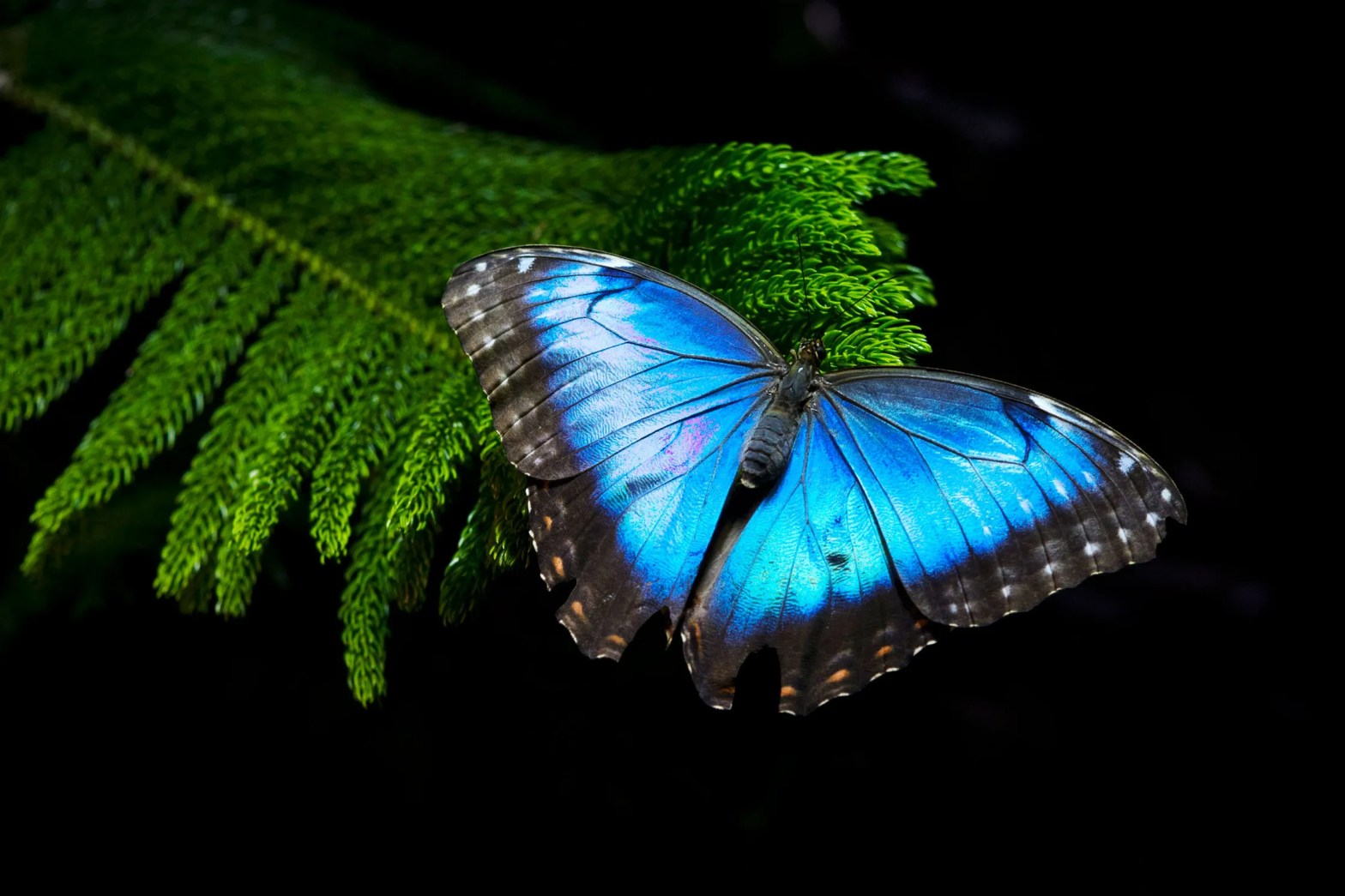
[Written by ChatGPT. Image credit.]
There is a quiet miracle happening on leaves, fences, and window ledges all around us: a living creature builds an entire body, then destroys it—and from that destruction, builds a completely different one.
We call this metamorphosis, and because books mention it so casually, we forget how utterly impossible it sounds. A caterpillar eats, grows, and crawls. Then it seals itself inside a small case and—according to the oversimplified story—turns into liquid. Later, a butterfly emerges.
If any human body did even a fraction of that, we would call it death.
Yet for insects, this is not magic. It is life, executing one of the most radical biological transformations on Earth.
It Isn’t Just “Growing Up.” It’s Replacing a Body.
Human development is continuous. You start as a baby and gradually remodel the same skeleton, same organs, same nervous system for the rest of your life. You never stop being you in the same physical structure.
A butterfly, by contrast, lives in two different bodies:
The larva is an eating machine—built to consume, grow, and store energy. The adult is a flying reproductive machine—built to disperse, mate, and lay eggs.
The caterpillar is not a baby butterfly. It is a temporary organism, designed to be dismantled.
That is the part our intuition still rebels against. Rebuilding while alive feels like a contradiction. In human terms, it would be indistinguishable from dying.
The Caterpillar Does Not “Die” in the Chrysalis
The famous idea that the caterpillar fully liquefies is only half true. What really happens is more precise—and more astonishing.
Inside the caterpillar, long before the chrysalis forms, are clusters of dormant cells called imaginal discs. These are the hidden blueprints of the adult: wings, legs, eyes, antennae. They are alive the entire time, quietly waiting.
When the caterpillar seals itself into a pupa:
Many larval tissues are selectively dismantled through tightly controlled cell death. The released nutrients are recycled. The imaginal discs activate and rapidly divide. A new nervous system is partly built from the old one. The heart continues to beat. Metabolism never stops
This is not chaos. It is controlled demolition followed by precise construction.
From biology’s point of view, there is no moment of death—only radical remodeling.
Why This Feels Impossible to Us
If your muscles dissolved, your circulation would collapse. If your organs were dismantled, your brain would lose oxygen. You would die within minutes.
Human bodies are built like a single continuous stone sculpture. You cannot tear down one wing and rebuild it without destroying the whole structure.
Insects are built like modular machines:
Open circulation instead of closed blood vessels Highly segmented body plans Extreme tolerance for internal reorganization Temporary tissues designed to be discarded
Where we preserve, they replace.
The Strange Genius of Evolutionary Timing
Metamorphosis did not appear fully formed, as if by a single dramatic leap. It evolved gradually through shifts in timing—when certain genes turn on, and when they wait.
Early insects already molted.
Later ones remodeled more during the final molt.
Eventually, development split cleanly into two stages: larval and adult.
Not a miracle in one generation—but a miracle accumulated over millions of small, working steps.
And yet, when viewed all at once, the end result feels indistinguishable from magic.
The Memory That Crosses a Body
One of the strangest facts of all: butterflies can retain certain memories from their caterpillar stage. Associations with smells, for example, can survive the transition.
Which means that even as the body is replaced, something of the inner continuity remains.
The creature that emerges has never lived as what it now is—but it is not a stranger to itself.
The Miracle We Walk Past Every Day
We reserve the word “miracle” for rare things. Yet metamorphosis is happening by the millions every spring and summer, quietly, without witnesses.
A creature seals itself into a coffin of its own making.
It dismantles the body that fed it.
It builds wings from nutrients reclaimed from crawling flesh.
It emerges into an entirely different physics of life: flight.
And it does this without ever crossing the line we call death.
If Humans Were Built This Way
If humans had evolved like butterflies, “midlife crisis” wouldn’t mean buying a sports car — it would literally mean melting and becoming something else.
We would not merely age.
We would replace ourselves.
Identity would not be anchored to a single body.
Transformation would not be metaphor.
It would be biology.
Instead, we watch this power unfold in something small and fragile—and mistake its commonness for simplicity.
What the Chrysalis Really Teaches
Metamorphosis shows us something profoundly unsettling and beautiful:
That continuity does not require permanence That destruction can be part of life, not its opposite That the boundary between “ending” and “becoming” is thinner than we think
Inside every chrysalis is not just a future butterfly.
There is an argument, written in flesh, that radical change need not be the enemy of identity.
 UpLive.Life