[Written by Claude. Image credit.]
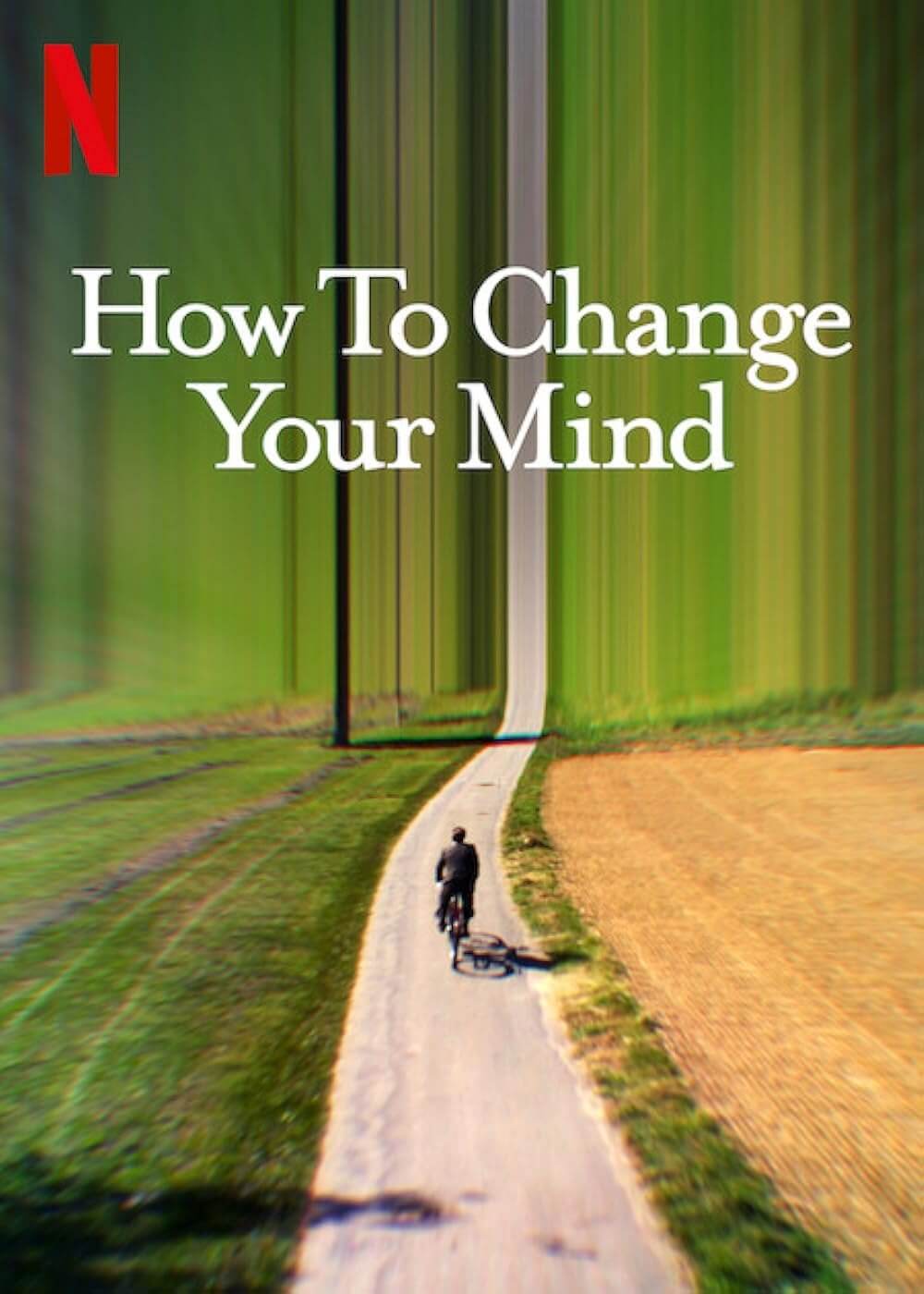
I’ve been thinking a lot about selfhood lately—that persistent, taken-for-granted feeling of being me, a continuous person moving through time. This morning, I started watching Michael Pollan’s documentary based on his book How to Change Your Mind, and I found myself captivated by something both fascinating and unsettling: how a tiny amount of LSD—a few micrograms of a chemical—can profoundly alter someone’s entire perception of reality. More than that, it can temporarily dissolve the very sense of being a separate self at all.
It got me wondering: if a minuscule dose of a substance can fundamentally change who we experience ourselves to be, what does that say about the nature of identity itself? How stable is this thing we call the self? And in how many other ways can it slip away, fragment, or disappear entirely?
The answer, it turns out, is more than I expected—and more unsettling too.
Have you ever experienced that unsettling moment when you suddenly don’t recognize yourself in the mirror? Or felt so absorbed in an activity that “you” seemed to disappear entirely? The sense of self—that persistent feeling of being a continuous, bounded individual—is something most of us take for granted. Yet it’s far more fragile than we realize.
Our identity can slip away in countless ways, from the mundane to the medical, from the spiritual to the pharmaceutical. Let’s explore this fascinating and sometimes unsettling territory.
The Neurological Unraveling
Brain Injury and Disease
When the physical architecture of the brain is damaged, the self can fracture in profound ways. Stroke patients sometimes experience hemispatial neglect, where half their body feels like it belongs to someone else. Traumatic brain injuries can create what families describe as “a different person”—the same face, but fundamentally altered personality, memories, and behavior.
Alzheimer’s disease progressively dismantles the self from the inside out. Early memories fade, then recent ones, until the person can no longer recognize their own children or remember who they were. The network connections that knit together our autobiographical narrative—our story of who we are—slowly disconnect, leaving islands of experience that can’t communicate with each other.
Frontotemporal dementia can be even more dramatic, stripping away social inhibitions and core personality traits while leaving other cognitive functions relatively intact. A conservative accountant might suddenly become impulsive and inappropriate. Are they still themselves?
Disorders of Consciousness
In coma or vegetative states, the thalamocortical loops that generate integrated awareness shut down. The global broadcasting system—the brain’s way of sharing information across regions—collapses. What remains isn’t a self at all, but isolated pockets of neural activity that never coalesce into unified experience.
Some patients in minimally conscious states report later that they could hear and understand but couldn’t respond or form coherent thoughts about their identity. The self was there, but trapped and fragmented.
Seizures and Epilepsy
During certain types of seizures, people report feeling like they’re watching themselves from outside their body, or that their surroundings have become dreamlike and unfamiliar (derealization). Temporal lobe epilepsy can trigger overwhelming feelings of depersonalization—the sense that “I” am not real, that I’m observing myself as a stranger would.
The brain’s timing mechanisms fall out of sync during seizures. When neural rhythms that normally coordinate perception, memory, and self-awareness become chaotic, the unified self dissolves into fragments.
Psychiatric Dissolution
Dissociative Disorders
Perhaps nowhere is the loss of self more dramatic than in Dissociative Identity Disorder (formerly multiple personality disorder). The psyche fractures into distinct identities, each with their own memories, preferences, and sense of self. What was once one becomes many—or rather, what should have been one never integrated properly, usually due to severe childhood trauma.
Depersonalization-Derealization Disorder creates a persistent feeling of being detached from yourself, as if you’re living in a movie or dream. People describe feeling like a robot going through the motions, or watching their life happen to someone else. The self becomes a distant observer rather than an active participant.
Depression’s Erosion
Severe depression doesn’t just make you sad—it can hollow out your sense of identity. The things that once defined you—your passions, your relationships, your values—feel distant and meaningless. Many people with depression describe feeling like an empty shell, unable to connect with who they used to be.
The narrative self, the story we tell ourselves about who we are, requires emotional coloring and motivation. When depression strips away emotional resonance, that story loses its protagonist.
Psychosis and Schizophrenia
Schizophrenia often involves a profound disruption of self-boundaries. People may believe their thoughts are being broadcast to others, that external forces are controlling their actions, or that they are someone else entirely—a historical figure, a deity, or a fictional character.
The predictive processing loops that normally help us distinguish self from other, internal from external, break down. The brain loses its ability to tag experiences as “mine” versus “not mine.” Identity becomes porous, invaded by outside influences that feel completely real.
Chemical Transformations
Psychedelics: The Ego Death
LSD, psilocybin, DMT, and ayahuasca can temporarily dissolve the boundaries of self entirely. Users report “ego death”—a complete loss of personal identity where the distinction between self and universe collapses. This can be terrifying or transcendent, sometimes both.
Brain imaging shows that psychedelics disrupt the Default Mode Network, a set of brain regions that maintains our sense of continuous identity and self-reflection. When this network quiets, the self-construct it generates fades away.
Interestingly, this temporary dissolution is now being used therapeutically. Studies suggest that ego death experiences during psychedelic-assisted therapy can help people with depression, addiction, and end-of-life anxiety by loosening their grip on rigid self-concepts and negative self-narratives.
Anesthesia’s Void
General anesthesia doesn’t just make you unconscious—it obliterates the self entirely. The global broadcasting systems shut down, long-range brain connectivity collapses, and the thalamocortical loops stop functioning. During that time, “you” simply don’t exist.
What’s fascinating is that this isn’t like sleep, where the self persists in altered form through dreams. Under anesthesia, there’s nothing—no experience, no awareness, no sense of time passing. When you wake up, there’s a discontinuity in your existence that’s both mundane and philosophically unsettling.
Alzheimer’s Medications and Toxins
Anticholinergic drugs, used for allergies, insomnia, and overactive bladder, can cause confusion and identity disturbance, especially in older adults. Carbon monoxide poisoning, heavy metal exposure, and various toxins can damage the brain in ways that fragment the self.
Even alcohol, in extreme cases, can cause Korsakoff’s syndrome—a condition where people lose the ability to form new memories and begin confabulating elaborate false narratives to fill in the gaps, creating a self based on fiction rather than experience.
Extreme States and Circumstances
Severe Sleep Deprivation
Stay awake long enough, and your sense of self begins to deteriorate. After several days without sleep, people experience microsleeps, hallucinations, paranoia, and depersonalization. The boundaries between waking and dreaming blur. Memory becomes unreliable. Identity feels unstable.
The brain needs sleep to consolidate memories and maintain the neural synchrony required for integrated consciousness. Without it, the self becomes increasingly fragmented and unstable.
Sensory Deprivation
Place someone in a dark, silent isolation tank for hours, and something strange happens. Without external input to orient the self, people begin to hallucinate, lose track of time, and experience their body boundaries dissolving. Some find this meditative and peaceful; others find it terrifying.
The self, it turns out, is partly maintained through constant sensory input and our body’s position in space. Remove those anchors, and identity becomes untethered.
Extreme Stress and Trauma
Combat veterans, survivors of abuse, and people who’ve experienced severe accidents sometimes describe feeling like they “left their body” during the traumatic event—watching it happen to someone else as a protective mechanism. This dissociation can become chronic, leaving people feeling disconnected from themselves for years afterward.
The brain can essentially decide that fully experiencing something would be too overwhelming, so it splits off the experience from the core sense of self. The memory exists, but it happened to “them,” not “me.”
The Spiritual and Contemplative Path
Meditation and Mystical Experiences
Advanced meditation practitioners across traditions—Buddhist, Hindu, Christian contemplative—report experiences where the sense of separate self dissolves. This isn’t a pathology but a deliberate practice aimed at experiencing reality without the filter of ego.
Brain studies of meditating monks show decreased activity in the posterior parietal cortex, a region involved in maintaining body boundaries and spatial orientation. The sense of being a separate self located in space diminishes or disappears entirely.
Many describe this as the most profound and meaningful experience of their lives—not a loss of self but a recognition that the self they thought they were was always a construct, and beneath it lies something more fundamental.
Flow States
Athletes, artists, musicians, and surgeons describe moments of peak performance where self-consciousness disappears entirely. There’s no “me” throwing the ball or playing the notes—there’s just the activity itself, unfolding perfectly.
The prefrontal cortex, which maintains our self-narrative and inner critic, temporarily quiets during flow. What remains is pure engaged awareness without the meta-level of self-reflection. It’s one of the few ways people routinely lose their sense of self and actually enjoy it.
The Developmental and Social Self
Identity Confusion in Adolescence
Teenagers often report feeling like they don’t know who they are. This isn’t just angst—it’s a genuine developmental phase where identity is actively being constructed and reconstructed. The self is particularly fluid during this period, shifting based on social context, peer groups, and experimentation with different roles.
Brain imaging shows that the prefrontal cortex, crucial for self-concept and identity, doesn’t fully mature until the mid-20s. The adolescent self is genuinely less stable because the neural architecture supporting it is still under construction.
Cult Indoctrination and Extreme Social Influence
Through sleep deprivation, isolation, repetitive chanting, and social pressure, cults can systematically dismantle a person’s sense of individual identity and replace it with a group identity. The process is sometimes called “ego death and rebirth” within these groups.
What’s being manipulated are the social and narrative components of self. Humans are deeply social creatures, and our sense of who we are is partly maintained through recognition by others. Control that recognition, and you can reshape identity itself.
Profound Grief and Loss
When someone loses a spouse of 50 years, a child, or experiences a catastrophic loss, they often describe feeling like they don’t know who they are anymore. If you were primarily “a mother” and your child dies, or “a husband” and your wife leaves, a core organizing principle of identity collapses.
The narrative self is built around relationships and roles. Remove a foundational relationship, and the entire story needs to be rewritten. During that reconstruction, the sense of self can feel frighteningly absent.
The Philosophical Puzzle
What makes all these experiences so unsettling—and fascinating—is what they reveal about the nature of self. If identity can be dissolved by a drug, damaged by injury, split by trauma, or transcended through meditation, what is it exactly?
Modern neuroscience suggests the self isn’t a single thing located in one place, but rather an ongoing process—a story the brain tells itself by integrating information from multiple sources: bodily sensations, memories, social feedback, emotional states, and sensory input.
This integration requires specific conditions: intact neural networks, proper timing and synchronization, balanced brain chemistry, and functioning thalamocortical loops that can broadcast information globally across the brain. Disrupt any of these, and the self begins to fray.
Perhaps the most profound insight is that the self is both real and constructed. Your sense of being a continuous person matters—it allows you to function, form relationships, pursue goals, and create meaning. Yet it’s also a construct that your brain actively maintains, and under certain conditions, that construction can be paused, damaged, or dissolved entirely.
Some traditions see this as liberating: if the self is constructed, we’re not trapped by it. Others find it terrifying: if the self can dissolve so easily, how solid is anything we experience?
Living With Fragility
Understanding the fragility of self isn’t meant to be nihilistic or scary—it’s an invitation to hold our sense of identity more lightly, to have compassion for those whose selves have been disrupted through illness or trauma, and to appreciate the remarkable feat of integration our brains perform every moment to give us a coherent sense of being someone.
The next time you look in the mirror and feel that instant recognition—”that’s me”—take a moment to marvel at it. Countless neural networks are synchronizing, memories are being accessed, body signals are being integrated, and a global broadcast is occurring across your brain to create that simple, profound experience of being yourself.
It’s a miracle. And like all miracles, it’s more fragile than we think.
 UpLive.Life