[Written by Claude]
There’s a particular kind of exhaustion that hits you when you return from a vacation that wasn’t quite a vacation. You’re jet-lagged, you’re bloated from two weeks of truly exceptional food, your inbox is a graveyard, and somewhere in the wreckage of your suitcase you find your unread book, still at page 47, exactly where you left it on day one.
That was me last month.
Fantasy vs. Reality
I told myself the trip would be different this time. Asia — two weeks, a mix of work calls in the mornings and exploration in the afternoons. I had grand plans: I’d keep up my workout and Duolingo streaks, read at least one book, maintain this blog, maybe even find a piano somewhere and practice for thirty minutes a day.
Well, none of that happened.
The problem wasn’t laziness or weak willpower. That’s what I told myself, anyway, with the confidence of someone who had just eaten her fourth meal of the day. The truth is murkier. What I know for certain is that the routines that hold my life together at home are precision instruments — they only work under controlled conditions. Put them in a different time zone, hand them a client call where you can’t figure out if the meeting is today or tomorrow or already happened, point them at a gym that smells aggressively of carpet, and they simply stop functioning. They were never built for travel. They were built for a very specific Tuesday morning in my house, where nothing is trying to overwhelm, seduce, or astonish me before 9am.
Remote Work Made It Worse
The promise of remote work is freedom — work from anywhere! — but in practice, “work from anywhere” often means “be available everywhere, always.” I was answering messages at 6am to keep up with my home time zone, jumping on calls during what would have been sightseeing windows, and then feeling guilty about not exploring enough in the evenings when I was too tired to do anything but eat.
This is the trap of the “workcation.” You end up with neither a real vacation nor a productive work week. You get the worst of both: the distraction of travel without the restoration of rest, and the obligation of work without the focus of an actual office. The email notifications followed me to temples. My laptop came to dinner twice.
When work bleeds into vacation, the mental space that lets routines breathe — that lets you feel settled enough to open a book, lace up your shoes, sit down at a keyboard — simply doesn’t exist.
The Ten Pounds
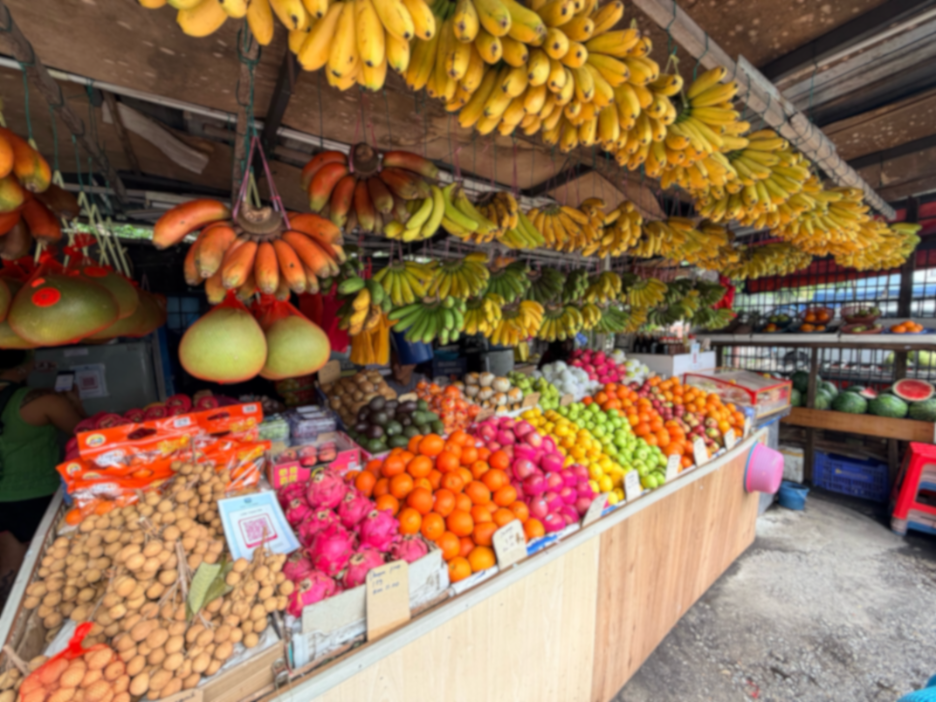
Let me be clear: the food was worth it. Every single meal. The night markets where you eat standing up at midnight and it’s the best thing you’ve had all year. The soy milk and pastry at 7am (after lining up for an hour) tasting inexplicably like comfort. The desserts, the fruit, the tea houses where you lose entire afternoons without minding at all. I don’t regret a bite.
But I also didn’t balance it with any of the things I normally do to feel good in my body. No workouts. No walking with intention — just wandering. Huge meals, late nights, minimal sleep, and the kind of eating that happens when every meal feels like a once-in-a-lifetime experience. Which, in fairness, many of them were.
The ten pounds aren’t a tragedy. They’re feedback. They’re the physical record of a trip where I was fully reactive — to the food, to the schedule, to other people’s agendas — rather than intentional about what I actually wanted from the experience.
So What Do You Actually Do?
I’ve been thinking hard about this. Not about restriction or deprivation — that’s not the point — but about how to travel in a way that feels like something other than a tornado passing through your life.
Here’s what I’m building into the next trip:
Draw a hard line around work hours. Travel gets a work window — mine will be 8am to noon — and after that, the laptop closes and stays closed. No email. No “quick question.” No messages that start with “sorry to bother you on your trip” and then bother you extensively. The world, I have been assured by people who’ve tested this, does not end. (Mandatory disclaimer for any clients reading this: I am being hyperbolic for literary effect. I am extremely reachable. My rates are competitive. Please stay.) But for real — the creep of work into every idle hour was the thing that poisoned this trip most. Not the jet lag, not the packed schedule. The inability to put the work down and just be somewhere.
Bring the minimum viable version of each habit. My workout doesn’t need to be an hour at a proper gym. It can be 20 minutes of bodyweight exercises in the hotel room before breakfast. The blog doesn’t need to be polished — it can be rough notes that I’ll shape later. The piano practice can be a music app on my phone. The goal isn’t to replicate home routine perfectly; it’s to maintain the identity behind it. I’m someone who moves her body and writes. Those things can happen in five square feet.
Protect the morning. Every travel routine I’ve ever seen that actually works starts with protecting the first hour of the day. Before the group itinerary kicks in, before the calls, before anything — that hour is mine. Move, read, write, sit quietly. Whatever the habit is, do a small version of it before the day has a chance to swallow you.
Plan one real rest day per week. Not a light day. An actual rest day. Sleep in. Read the whole book. Sit in a café for three hours. Don’t optimize it. This is the thing that real vacations used to do automatically — enforce rest — and that modern “workcations” eliminate entirely.
Make peace with the food. Great food is one of the best reasons to travel. Eat the things. Enjoy them fully. But eat slowly, eat with attention, and maybe don’t treat every single meal like it’s your last. The frantic, slightly panicked quality of vacation eating — I have to try everything! — is its own kind of stress. You can have the extraordinary bowl of noodles and still drink water and go to bed at a reasonable hour.
Build a return ritual. The transition home is its own skill. I came back and immediately dove into email, which meant the trip never really ended and the re-entry never really began. Next time: one slow day to unpack, do laundry, cook a simple meal, take a long walk, and let my nervous system understand that it’s home. Routines restart the next morning, deliberately, one at a time.
The Bigger Question
The real issue underneath all of this is a question worth sitting with: what is a vacation actually for?
If it’s for adventure and experience, then eat the food, see the things, and accept that your routines will take a hit. That’s a fair trade.
If it’s for rest and restoration, then something has to give — probably the packed itinerary and definitely the work calls.
If it’s for both, which is what most of us want, then you need a structure that makes both possible. Not a rigid schedule, but a shape. A few anchors in the day that keep you from being fully adrift.
I went to Asia as a person who works out, reads, writes, and plays piano. I came back ten pounds heavier with an unread book, no new posts, and hands that had forgotten where the keys were. The food was extraordinary. The trip was genuinely wonderful in many ways.
But next time, I’m bringing a slightly sturdier version of myself along for the ride.
 UpLive.Life