[Written by ChatGPT]
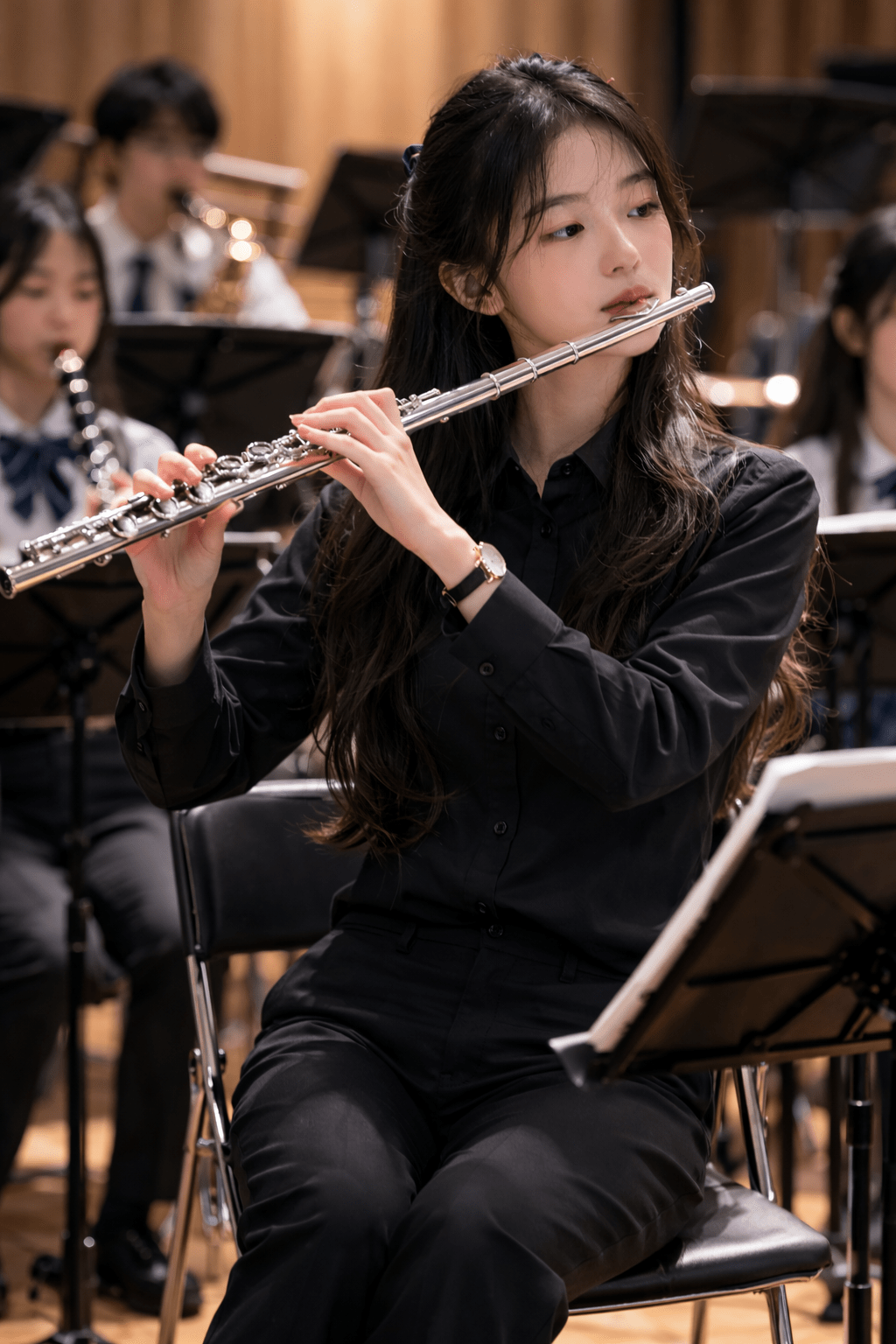
This morning, I sat in the audience at the high school music festival and watched my daughter walk onto the stage with her flute. The lights were bright and the room filled with that low murmur of parents and students waiting for the next performance. She took her seat with the band, smoothed her music, and lifted her instrument.
It was the same flute I played when I was her age.
That flute once rested in my own nervous hands as I waited for my cue in festival performances just like this one. Back then, my whole body would buzz with adrenaline. My mouth would go dry. I’d silently count measures, praying I wouldn’t miss my entrance.
And then came the solo.
I remember how the world seemed to narrow to a single thread of sound. The band would fall away, and suddenly it was just me—one breath, one line of music, exposed and fragile. I was always terrified that my tone would crack or my fingers would slip. But somehow, when the moment came, muscle memory and practice would take over.
Sitting in that auditorium now, I felt all of it again.
When her solo approached, I could see the subtle signs: the deeper breath, the way her shoulders lifted just slightly, the intense focus in her eyes. I knew that feeling. I could practically hear the thoughts racing through her mind. Don’t rush. Support the air. Trust yourself.
Then she played.
Her sound was clear and confident, carrying effortlessly over the supporting clarinet section. It was warm and expressive in a way that was entirely her own. I realized, as the melody unfolded, that while the flute connected us across time, the music belonged fully to her. She wasn’t reliving my story. She was writing her own.
In that moment, pride and nostalgia tangled together in my chest. I remembered being her age, feeling small in a big world. I remembered how monumental those performances felt—how a single solo could define an entire week, maybe even a year.
Now, as a parent, the perspective is different. The festival ratings matter less than the courage it takes to play a solo part. What overwhelms me isn’t whether every note is perfect, but that she is willing to try. That she practices when it’s hard. That she steps into the spotlight even with nerves fluttering inside.
After the performance, she came down from the stage with that mix of relief and excitement I remember so well. “I was so nervous,” she said, laughing. I smiled because I knew. I’ve been there. I’ve held that same flute with the same trembling hands.
The flute has traveled from my childhood to hers, from one generation of nervous high school solos to another. Its silver keys have carried scales, band trips, performances, and now festival melodies played by my daughter.
Music does that—it bridges time. It turns memory into harmony.
As I watched her take her bow, I realized something beautiful: the fear I once felt wasn’t just about performance. It was about caring deeply. And now, seeing her care just as deeply, I understand that those nerves were never a weakness. They were proof that the music mattered.
And it still does.
 UpLive.Life