[Written by ChatGPT. Image credit.]
📘 Chris: The Almanack of Naval Ravikant, Author: Eric Jorgenson, Publication date: 2020 A collection of insights on wealth, happiness, and decision-making drawn from Naval Ravikant’s writings and interviews. It explores how true wealth comes from ownership, leverage, and specific knowledge, while happiness is cultivated as a skill through reduced desires, self-awareness, and long-term thinking.
👉 Big idea: Play long-term games with long-term people, and master yourself.
📗 Lillian: Theo of Golden, Author: Allen Levi, Publication date: 2023 This reflective novel centers on a small-town lawyer and his deepening friendship with a quiet, enigmatic man named Theo. Rather than relying on heavy plot, it delves into themes of meaning, friendship, grief, and faith through quiet moral reflection and inner life.
👉 Big idea: A meaningful life is shaped by relationships and quiet acts of integrity.
📕 Heidi: Still Life, Author: Louise Penny, Publication date: 2005 In a peaceful Quebec village, the apparent accidental death of a beloved local woman reveals itself as murder, drawing Inspector Gamache into the investigation. Beneath the crime, the story focuses on human character, community dynamics, and the hidden tensions that exist beneath small-town harmony.
👉 Big idea: People—and their secrets—matter more than the crime itself.
📺 Babylon Berlin Set in late-1920s Weimar Germany, this noir drama intertwines crime, political intrigue, and social upheaval in a society teetering on the brink of economic collapse and extremism. It portrays a world of cultural decadence, moral ambiguity, and rising instability that foreshadows major political shifts.
👉 Big idea: Cultural decadence and instability often precede major political shifts.
📘 Robert: 1929, Author: Andrew Ross Sorkin, Publication date: 2025 This narrative recounts the stock market crash of 1929 through the perspectives of key personalities involved in the events. It illustrates how speculation, easy credit, overconfidence, and the interplay of finance, politics, and human ego drove the bubble toward collapse.
👉 Big idea: Financial crises are driven as much by human behavior as by economics.
📙 Robert: The Great Crash 1929, Author: John Kenneth Galbraith, Publication date: 1955 This classic analysis examines the causes and mechanisms behind the 1929 stock market crash with a clear, analytical lens. It highlights recurring patterns rooted in speculation, inequality, weak banking systems, and blind optimism, showing how human nature fuels financial bubbles.
👉 Big idea: Bubbles repeat because human nature doesn’t change.
🎧 Kanth: The Rest Is History This engaging podcast brings historical events to life through vivid storytelling, rich context, and focus on the personalities behind major moments. It makes complex history feel immediate and relevant by emphasizing narrative over dry facts.
👉 Big idea: History is best understood through stories, not just facts.
📖 Yuan: Things in Nature Merely Grow, Author: Yiyun Li, Publication date: 2025 This deeply personal and minimalist work by Yiyun Li reflects on life, growth, loss, and the quiet acceptance of what simply exists without forced meaning. It continues her introspective style, suggesting that—like things in nature—we must simply grow through grief and uncertainty.
👉 Big idea: Things in nature merely grow — and so must we, even through grief and uncertainty, without forcing meaning or drama.
📘 Yuan: Notes to John, Author: Joan Didion, Publication date: 2023 Written in the aftermath of her husband’s sudden death, this memoir captures Joan Didion’s experience of grief through the lens of “magical thinking”—the irrational belief that her husband might still return. It portrays grief as a profound disorientation and denial, ultimately showing the slow process of accepting an unchangeable reality.
👉 Big idea: Grief disrupts reality—healing means slowly accepting what cannot be changed.
📙 Hunter: Thinking, Fast and Slow This foundational psychology book introduces two systems of thinking: System 1 (fast, intuitive, and emotional) and System 2 (slow, rational, and deliberate). It reveals how humans are riddled with cognitive biases and mental shortcuts, showing that we are far less rational than we believe.
👉 Big idea: We think we’re rational—but we’re predictably irrational.
📖 Abe: A Tale of Two Cities, Author: Charles Dickens This sweeping historical novel unfolds against the backdrop of the French Revolution, following the intertwined lives of characters in London and Paris amid chaos, violence, and social upheaval. Through themes of resurrection, sacrifice, love, and redemption, it illustrates how personal integrity and quiet heroism can emerge even in the darkest periods of history.
👉 Big idea: In times of upheaval, personal integrity, sacrifice, and redemption can shine through even the darkest history.
[Written by Grok]
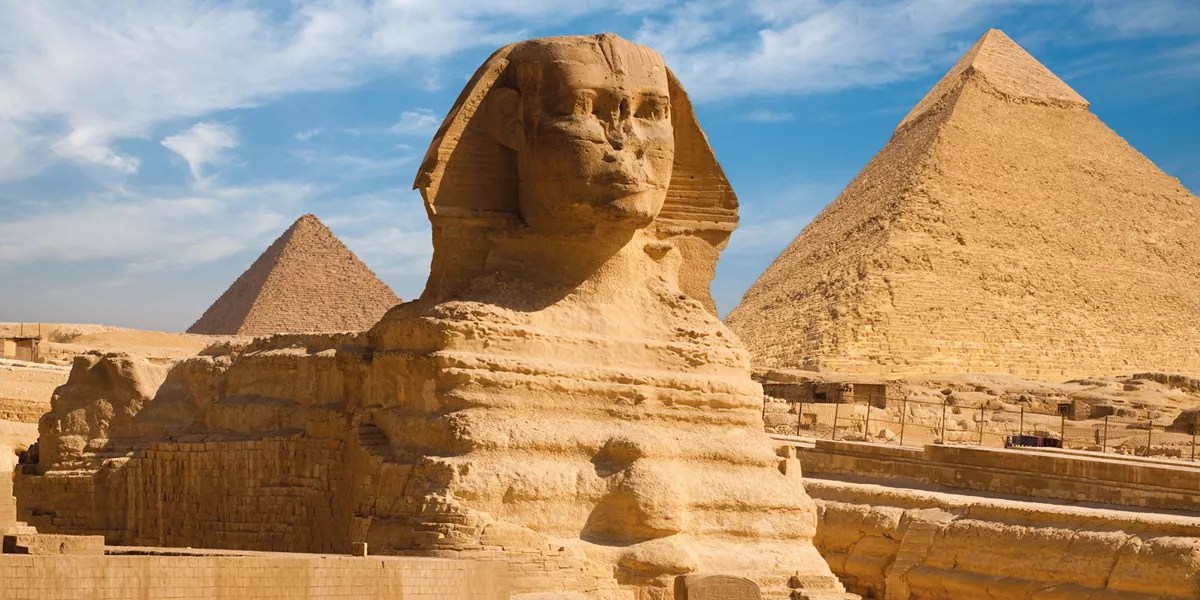
Ed gave a wonderful presentation of his one-week journey through Egypt with breathtaking photographs of the majestic pyramids at Giza, the serene Nile River at sunset, and the intricate hieroglyphs inside ancient temples. He wove an engaging narrative that brought the experience to life: from the Old Kingdom’s monumental pyramid builders and the powerful pharaohs of the Middle Kingdom to the golden age of the New Kingdom with figures like Ramses II and the enigmatic Queen Hatshepsut.
[Written by Grok]
Thematic Summary
Across these works—spanning finance, psychology, history, fiction, memoir, and drama—emerges a profound meditation on living wisely in an unstable world. The selections reveal a recurring truth: external reality is chaotic, cyclical, and often indifferent to human plans, whether manifested in financial crashes, revolutionary upheaval, personal loss, or societal fracture. Yet amid this instability, the books converge on what remains within our control: perception, character, relationships, and inner resilience. From the speculative frenzy of 1929 and the social convulsions of Weimar Germany and the French Revolution to the quiet grief of individual lives and the cognitive biases that drive collective madness, the list paints a portrait of humanity repeatedly confronting the tension between uncontrollable forces and the dignity of individual response. Yiyun Li’s minimalist introspection, Joan Didion’s raw confrontation with “magical thinking,” Dickens’s epic of sacrifice, and Naval Ravikant’s emphasis on leverage and self-mastery all point toward the same quiet wisdom: meaning is not found in denying chaos but in cultivating clarity, integrity, and connection despite it. The stories and ideas repeatedly affirm that bubbles burst, empires fall, loved ones vanish, and minds deceive us—yet the human capacity for judgment, sacrifice, friendship, and simple growth endures as the only stable ground.
Key Takeaways
- Reality is unstable and cyclical Financial bubbles, revolutions, and societal collapses (seen in 1929, The Great Crash 1929, Babylon Berlin, and A Tale of Two Cities) follow recurring patterns driven by overconfidence, leverage, denial, and human nature. Expect cycles rather than permanent stability. Do not build your life assuming external conditions will remain favorable.
- Humans are predictably irrationalThinking, Fast and Slow reveals how System 1 thinking—fast, emotional, and biased—fuels herd behavior, overconfidence, and poor decisions in markets, politics, and daily life. Recognizing these mental shortcuts is essential to avoiding the traps that repeatedly doom individuals and societies.
- Wealth and success demand leverage, ownership, and judgmentThe Almanack of Naval Ravikant teaches that true wealth arises not merely from effort but from specific knowledge, leverage (code, media, capital), and clear long-term thinking. However, the financial histories warn that the same ambition and leverage that create fortunes can also amplify collapses when untethered from wisdom.
- Inner life is the only reliable foundation In times of upheaval or loss—whether revolutionary terror (A Tale of Two Cities), grief (Notes to John, Yiyun Li’s works including Things in Nature Merely Grow), or constraint (Theo of Golden)—external identity, status, or certainty can vanish instantly. Cultivating emotional resilience, self-awareness, acceptance, and quiet dignity becomes the permanent home for the self.
- Meaning arises through relationships and quiet integrityStill Life, Theo of Golden, and A Tale of Two Cities show that community, friendship, and small acts of moral courage give life purpose. Even amid chaos or isolation, relational bonds and personal integrity provide the deepest sources of meaning and redemption.
- Grief and suffering are central, not exceptional Yiyun Li’s minimalist explorations and Joan Didion’s Notes to John demonstrate that loss and pain are woven into existence. Language often fails to contain suffering, yet growth happens anyway—“things in nature merely grow.” We must learn to accept what cannot be changed without forcing false meaning or drama.
- Stories and narrative are essential for wisdomThe Rest Is History, Babylon Berlin, Still Life, and A Tale of Two Cities remind us that while data explains events, stories reveal why they matter and how humans endure. Narrative builds deeper understanding than analysis alone.
Integrated Takeaway
The collective wisdom of this list is both sobering and liberating: the world is largely outside your control—markets crash, revolutions devour their children, loved ones die, and minds play tricks on themselves—yet your response remains yours. Build leverage and wealth with open eyes (Naval), question your own thinking (Kahneman), anchor yourself in relationships and integrity (Penny, Levi, Dickens), and cultivate an inner life resilient enough to weather grief and uncertainty (Didion, Yiyun Li). Like the characters who find redemption amid the French Revolution or the quiet growth that persists through personal loss, the path forward is not to demand perpetual stability or superlative triumph, but to move through the best and worst of times with clarity, dignity, and measured hope—recognizing that in every age of wisdom and foolishness, the truest progress lies in mastering yourself while extending grace to others.
 UpLive.Life