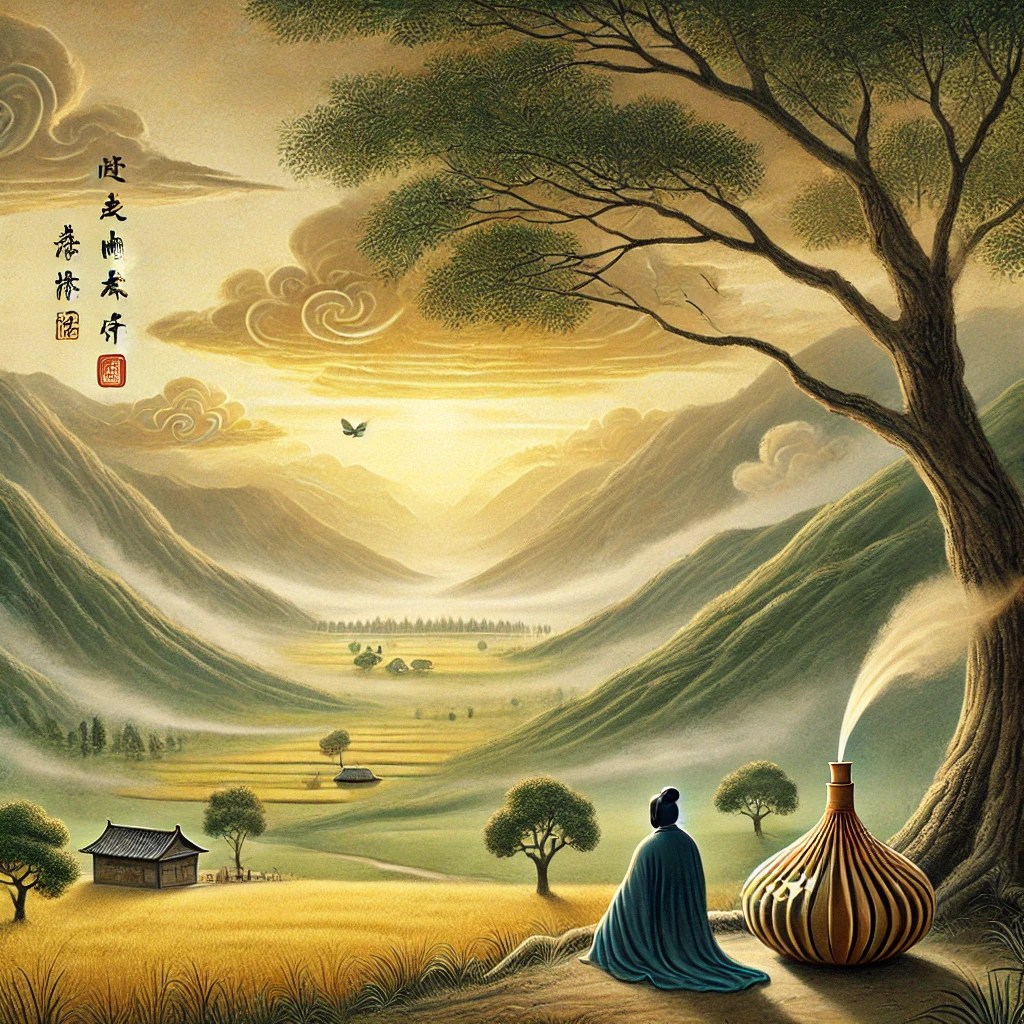
Verse 5 by Lao Zi: 天地不仁,以万物为刍狗;圣人不仁,以百姓为刍狗。天地之间,其犹橐龠乎?虚而不屈,动而愈出。多言数穷,不如守中。
“Heaven and Earth are not benevolent;
They treat all things as straw dogs.
The sage is not benevolent;
He treats the people as straw dogs.
The space between Heaven and Earth,
Is it not like a bellows?
Empty, yet it does not collapse,
Moving, it produces more.
Too many words lead to exhaustion;
Better to hold to the center.”
Related verses:
Verse 3 by Lao Zi: 不尚贤,使民不争;不贵难得之货,使民不为盗;不见可欲,使心不乱。是以圣人之治,虚其心,实其腹,弱其志,强其骨。常使民无知无欲。使夫知者不敢为也。为无为,则无不治。
Verse 2 by Lao Zi: 天下皆知美之为美,斯恶已。皆知善之为善,斯不善已。故有无相生,难易相成,长短相较,高下相倾,音声相和,前后相随。是以圣人处无为之事,行不言之教;万物作焉而不辞,生而不有。为而不恃,功成而弗居。夫唯弗居,是以不去。
[Written by ChatGPT]
Straw Dogs and Bellows
Cultural and Historical Context
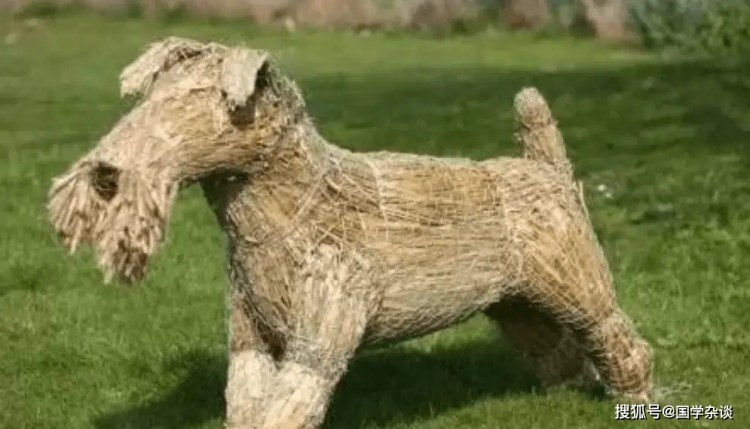
In ancient China, straw dogs were ceremonial objects made from straw or grass, often used in rituals or sacrifices. They were treated with great reverence during the ceremony but were discarded without concern once the ritual was over.
The idea of straw dogs reflects a temporary utility and a lack of intrinsic or lasting value after their purpose has been fulfilled.
Symbolism in the Daodejing
In the Daodejing, the term 刍狗 serves as a metaphor for how Heaven and Earth, as well as the sage, treat all things and people:
- Impartiality: The Daodejing uses the straw dog to illustrate how Heaven and Earth, as embodiments of the Dao, do not show favoritism or emotional attachment. Everything in the natural world is treated equally, without preference or bias.
- Transience: The metaphor also reflects the transient nature of life and the impermanence of all things. Like the straw dog, objects and individuals have their time and purpose, after which they return to the larger cycle of existence without fanfare or sentimentality.
Broader Implications
The use of “straw dogs” in this context challenges human-centered values like benevolence, attachment, and sentimentality. Laozi suggests that the natural way (Dao) operates beyond human emotions, reflecting a detached and balanced perspective that recognizes the impermanence and equality of all things.
Key Takeaway
刍狗 represents the impartial and utilitarian way in which the natural order and the wise ruler (sage) engage with the world. It is not meant to imply callousness but rather to encourage a perspective aligned with the natural rhythms of life, free from excessive attachment or bias.
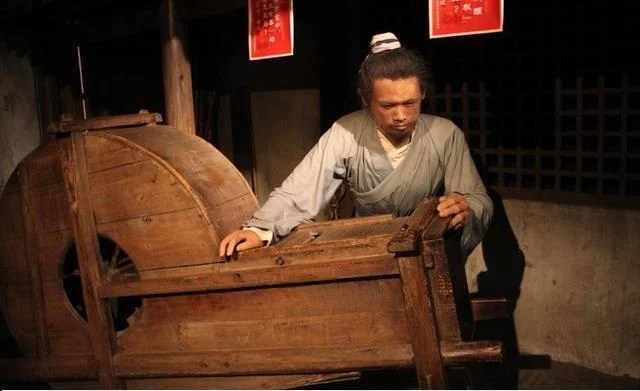
橐龠 (tuó yuè) refers to a bellows, a device used in ancient times (and still in some cases today) to blow air into a fire to intensify the heat. It is a symbolic metaphor used in the Daodejing to illustrate concepts related to emptiness, potential, and the continuous generation of energy.
Symbolism of 橐龠
- Emptiness with Potential:
- The bellows is empty inside, yet its emptiness is what allows it to function. Similarly, the Dao operates through emptiness, creating endless potential and energy.
- Continuous Flow:
- The motion of the bellows creates an infinite flow of air. This reflects the Dao’s ability to generate abundance and maintain balance without being depleted.
- Non-Interference:
- The bellows does not force or strain; it simply facilitates the natural flow of air. This aligns with the principle of wu wei (non-action or effortless action) in the Daodejing.
Philosophical Implications
- Space and Energy: The bellows demonstrates that emptiness is not useless; instead, it is the source of potential and creation. This contrasts with the human tendency to undervalue what is empty or intangible.
- The Infinite Nature of the Dao: Just as the bellows can continually produce air, the Dao is inexhaustible in its ability to generate and sustain life.
- Balance and Harmony: The bellows works because of its balance between emptiness and movement. Similarly, aligning with the Dao involves finding balance in life.
Conclusion
橐龠 (tuó yuè) symbolizes the profound utility of emptiness and the infinite potential of the Dao. Through this metaphor, Laozi conveys the importance of non-action, balance, and harnessing the power of what is unseen or intangible. It encourages readers to recognize the creative power of stillness and simplicity in both nature and life.
The Interwoven Wisdom of the Fifth Verse of the Daodejing
The ideas in the fifth verse of the Daodejing—the impartiality of Heaven and Earth, the sage’s governance, the bellows metaphor, and the value of simplicity—are deeply interconnected. Together, they form a cohesive philosophical reflection on how the Dao operates and how humans, especially leaders, can align with its principles. Here’s how these ideas are connected and why they are presented in the same verse:
1. Impartiality of Heaven and Earth
- Connection to the Sage:
- The impartiality of Heaven and Earth serves as a model for the sage’s governance. Just as nature operates without favoritism or emotion, the sage strives to lead with detachment, treating all people equally, like “straw dogs.” This impartiality ensures fairness and harmony, avoiding chaos caused by personal bias or excessive interference.
- Why It’s Included:
- By starting with this concept, Laozi establishes the natural order (Dao) as the ultimate example of balance and functionality, setting the stage for human behavior to mirror this cosmic principle.
2. The Sage’s Governance
- Connection to the Bellows:
- The sage’s approach to leadership—impartial, detached, and aligned with the Dao—is mirrored in the bellows metaphor. The sage, like the bellows, achieves great results (harmony and abundance) by working with the natural flow rather than imposing force or control.
- Why It’s Included:
- The verse shifts from the cosmic level (Heaven and Earth) to the human level (the sage), emphasizing that effective leadership is rooted in natural principles of balance and non-interference.
3. The Bellows Metaphor
- Connection to Simplicity and Restraint:
- The bellows symbolizes infinite potential arising from emptiness and movement. This ties directly to the principle of simplicity—avoiding unnecessary complexity and allowing the Dao to work naturally. Excessive words or actions (symbolized by “too many words lead to exhaustion”) disrupt this balance.
- Why It’s Included:
- The bellows illustrates how seemingly passive or empty things (like the Dao) are powerful and productive. This reinforces the need for simplicity and restraint, showing that less can often achieve more.
4. Simplicity and Restraint
- Connection to the Sage and Bellows:
- Simplicity and restraint are practical applications of the Dao. Just as the bellows produces energy without effort and the sage governs without excess, individuals are advised to embrace simplicity in their thoughts, speech, and actions. This is the ultimate “holding to the center.”
- Why It’s Included:
- The closing lines offer a practical takeaway for readers: avoid overcomplication, align with natural rhythms, and find harmony by focusing on essentials.
Why Are These Ideas in the Same Verse?
- Unified Theme of the Dao’s Principles:
- The verse explores how the Dao operates (impartiality, potential through emptiness, balance) and how humans can emulate these principles in governance and daily life.
- Cosmic to Practical Connection:
- The progression from the impartiality of Heaven and Earth, to the sage’s governance, to the bellows, and finally to simplicity reflects a movement from universal principles to actionable advice.
- Emphasis on Non-Interference:
- All these ideas share the core concept of wu wei (non-action or effortless action). Heaven and Earth do not interfere, the sage governs without imposing, the bellows functions through emptiness, and simplicity avoids unnecessary effort—all aligning with the Dao’s way of letting things flow naturally.
- Balance and Harmony:
- The verse presents a holistic vision of balance: the impartiality of nature, the fairness of the sage, the productive emptiness of the bellows, and the clarity of simplicity all contribute to a harmonious existence.
Summary
The fifth verse of the Daodejing is a masterful synthesis of interconnected ideas:
- Heaven and Earth provide the ultimate example of impartiality.
- The sage applies this principle to governance, fostering harmony without interference.
- The bellows illustrates the generative power of emptiness and movement, reinforcing the value of non-action.
- Simplicity and restraint serve as practical advice for living in accordance with these principles.
By uniting these concepts in a single verse, Laozi creates a cohesive and profound reflection on how individuals and leaders can align with the natural order of the Dao to cultivate balance, harmony, and effectiveness.
Word by Word Breakdown
Original Text:
天地不仁,以万物为刍狗;
圣人不仁,以百姓为刍狗。
天地之间,其犹橐龠乎?
虚而不屈,动而愈出。
多言数穷,不如守中。
Line 1: 天地不仁,以万物为刍狗
- 天 (tiān): Heaven; the sky; a metaphor for the natural order.
- 地 (dì): Earth; the ground; complementary to Heaven.
- 不 (bù): Not; negation.
- 仁 (rén): Benevolence; kindness, humaneness.
- 以 (yǐ): To use, to treat, or to regard.
- 万物 (wàn wù): All things; the myriad creatures and phenomena of the universe.
- 为 (wéi): To act as, to treat as.
- 刍狗 (chú gǒu): Straw dogs; ceremonial objects that were respected during rituals but discarded afterward.
Translation:
“Heaven and Earth are not benevolent; they treat all things as straw dogs.”
Interpretation:
The universe operates with impartiality, treating all things equally without emotional attachment or favoritism. Nature is indifferent to human values like benevolence or cruelty.
Line 2: 圣人不仁,以百姓为刍狗
- 圣人 (shèng rén): The sage; a wise and enlightened person or ruler.
- 不 (bù): Not; negation.
- 仁 (rén): Benevolence; kindness, humaneness.
- 以 (yǐ): To use, to treat, or to regard.
- 百姓 (bǎi xìng): The people; common people, citizens.
- 为 (wéi): To act as, to treat as.
- 刍狗 (chú gǒu): Straw dogs; see above.
Translation:
“The sage is not benevolent; he treats the people as straw dogs.”
Interpretation:
The sage, like Heaven and Earth, governs with impartiality, treating all people equally. This is not cruelty but a reflection of fairness and detachment from personal emotions.
Line 3: 天地之间,其犹橐龠乎
- 天地 (tiān dì): Heaven and Earth; the natural order.
- 之间 (zhī jiān): Between; the space between.
- 其 (qí): Its, is it not?
- 犹 (yóu): Like, as if.
- 橐龠 (tuó yuè): Bellows; a device used to blow air, symbolizing emptiness and potential.
Translation:
“Is not the space between Heaven and Earth like a bellows?”
Interpretation:
The space between Heaven and Earth, like a bellows, is empty yet full of potential. It represents the inexhaustible and generative nature of the Dao.
Line 4: 虚而不屈,动而愈出
- 虚 (xū): Empty; void.
- 而 (ér): And; yet.
- 不 (bù): Not.
- 屈 (qū): Collapse, bend, or diminish.
- 动 (dòng): To move, to act.
- 而 (ér): And; yet.
- 愈 (yù): Even more, increasingly.
- 出 (chū): To emerge, to produce.
Translation:
“Empty, yet it does not collapse; in motion, it produces even more.”
Interpretation:
The bellows symbolizes how emptiness is not weakness but a source of endless potential. Movement generates abundance, just as the Dao creates without exhaustion.
Line 5: 多言数穷,不如守中
- 多言 (duō yán): Many words; excessive talking.
- 数穷 (shù qióng): Exhaustion of reasoning; reaching a limit or dead end.
- 不如 (bù rú): Not as good as; better to.
- 守 (shǒu): To hold, to maintain, to guard.
- 中 (zhōng): The center; balance, moderation.
Translation:
“Too many words lead to exhaustion; better to hold to the center.”
Interpretation:
Laozi warns against overcomplication and excessive speech, which can drain energy and create confusion. Instead, he advocates for simplicity, balance, and staying grounded.
Summary of the Word-for-Word Breakdown
- Heaven and Earth’s Impartiality: Nature operates without human-like benevolence, treating all things equally.
- The Sage’s Governance: A wise ruler emulates this impartiality, treating people without emotional bias or favoritism.
- The Bellows as a Metaphor: Emptiness and potential are central to the Dao. Movement within this emptiness generates abundance.
- Simplicity and Restraint: Excessive words or actions lead to exhaustion; maintaining balance and moderation is key.
Practical Takeaways
- Embrace impartiality and fairness in decision-making.
- Recognize the value of simplicity and avoid overcomplicating matters.
- Trust in the potential of “emptiness” (space, silence, or non-action) to create opportunities and solutions.
- Focus on balance and moderation as a way to navigate life’s challenges effectively.
 UpLive.Life
One thought on “Impartiality, Balance, and Simplicity”