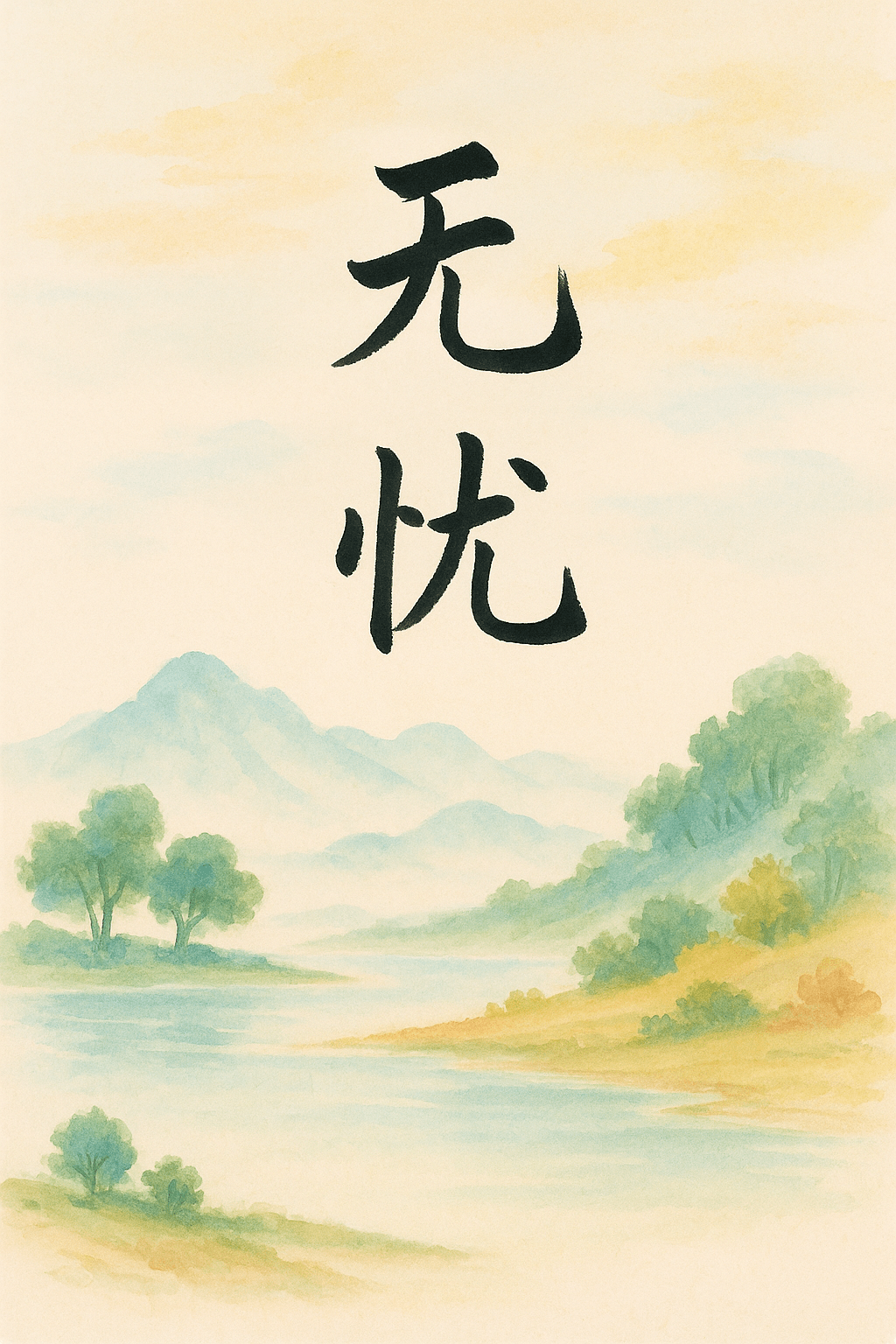
Verse 19 by Lao Zi: 绝圣弃智,民利百倍;绝仁弃义,民复孝慈;绝巧弃利,盗贼无有。此三者以为文不足,故令有所属;见素抱朴,少私寡欲;绝学无忧
Abolish sagehood and discard wisdom — the people will benefit a hundredfold.
Abandon benevolence and discard righteousness — the people will return to filial piety and compassion.
Eliminate cleverness and forsake profit — there will be no thieves or robbers.
These three things are not enough in themselves;
Thus, let people have something to turn to:
See the plain, embrace simplicity,
Reduce selfishness, lessen desires.
Abandon learning, and you will be free from worry.
Related Post: Verse 18
[Written by ChatGPT]
At first glance, Laozi’s words seem dangerous: abandon wisdom? discard learning? eliminate virtue? Isn’t that the path to ignorance and chaos?
But Laozi is not anti-knowledge. He is anti-artificial knowledge — the kind of cleverness and moral posturing that disconnects us from truth, simplicity, and natural harmony. This chapter is a warning against a world where image replaces essence, where thinking outpaces being, and where learning becomes a distraction from living.
1. “Abolish sagehood and discard wisdom — the people will benefit a hundredfold.”
Here, “sagehood” (shèng) and “wisdom” (zhì) don’t mean real inner clarity — they refer to elite knowledge, strategic thinking, and clever manipulation. When a society is led by schemers and “wise” politicians, ordinary people suffer.
Laozi suggests that if we let go of this performative brilliance, people would live more simply, honestly, and peacefully.
Today’s version? When experts complicate what should be simple — in finance, health, governance — the average person is burdened. If systems were straightforward and built on common sense, more people would thrive.
2. “Abandon benevolence and discard righteousness — the people will return to filial piety and compassion.”
When ren (benevolence) and yi (righteousness) must be declared, it’s because they’ve already been lost. Laozi implies that true kindness doesn’t need to be taught — it emerges naturally when life is in harmony.
Modern parallel: In times of social breakdown, institutions overcompensate with moral codes, PR campaigns, and slogans. But real compassion isn’t scripted — it arises from connection, not compliance.
3. “Eliminate cleverness and forsake profit — there will be no thieves or robbers.”
Cleverness (qiǎo) and profit-seeking (lì) may drive innovation, but they also fuel deception, greed, and exploitation. Laozi observes that when people are obsessed with getting ahead, they’re more likely to cheat, steal, or harm others.
He proposes: What if we stopped glorifying gain? What if we made enough enough?
In practice: Simpler systems with fewer incentives to exploit others — in business, education, or politics — foster a healthier society.
Why He Says “Abandon Learning”
Laozi’s line — “Abandon learning, and you will be free from worry” — can sound anti-intellectual. But the word “learning” (xué) here refers not to deep understanding, but to empty scholarship, memorized dogma, and contrived philosophies that take us further from reality.
He doesn’t mean stop thinking. He means stop overthinking.
Modern life floods us with information, advice, opinions. Much of it makes us anxious or feel inadequate. Laozi suggests letting go of the need to know more in order to be more. Instead, he tells us to:
- “See the plain” – Value what is simple and unadorned.
- “Embrace simplicity” – Choose ease over complication.
- “Reduce selfishness” – Be less ego-driven.
- “Lessen desires” – Want less, and suffer less.
This is not ignorance. It’s clarity.
What This Means for Us
Laozi is reminding us that when the world becomes too clever, too moralistic, and too self-interested, it loses its soul.
Instead of trying to solve everything with intellect, we can:
- Return to stillness and observation.
- Value natural kindness over imposed ethics.
- Simplify where we’ve overcomplicated.
- Trust our own sense of what feels grounded and real.
Final Thought:
The Dao De Jing doesn’t say don’t learn — it says don’t let your learning separate you from life. When knowledge becomes noise, step back. When virtue becomes performance, return to quiet goodness.
Sometimes, the wisest thing you can do is unlearn what the world has taught you — and remember what you always knew.
 UpLive.Life