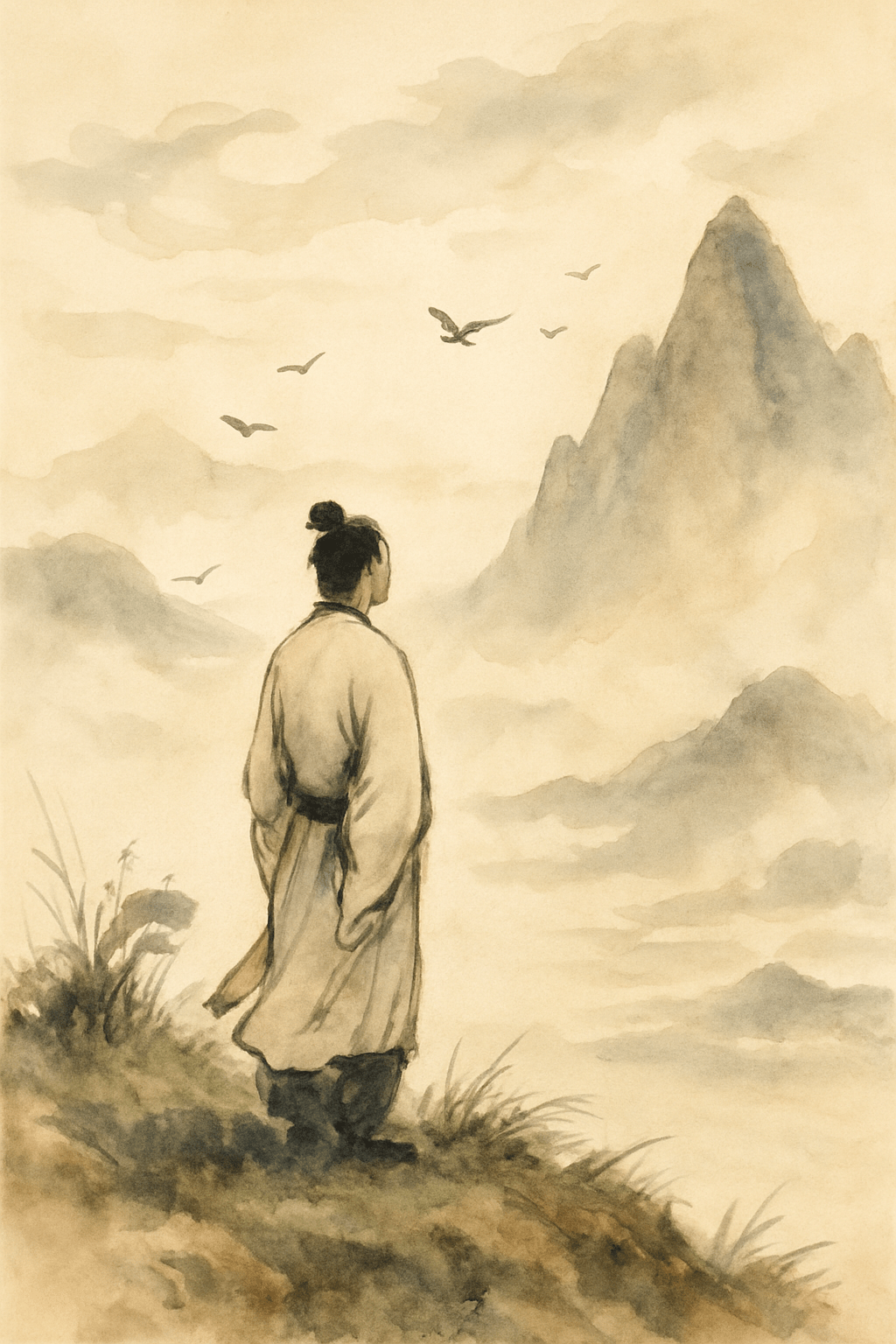
Verse 20 by Lao Zi: 唯之与阿,相去几何?美之与恶,相去若何?人之所畏,不可不畏。荒兮,其未央哉!众人熙熙,如享太牢,如春登台。我独泊兮,其未兆;沌沌兮,如婴儿之未孩;傫傫兮,若无所归。众人皆有余,而我独若遗。我愚人之心也哉!俗人昭昭,我独昏昏。俗人察察,我独闷闷。澹兮,其若海;飂兮,若无止。众人皆有以,而我独顽且鄙。我独异于人,而贵食母。
Agreement and flattery — how far apart are they?
Goodness and evil — how different are they?
What people fear, one cannot but fear as well.
How vast and boundless — it all seems without end!
The multitude are merry,
as if feasting at a grand sacrifice,
as if ascending a terrace in spring.
I alone am still, quiet,
like an infant not yet born.
Weary and aimless,
like one with no home to return to.
The people all have more than enough,
but I alone seem to have lost everything.
How foolish I must be!
So confused, so dull.
The common people are so bright and sharp,
but I alone am dim and muddled.
They are so discerning,
but I alone am closed and withdrawn.
Vast and drifting, like the sea.
Blown about, as if with no resting place.
Everyone else has their purpose,
but I alone am stubborn and uncouth.
I alone am different from the others —
I value the nourishment of the mother.
[Written by ChatGPT]
When Wisdom Feels Like Loneliness
In most of the Dao De Jing, Laozi writes like a detached observer — calm, cosmic, mysterious. But in Chapter 20, something shifts. Suddenly, he sounds personal. Vulnerable. Almost… sad.
He describes a world buzzing with certainty and cheer — people celebrating, pursuing knowledge, climbing ladders of power and status. And then there’s him: still, unsure, disconnected. He feels like a baby not yet born, like a wanderer with no home.
Why this sudden emotional honesty?
Because to walk the Dao is to walk alone.
Why Laozi Feels Out of Place
Laozi isn’t confused — he’s awake. What makes him feel lost is the fact that everyone else is sleepwalking.
He sees:
- People calling themselves wise while chasing personal gain.
- Societies praising morality because they’ve lost their natural harmony.
- Individuals obsessed with appearances, while their roots are withering.
So he steps back. But stepping back makes him look foolish — to others, and maybe sometimes to himself.
“The people all have more than enough,
but I alone seem to have lost everything.”
It’s a relatable feeling — when you choose a different path in life, people may not understand. You may not be able to explain. And the farther you walk, the lonelier it sometimes feels.
“I Alone Am Different”
Laozi ends this poetic reflection not in despair, but in quiet strength:
“I alone am different from others —
I value the nourishment of the mother.”
In Daoist philosophy, the “mother” symbolizes the Dao itself — the natural, nurturing source of all life. Instead of chasing approval, profit, or certainty, Laozi turns inward, choosing to stay rooted in what is real, original, and nourishing.
It’s a powerful message:
It’s okay to be out of sync with a world that has lost its way.
Better to feel alone and be true than to feel accepted and be hollow.
Modern Lessons from Chapter 20
This passage speaks to anyone who:
- Has felt out of step with the culture around them.
- Has chosen simplicity in a world that praises complexity.
- Has questioned success, status, or certainty.
- Has walked away from noise in search of something quieter and deeper.
Laozi reminds us that:
- Clarity can feel like confusion when everyone else is chasing illusions.
- Authenticity can feel like exile when the crowd rewards conformity.
- Stillness can feel like stagnation until you realize you’re rooted, not stuck.
Final Thought
Chapter 20 of the Dao De Jing is not a lament. It’s a gentle affirmation.
It tells us that:
If you feel like you don’t fit in —
you might just be seeing things more clearly than most.
There is strength in stillness. There is wisdom in wandering. There is peace in walking away from what the world insists you need.
And when the path feels lonely, remember:
You are not lost. You are just ahead of your time.
Title: What If Enough Is Already Enough? Reflections on Success, Simplicity, and Chapter 20 of the Dao De Jing
In Chapter 20 of the Dao De Jing, Laozi writes like someone watching the world from a quiet distance:
“The people are so bright and self-assured.
But I alone seem dim and dull.
Everyone else has a purpose.
I alone drift like the sea.”
He sees the world rushing forward — striving, comparing, chasing — and he wonders: Why? Why the frenzy? Why the constant hunger for more?
He doesn’t offer condemnation, just quiet contrast. While others seek certainty and accomplishment, he embraces stillness, simplicity, and the unquantifiable nourishment of the Dao — the deeper flow of life.
Why Is Success So Important to People?
We live in a culture — global and ancient — that reveres “success”. It’s often defined by:
- Wealth: Having more than you need.
- Status: Being recognized and admired.
- Power: Being in control of resources or people.
- Achievement: Having a résumé that impresses others.
From a survival standpoint, this made sense: those who had more were safer. From a social standpoint, it made sense: admiration brought opportunity. And for many immigrants, marginalized groups, and war survivors, success was tied to security, respect, and freedom — real and hard-earned.
But somewhere along the way, it became a treadmill, not a destination. Enough stopped being enough.
The Parental Wish for “Extraordinary”
Why do parents — even wise, loving, peaceful ones — so often want their children to be “extraordinary”?
Not just good. Not just content. But standout. Wealthy. Impressive.
It’s rarely about greed. Often, it’s about fear:
- Fear they won’t be safe.
- Fear they won’t be valued.
- Fear they’ll suffer the humiliations or hardships the parent endured.
And so, love becomes entangled with expectation:
“Be exceptional — not because I need it, but because the world is cruel, and I want it to treat you well.”
But this well-meaning wish can sometimes crowd out a deeper question:
What if your child wants a peaceful, ordinary life?
What if their enough is enough?
Laozi’s Quiet Rebellion
Chapter 20 shows Laozi stepping back from a society obsessed with brightness, cleverness, and success:
“I alone am different from the others —
I cherish the nourishment of the mother.”
He isn’t lost — he just doesn’t want what others want.
He sees the source of life (the Dao) as sufficient. He embraces his difference, not in defiance, but in fidelity to a truth that can’t be quantified: peace, simplicity, presence.
Laozi’s message is especially powerful today, in a world that confuses productivity with worth, ambition with meaning, and wealth with safety.
Can We Want Less — and Still Be Whole?
This is the hidden courage in Laozi’s words:
Not the courage to be great — but the courage to be small, and still whole.
To live without applause, and still feel complete.
To raise a child who is kind and grounded, not just impressive.
Maybe the path forward isn’t to reject success, but to redefine it:
- Not in numbers, but in presence.
- Not in legacy, but in inner peace.
- Not in admiration, but in alignment with who we really are.
Final Reflection
It’s okay to want a good life for your children. It’s okay to strive, to build, to hope. But we should ask ourselves:
What if the extraordinary life we wish for them
is one where they don’t have to prove themselves every day?
What if we raised children who knew that peace, kindness, and simplicity were enough?
What if we lived as if that were true for us, too?
Because maybe the ones who drift a little —
the ones who seem dim and odd in a bright, clever world —
are the ones most aligned with the flow of life itself.
Just like Laozi.
唯之与阿,相去几何?
Wéi zhī yǔ ā, xiāng qù jǐ hé?
Agreement and flattery — how far apart are they?
美之与恶,相去若何?
Měi zhī yǔ è, xiāng qù ruò hé?
Goodness and evil — how different are they?
人之所畏,不可不畏。
Rén zhī suǒ wèi, bù kě bù wèi.
What people fear, one cannot but fear.
荒兮,其未央哉!
Huāng xī, qí wèi yāng zāi!
How vast and boundless — it all seems without end!
众人熙熙,如享太牢,
Zhòng rén xī xī, rú xiǎng tài láo,
The multitude are merry, as if feasting at a grand sacrifice,
如春登台。
Rú chūn dēng tái.
As if ascending a terrace in spring.
我独泊兮,其未兆;
Wǒ dú bó xī, qí wèi zhào;
I alone am still and quiet;
沌沌兮,如婴儿之未孩;
Dùn dùn xī, rú yīng ér zhī wèi hái;
Confused and dim, like a baby who has not been born.
傫傫兮,若无所归。
Lěi lěi xī, ruò wú suǒ guī.
Weary and aimless, like one with no home.
众人皆有余,
Zhòng rén jiē yǒu yú,
The people all have more than enough,
而我独若遗。
Ér wǒ dú ruò yí.
But I alone seem to have lost everything.
我愚人之心也哉!
Wǒ yú rén zhī xīn yě zāi!
How foolish is the heart of mine!
俗人昭昭,
Sú rén zhāo zhāo,
Common people are so bright and certain,
我独昏昏。
Wǒ dú hūn hūn.
But I alone am dim and confused.
俗人察察,
Sú rén chá chá,
Common people are so sharp and precise,
我独闷闷。
Wǒ dú mèn mèn.
But I alone am dull and muddled.
澹兮,其若海;
Dàn xī, qí ruò hǎi;
Calm like the sea,
飂兮,若无止。
Liù xī, ruò wú zhǐ.
Drifting like the wind with no place to land.
众人皆有以,
Zhòng rén jiē yǒu yǐ,
Everyone else has their means and goals,
而我独顽且鄙。
Ér wǒ dú wán qiě bǐ.
But I alone am stubborn and uncouth.
我独异于人,
Wǒ dú yì yú rén,
I alone am different from others,
而贵食母。
Ér guì shí mǔ.
And I cherish the nourishment of the mother.
 UpLive.Life