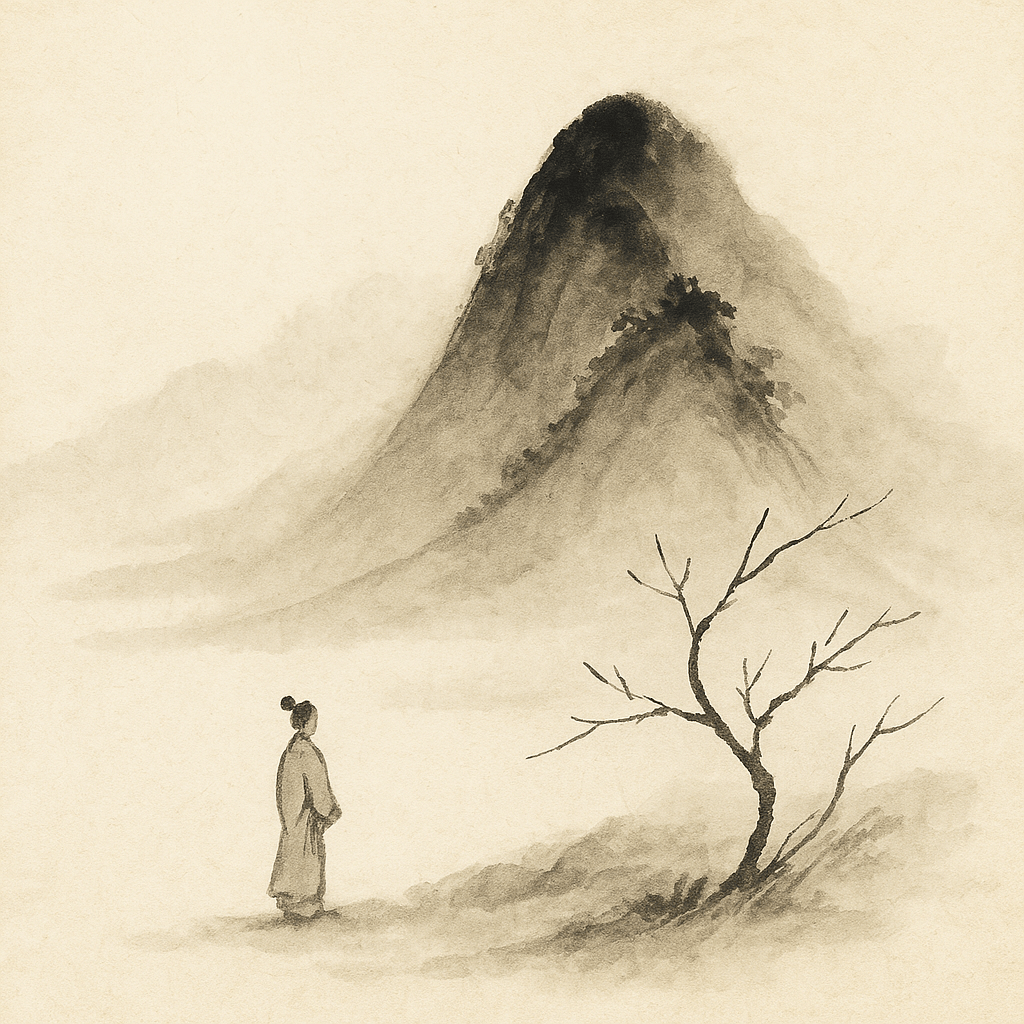
Verse 24 by Lao Zi: 企者不立,跨者不行;自见者不明;自是者不彰;自伐者无功;自矜者不长。其在道也,曰余食赘形。物或恶之,故有道者不处。
Those who tiptoe do not stand firm.
Those who stride ahead do not walk the true path.
Those who show themselves are not seen clearly.
Those who justify themselves are not respected.
Those who boast achieve no real merit.
Those who are proud do not endure.
In the Way (Dao), these are called:
‘Leftover food’ and ‘excess baggage.’
They are disliked by all things.
So those who follow the Dao do not dwell in them.
[Written by ChatGPT]
Chapter 24 of the Dao De Jing offers a powerful lesson about ego, excess, and unnatural striving, using vivid metaphors to show what it means to be out of step with the Dao (the natural Way). Here’s a breakdown of what it teaches:
🧍♂️ 1. Overreaching Leads to Instability
“Those who tiptoe do not stand firm.
Those who stride ahead do not walk the true path.”
These lines critique unnatural ambition — trying to get ahead too quickly or forcefully. Tiptoeing may elevate you for a moment, but it’s unstable. Striding might look bold, but it breaks rhythm.
Lesson:
True strength and progress come from balance and groundedness, not from performance or haste.
👁️ 2. Ego Obscures True Character
“Those who show themselves are not seen clearly.
Those who justify themselves are not respected.”
Laozi warns against self-promotion and self-righteousness. When someone tries too hard to be noticed or seen as right, they often achieve the opposite: people mistrust them or see through them.
Lesson:
Let your character speak for itself. The more you seek external validation, the less clearly others can perceive your essence.
🏆 3. Boasting and Pride Are Counterproductive
“Those who boast achieve no real merit.
Those who are proud do not endure.”
Laozi contrasts true virtue, which is subtle and quiet, with empty showmanship. Boasting may attract applause, but it lacks substance and leads to resentment. Pride builds separation between people and invites downfall.
Lesson:
Real achievement and endurance come from humility and quiet strength.
🥣 4. Excess Is Useless
“In the Way, these are called ‘leftover food’ and ‘excess flesh.’
They are disliked by all things.”
This harsh metaphor — “leftover food” and “useless fat” — paints egoistic behavior as wasteful, unattractive, and burdensome. In nature, excess is often pruned away. In society, those who demand too much attention become alienating.
Lesson:
The Dao values simplicity, sufficiency, and modesty. Ego is not just unhelpful — it is repellent to both people and nature.
🧘♀️ 5. The Sage Avoids These Traps
“So those who follow the Dao do not dwell in them.”
In the end, the sage — one who seeks to live according to the Dao — avoids pride, boasting, self-justification, and unnatural striving. She stays low, quiet, and grounded — and because of that, she is respected, effective, and lasting.
🌿 Core Teaching:
Ego and showmanship are like weeds that choke out true virtue.
The Dao does not favor the flashy, the loud, or the proud — it supports those who act with humility, balance, and sincerity.
Chapter 24 of the Dao De Jing offers a powerful lesson about ego, excess, and unnatural striving, using vivid metaphors to show what it means to be out of step with the Dao (the natural Way). Here’s a breakdown of what it teaches:
🧍♂️ 1. Overreaching Leads to Instability
“Those who tiptoe do not stand firm.
Those who stride ahead do not walk the true path.”
These lines critique unnatural ambition — trying to get ahead too quickly or forcefully. Tiptoeing may elevate you for a moment, but it’s unstable. Striding might look bold, but it breaks rhythm.
Lesson:
True strength and progress come from balance and groundedness, not from performance or haste.
👁️ 2. Ego Obscures True Character
“Those who show themselves are not seen clearly.
Those who justify themselves are not respected.”
Laozi warns against self-promotion and self-righteousness. When someone tries too hard to be noticed or seen as right, they often achieve the opposite: people mistrust them or see through them.
Lesson:
Let your character speak for itself. The more you seek external validation, the less clearly others can perceive your essence.
🏆 3. Boasting and Pride Are Counterproductive
“Those who boast achieve no real merit.
Those who are proud do not endure.”
Laozi contrasts true virtue, which is subtle and quiet, with empty showmanship. Boasting may attract applause, but it lacks substance and leads to resentment. Pride builds separation between people and invites downfall.
Lesson:
Real achievement and endurance come from humility and quiet strength.
🥣 4. Excess Is Useless
“In the Way, these are called ‘leftover food’ and ‘excess flesh.’
They are disliked by all things.”
This harsh metaphor — “leftover food” and “useless fat” — paints egoistic behavior as wasteful, unattractive, and burdensome. In nature, excess is often pruned away. In society, those who demand too much attention become alienating.
Lesson:
The Dao values simplicity, sufficiency, and modesty. Ego is not just unhelpful — it is repellent to both people and nature.
🧘♀️ 5. The Sage Avoids These Traps
“So those who follow the Dao do not dwell in them.”
In the end, the sage — one who seeks to live according to the Dao — avoids pride, boasting, self-justification, and unnatural striving. She stays low, quiet, and grounded — and because of that, she is respected, effective, and lasting.
🌿 Core Teaching:
Ego and showmanship are like weeds that choke out true virtue.
The Dao does not favor the flashy, the loud, or the proud — it supports those who act with humility, balance, and sincerity.
Chapter 24 of the Dao De Jing offers a powerful lesson about ego, excess, and unnatural striving, using vivid metaphors to show what it means to be out of step with the Dao (the natural Way). Here’s a breakdown of what it teaches:
🧍♂️ 1. Overreaching Leads to Instability
“Those who tiptoe do not stand firm.
Those who stride ahead do not walk the true path.”
These lines critique unnatural ambition — trying to get ahead too quickly or forcefully. Tiptoeing may elevate you for a moment, but it’s unstable. Striding might look bold, but it breaks rhythm.
Lesson:
True strength and progress come from balance and groundedness, not from performance or haste.
👁️ 2. Ego Obscures True Character
“Those who show themselves are not seen clearly.
Those who justify themselves are not respected.”
Laozi warns against self-promotion and self-righteousness. When someone tries too hard to be noticed or seen as right, they often achieve the opposite: people mistrust them or see through them.
Lesson:
Let your character speak for itself. The more you seek external validation, the less clearly others can perceive your essence.
🏆 3. Boasting and Pride Are Counterproductive
“Those who boast achieve no real merit.
Those who are proud do not endure.”
Laozi contrasts true virtue, which is subtle and quiet, with empty showmanship. Boasting may attract applause, but it lacks substance and leads to resentment. Pride builds separation between people and invites downfall.
Lesson:
Real achievement and endurance come from humility and quiet strength.
🥣 4. Excess Is Useless
“In the Way, these are called ‘leftover food’ and ‘excess flesh.’
They are disliked by all things.”
This harsh metaphor — “leftover food” and “useless fat” — paints egoistic behavior as wasteful, unattractive, and burdensome. In nature, excess is often pruned away. In society, those who demand too much attention become alienating.
Lesson:
The Dao values simplicity, sufficiency, and modesty. Ego is not just unhelpful — it is repellent to both people and nature.
🧘♀️ 5. The Sage Avoids These Traps
“So those who follow the Dao do not dwell in them.”
In the end, the sage — one who seeks to live according to the Dao — avoids pride, boasting, self-justification, and unnatural striving. She stays low, quiet, and grounded — and because of that, she is respected, effective, and lasting.
🌿 Core Teaching:
Ego and showmanship are like weeds that choke out true virtue.
The Dao does not favor the flashy, the loud, or the proud — it supports those who act with humility, balance, and sincerity.
企者不立,
Qǐ zhě bù lì,
Those who tiptoe do not stand firm.
跨者不行;
Kuà zhě bù xíng;
Those who stride ahead do not walk the true path.
自见者不明;
Zì jiàn zhě bù míng;
Those who show themselves are not seen clearly.
自是者不彰;
Zì shì zhě bù zhāng;
Those who justify themselves are not respected.
自伐者无功;
Zì fá zhě wú gōng;
Those who boast achieve no real merit.
自矜者不长。
Zì jīn zhě bù cháng.
Those who are proud do not endure.
其在道也,曰余食赘形。
Qí zài Dào yě, yuē yú shí zhuì xíng.
In the Dao, these are called: “leftover food” and “excess flesh.”
物或恶之,
Wù huò wù zhī,
All things may detest them.
故有道者不处。
Gù yǒu Dào zhě bù chǔ.
Therefore, those who follow the Dao do not dwell in them.
 UpLive.Life