[Wriiten by Grok]
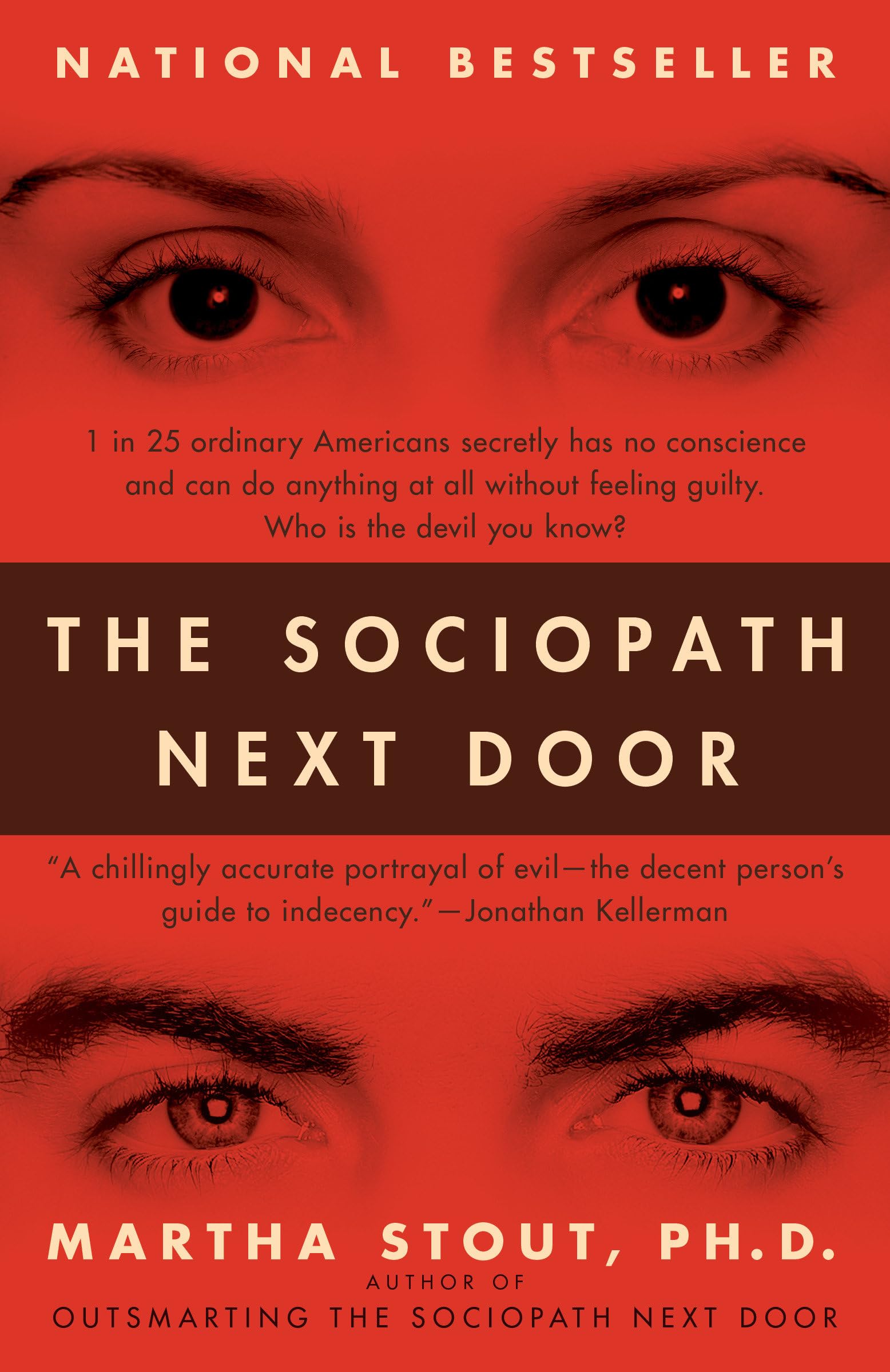
Martha Stout’s The Sociopath Next Door (2005) sets out to expose what the author claims is a hidden 4% of the population—people who lack a conscience and operate as manipulative, remorseless “sociopaths” among us. Structured around case studies of anonymized individuals—like corporate schemers or deceptive neighbors—the book aims to help readers identify these everyday predators. As a clinical psychologist, Stout brings some credibility, but the book falls flat in execution and depth, especially for readers expecting a scientific exploration of sociopathy.
I approached this book hoping for a rigorous dive into the brain mechanisms behind sociopathy, such as differences in neural structures like the amygdala or genetic factors that might explain a lack of empathy. Unfortunately, The Sociopath Next Door offers little of that. Stout briefly mentions biological possibilities but quickly pivots to anecdotal vignettes and philosophical tangents that feel more Freudian than evidence-based. The lack of engagement with modern neuroscience or evolutionary psychology makes the book feel outdated, especially given advances in brain research since its publication.
Worse, the writing is far from engaging. The case studies, meant to illustrate sociopathy’s subtle manifestations, feel repetitive and overly dramatized, failing to hold attention. I found myself flipping pages, hoping for a spark of insight or a compelling argument that never materialized. Stout’s definition of “sociopath” is also frustratingly vague, conflating clinical antisocial personality disorder with anyone who acts selfishly or without remorse. This raises unanswered questions: Could we all exhibit sociopathic tendencies under certain conditions, like extreme stress? Can those labeled as sociopaths show genuine care within their inner circle while exploiting others? The book sidesteps these complexities, opting for a simplistic “us vs. them” narrative that doesn’t grapple with the spectrum of human behavior.
While the practical advice for spotting manipulators might be useful for some, it’s buried under tedious storytelling and lacks the nuance to explore whether sociopathy is a fixed trait or context-dependent. For a book promising to unveil a hidden societal threat, it feels more like a slog than a revelation.
Rating: 2/5 stars.

