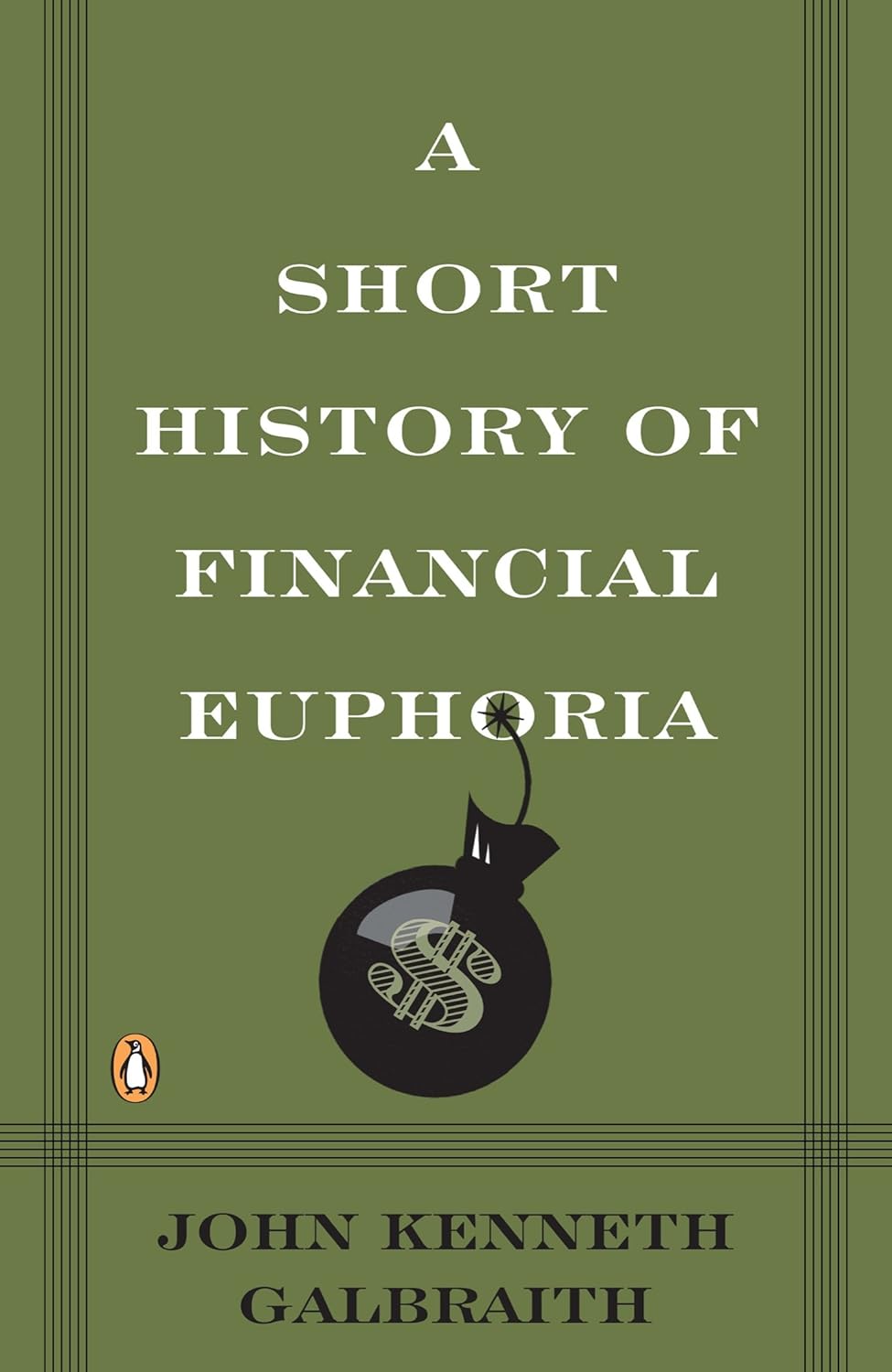
John Kenneth Galbraith’s A Short History of Financial Euphoria (1994) is a very readable book. At 128 pages, it is brief and clear. Galbraith lays out complex financial history into digestible stories without unnecessary jargon. His writing style is witty, cynical and conversational. A logical progression makes the book easy for readers to identify patterns across various financial manias rather than getting lost in the details.
Galbraith traced financial mania from the Dutch tulip craze through to the Great Depression and beyond, as well as how leverage was used to finance the American Revolution. He argues that speculative episodes follow a predictable pattern despite appearing novel each time. All bubbles share similar characteristics, namely excessive optimism and widespread use of leverage. His key takeaways include:
– Financial memory is dangerously short
– The wealth-intelligence fallacy
– The “this time is different” delusion
– Leverage amplifies gain, as well as losses
– Collective suspension of reason
– The aftermath’s selective memory
– Bubbles are inevitable
He concluded by noting that beyond a better perception of the speculative tendency and process itself, there probably is not a greater deal that can be done. The only remedy is an enhanced skepticism of the association of over optimism and the foolishness of associating intelligence with the deployment or acquisition of large sums of money.
If you like this book, you might also like his other book The Great Crash, 1929 (2009) and The Lessons of History (2010) by Will and Ariel Durant
[Written with the assistance of Claude]
 UpLive.Life