[Written by Grok. Image credit.]
In a world of one-click purchases, endless streaming, and overnight-delivery everything, it’s easy to believe that happiness is just a swipe away. But as psychologist Jonathan Haidt, Abraham Maslow, and Aristotle all remind us, the deepest forms of satisfaction—those that give life meaning and purpose—almost always demand effort, patience, and sometimes real sacrifice.
Let’s explore a simple Hierarchy of Desires that builds on Maslow’s famous pyramid but focuses on how much work and sacrifice each level actually requires. The lower levels can be bought or consumed quickly. The higher levels must be earned—and they’re the ones that matter most in the long run.
The Hierarchy of Desires
- Instant Hedonic Desires
Eating out, buying the latest gadget, binge-watching shows, weekend getaways.
How it’s satisfied: Money + a few hours.
Result: Quick dopamine hit, but the pleasure fades fast. - Status & Material Desires
Designer clothes, expensive cars, a big house, social-media validation.
How it’s satisfied: Money + moderate career effort.
Result: Temporary boost in social standing, yet comparison never ends. - Achievement & Competence Desires
Mastering a skill, getting a degree, running a marathon, earning a promotion.
How it’s satisfied: Years of consistent practice and discipline.
Result: Lasting pride and confidence. - Meaningful Contribution & Legacy Desires
Starting a company, writing a book, raising good kids, building a charity.
How it’s satisfied: Long-term commitment, financial risk, leadership, resilience.
Result: Deep sense of purpose and impact. - Transcendent & Existential Desires
Profound relationships, spiritual growth, artistic creation, service to something larger than yourself.
How it’s satisfied: Ego sacrifice, giving up comfort or status, lifelong personal growth.
Result: True flourishing (Aristotle’s eudaimonia).
The pattern is clear: the higher you climb, the more sacrifice is required—and the more enduring the reward.
Advice for Different Life Stages
Teens (13–19)
You’re at the age where instant gratification feels irresistible—social media likes, new clothes, video games, and fast food are all a click away. The temptation is to chase Level 1 and Level 2 desires because they give quick rewards and help you fit in.
Practical advice
- Limit screen time and set “no-phone” zones (meals, bedroom, first hour after waking).
- Start one small habit that builds competence: learn an instrument, join a sports team, or code a simple app.
- Volunteer once a month—helping others early teaches you that real fulfillment comes from contribution, not consumption.
- Remember: every time you choose delayed gratification (studying instead of scrolling), you’re training your brain for bigger wins later.
Young Adults (20s–30s)
This is often the decade of building foundations—career, relationships, finances. Many people get stuck at Levels 2 and 3, chasing promotions and status symbols to feel “successful.”
Practical advice
- Invest in skills that compound over time (learning a language, public speaking, coding, financial literacy).
- Protect your health and relationships now—burnout and broken marriages are expensive to fix later.
- Take calculated risks: start a side project, ask for a raise, or move to a new city. The 20s and 30s are the best time to experiment.
- Begin saving—even small amounts—because financial freedom later lets you pursue higher-level desires without desperation.
Middle-Aged People (40s–50s)
By midlife, many have achieved Levels 2 and 3 (career success, nice home), but a surprising number feel empty. This is often the “midlife crisis” phase—when people realize material things don’t fill the deeper void.
Practical advice
- Shift from “me” to “we”: mentor younger colleagues, coach a team, or get involved in community service.
- Reassess your legacy: What do you want to be remembered for? Adjust your career or lifestyle accordingly.
- Protect your health aggressively—exercise, sleep, and nutrition become non-negotiable.
- Invest in relationships—deep friendships and family time are the best predictors of happiness in later life.
Elders (60+)
You’ve likely climbed most of the ladder. Now the question becomes: “How do I spend the rest of my time meaningfully?”
Practical advice
- Share your wisdom—teach, write memoirs, volunteer, or simply listen to younger people.
- Pursue transcendent goals: travel for connection (not just luxury), deepen spiritual practices, or create art for its own sake.
- Prioritize presence—time with grandchildren, old friends, or nature often brings more joy than any purchase.
- Accept that some sacrifices (health, mobility) come with age, but redirect your energy toward gratitude and giving.
The Bottom Line
Money and entertainment are powerful tools—they can satisfy the lower levels of desire very effectively. But they cannot buy the higher ones. The most meaningful life is built through effort, risk, and sacrifice: mastering skills, building something lasting, serving others, and growing beyond the ego.
Start small, no matter your age. Choose one desire that sits one or two levels higher than what you’re chasing today, and take a single step toward it. Over time, those steps compound into a life of real fulfillment—one that feels worth living, not just consuming.
The ancient philosophers were right: true happiness isn’t something you buy. It’s something you become.
The More You Desire, the More You Suffer… and Maybe the More You Gain
[Written by Grok and Claude]
A single line from Naval Ravikant has stuck with me for years: “Desire is a contract you make with yourself to be unhappy until you get what you want.” It’s a powerful warning, but it’s only half the story. The full truth is more nuanced—and more hopeful: the more you desire the right things, the more you will suffer, and the more you will gain. Suffering is not the enemy of a good life; it’s often the price of a meaningful one.
The word “suffering” may not capture the spirit of what’s happening. It’s less about pain and more about effort, challenge, discipline, tension, and growth—the constructive difficulties that help us evolve. And perhaps desire itself isn’t the destination, but the beacon—the thing that orients us toward a direction rather than an endpoint. We tend to imagine that fulfillment lies in finally reaching what we want, but often the deepest meaning comes from moving toward that beacon: the learning, the stretching, the becoming that happens along the way. Desire points the way, but it’s the process of pursuit—the daily steps, failures, adjustments, and small victories—that shapes us most profoundly.
Desire Is Necessary—And So Is Suffering
From an evolutionary perspective, desire is hardwired into us. Hunger, thirst, sexual attraction, the drive for safety and status—these impulses kept our ancestors alive and reproducing. Without desire, there is no motivation, no curiosity, no progress. A creature without desire is a creature that sits still until it dies.
Philosophers have long recognized this fundamental truth. Aristotle called humans “desiring animals” (orektikon zōon). Our rational nature doesn’t suppress desire; it directs it toward excellence, virtue, and flourishing (eudaimonia). Nietzsche went further, identifying desire as the “will to power,” the fundamental force of life itself. To deny it is to deny life. The ascetic traditions that preach the elimination of desire, he argued, are symptoms of weakness and resentment.
Even Naval, who warns so strongly against desire, is careful not to advocate for its complete elimination. He simply says the happiest people have very few desires—and the ones they do have are large, long-term, and high-quality. The question, then, is not whether to desire, but what to desire and how.
The Two Kinds of Suffering
Understanding this distinction requires us to recognize two very different types of suffering, each with its own origins and consequences.
Pointless, reactive suffering is the chronic, low-grade misery that comes from chasing desires that never truly satisfy. This is the endless cycle of social media comparison, craving the next gadget, status anxiety, and addiction to short-term pleasure. It’s repetitive, exhausting, and leaves us emptier than before. This is what the Buddha meant by tanha (craving), what Schopenhauer saw as the endless pendulum between pain and boredom, and what Naval calls “desiring too much.” It’s the suffering we want to minimize because it serves no purpose beyond perpetuating itself.
Productive, voluntary suffering, by contrast, is the pain that accompanies meaningful pursuits. It’s the discomfort of discipline, the fear before taking a significant risk, the grief of letting go of comfort, and the exhaustion of sustained effort toward a worthy goal. The marathon runner suffers through training but gains resilience and pride. The entrepreneur suffers rejection and financial stress but may build something that changes lives. The parent suffers sleepless nights and worry but experiences a depth of love and purpose few things can match. The artist suffers self-doubt and criticism but creates work that moves others.
In these cases, suffering is not a bug—it’s a feature of the process. Nietzsche called it “the price of greatness.” Aristotle saw it as part of living fully according to reason. The Stoics treated hardship as training for virtue. Viktor Frankl, writing from Auschwitz, argued that even in the worst suffering we can choose our attitude—and that choice itself creates meaning. This is the suffering that forges us rather than diminishes us.
The Wisdom of Ancient Traditions
The philosophical traditions that seem most anti-desire are actually more subtle than they’re sometimes portrayed. The Buddha didn’t teach the elimination of all desire; he taught the release of clinging and attachment to impermanent things. The enlightened person still acts, still loves, still creates—they simply do so without the mental agitation of grasping. The problem is not wanting; it’s the desperate need for things to be other than they are.
The Stoics didn’t aim for apathy or emotional numbness; they aimed for calm, focused desire to act rightly regardless of outcomes. Seneca wrote, “It is not the man who has too little, but the man who craves more, that is poor.” Their goal was to cultivate desires aligned with virtue and wisdom while remaining unattached to external outcomes beyond their control.
Even Schopenhauer, the most pessimistic of Western philosophers, allowed for temporary respite through art, music, and compassion—moments where the will quiets down without erasing life itself. His philosophy, while bleak, recognized that certain pursuits could provide genuine relief from the suffering inherent in existence.
The most balanced position—shared by Aristotle, the Stoics, many Buddhists, Nietzsche, and modern thinkers like Naval—is that desire is necessary and beautiful, but it must be trained and directed. We need desires to get out of bed, to learn, to build, to love. We suffer when we let shallow, ego-driven desires dominate our lives. We flourish when we cultivate higher desires: mastery, meaningful contribution, truth, beauty, and the good of others.
How to Suffer Well
The practical question becomes: Is the suffering I’m experiencing the kind that makes me more capable, more connected, and more alive? Or is it just the background noise of chasing things that don’t really matter?
Naval puts it perfectly: “The more you desire, the more you suffer. The less you desire, the more you live.” But he means “less” in quantity and “higher” in quality—not “none.” The ideal is a life with a few clear, high-quality desires that are worth the suffering they bring.
To distinguish between productive and pointless suffering, ask yourself these questions: Does this desire require constant comparison or external validation? Will satisfying it leave me essentially the same, or will it make me a better version of myself? Does pursuing this desire align with long-term flourishing, or is it just a temporary distraction from discomfort?
The answers to these questions reveal whether your suffering serves a purpose or simply perpetuates itself. They help clarify whether you’re building something meaningful or merely running on a hedonic treadmill.
The Bottom Line
Suffering is not necessarily bad. Some suffering is the inevitable companion of a life worth living. The goal is not to eliminate all suffering (which is impossible) or all desire (which is undesirable). The goal is to suffer well—to suffer for things that matter, to suffer voluntarily, and to suffer in ways that build character, meaning, and depth.
Yes: the more you desire the right things, the more you will suffer—and the more you will gain. The trick is to make sure the suffering is the kind that forges you, not the kind that merely wears you down. Choose desires that demand your growth, that pull you toward excellence, that connect you to something larger than yourself.
In the end, a life without any suffering is a life without any real stakes. And a life without real stakes is barely a life at all. The question is not whether you will suffer, but what you will suffer for—and whether that suffering will leave you stronger, wiser, and more fully alive.
Evolution’s Solution: Hormesis as the Built-In Path to Strength—and Why Desire and Suffering Are Essential
[Written by Grok]
Evolution doesn’t care about our happiness. It cares about survival and reproduction. Over billions of years, it encountered a harsh reality: the world is full of stressors—predators, scarcity, injury, cold, uncertainty—that can destroy the weak, yet can also be opportunities to become stronger if the organism adapts.
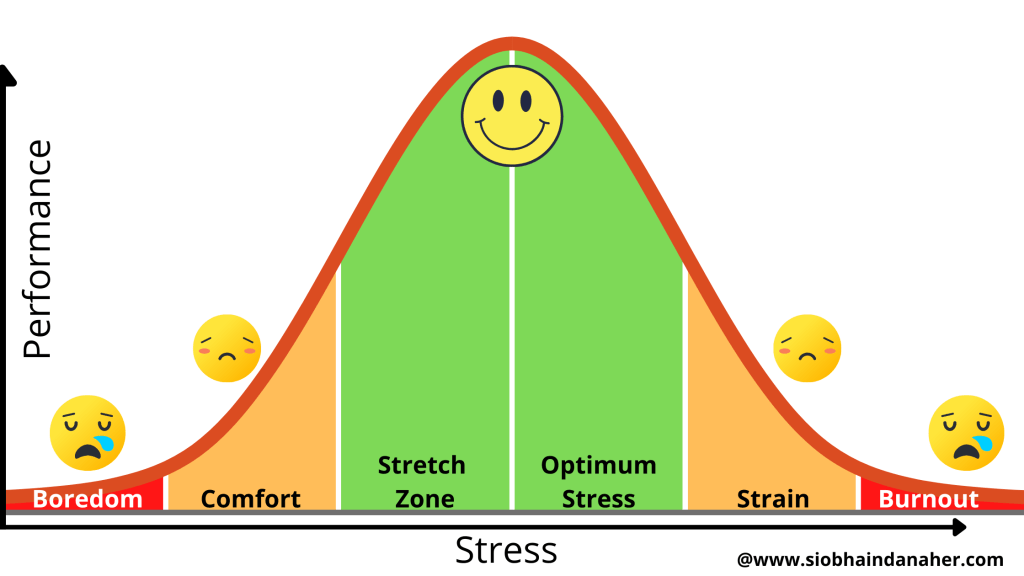
The solution evolution engineered is hormesis: a precise dose-response curve where moderate, intermittent stress triggers protective adaptations, while too little stress leaves you soft and too much breaks you. In biological terms, it’s the reason muscles grow after being challenged, immune systems strengthen after mild exposure, and brains rewire after wrestling with difficulty.
But hormesis isn’t just a physical mechanism—it’s the evolutionary justification for why desire and voluntary suffering are not flaws to be eliminated, but features to be embraced.
Desire Is the Engine That Drives Hormetic Stress
Desire is the psychological force that makes us seek out challenges. Without it, we would never voluntarily expose ourselves to the stressors that trigger growth:
- The desire to run faster pushes us to train through fatigue and soreness → muscles adapt and endurance improves.
- The desire to build something meaningful drives us to endure rejection, financial risk, and sleepless nights → resilience, skill, and character deepen.
- The desire to love and raise children makes us willingly accept worry, sacrifice, and heartbreak → we develop profound emotional depth and purpose.
In other words, desire is evolution’s way of ensuring that organisms don’t just survive—they seek out the exact level of discomfort that will make them stronger. The organism that never desires anything never experiences hormetic stress and never grows. It remains fragile in a dangerous world.
Suffering Is Not a Bug—It’s the Signal of Adaptation
Every meaningful desire carries suffering in its wake, and that suffering is the body’s and mind’s way of saying, “Something important is happening here.” The ache of discipline, the sting of failure, the fear before a leap—these are the signals that adaptation is underway.
Nietzsche understood this instinctively: “What does not kill me makes me stronger.” The Stoics practiced voluntary discomfort (cold baths, fasting, poverty simulations) to prepare for life’s inevitable hardships. The Buddha, while warning against compulsive craving, still walked the path of intense effort and austerity to reach awakening. Even modern neuroscience shows that the brain’s reward systems light up most brightly when we overcome obstacles—not when everything is easy.
Suffering, when it arises from meaningful desire, is not punishment. It is the price of becoming. It is the mechanism that turns a soft, comfort-seeking creature into one that can thrive in an unpredictable world.
The Delicate Balance: Too Much or Too Little
Evolution’s design works only in the Goldilocks zone:
- Too little desire → no hormetic stress → atrophy, boredom, and fragility.
- Too much desire (or the wrong kind) → chronic, pointless stress → burnout, anxiety, and exhaustion.
- The right amount and the right kind → voluntary, purposeful hardship → growth, resilience, and flourishing.
This is why Naval Ravikant says to have few desires, but make them high-quality ones. The fewer, the more selective we are, the more likely we are to stay in the hormetic sweet spot—where suffering is productive rather than destructive.
Reflection: A Life Without Desire and Suffering Is a Life Without Evolution’s Gifts
Imagine a world where no one ever desired anything difficult. No one trained hard, risked failure, loved deeply, or created anything lasting. There would be no art, no science, no families, no progress—only a dull, comfortable stasis.
That is not the life evolution sculpted us for. It wired us with desire precisely so we would seek out the stressors that forge strength. The pain that accompanies meaningful desire is not a betrayal of our nature; it is proof that we are living in alignment with it.
So when you feel the pull of a big, worthy goal—and the accompanying discomfort, fear, or exhaustion—don’t recoil. Recognize it for what it is: evolution’s ancient invitation to grow. The more you desire the right things, the more you suffer in the hormetic zone, and the more you become the resilient, capable, fully alive creature your ancestors fought to become.
That is not a curse. That is the gift.
A little stress is good for you. Image credit.